One More Day With Her Family
How NurseLink Healthcare Transported A Frail Elderly Woman
A Case Study In Compassionate, Clinically Safe Patient Transport
Introduction
Not every journey a patient makes is about a medical appointment. Some journeys are about something more fundamental than clinical management, about being present for the moments that define a life and a family, about the kind of memory that outlasts the person who made it and lives on in the people who were there.
For an elderly person in the final months of life, the question of what is still possible carries a weight that extends far beyond the practical. A wedding, a graduation, a family gathering that has been planned and anticipated, these are not optional extras to be set aside when health declines. They are, for many people, exactly the reason to keep going for as long as going is possible.
Non-emergency patient transport that understands this, that approaches a journey like a family wedding not as a logistical exercise but as something that matters enormously to a frail person and to everyone who loves them, provides something that no clinical service alone can offer. It provides the bridge between where a person is and where they need to be, so that the moments that matter most are not taken away by the simple fact of not being able to get there.
At NurseLink Healthcare, we believe that transport is never just transport. This case study documents how our team supported a woman in her late eighties, living in residential aged care in Shepparton, Victoria, with advanced heart failure, to attend her granddaughter’s wedding, in what proved to be one of the last significant occasions of her life.
To protect the privacy of the client and her family, all names and identifying details have been kept confidential throughout this case study.
The Child & His Family's Situation
The client is a woman in her late eighties who had been living in a residential aged care facility in Shepparton for just over two years at the time of this case study. She had grown up in regional Victoria, had married young and had spent the better part of six decades raising a family, keeping a large garden and being, by every account of those who knew her, the kind of person around whom a family organises itself. Christmases at her house. Sunday lunches that ran into the afternoon. The person whose opinion was sought first and whose presence, at any gathering, made the gathering feel complete.
Her advanced heart failure had been diagnosed the previous year, and the progression of her condition over the months since had been gradual but clear. She experienced significant breathlessness with any exertion, required oxygen support for portions of the day and had periods of fatigue that confined her to her room for days at a time. Her mobility was limited, she used a wheelchair for any distance beyond a few steps and the physical demands of leaving the facility for any purpose required careful clinical planning and consideration.
Her granddaughter’s wedding had been planned for a venue outside Shepparton, a journey of approximately forty minutes from the aged care facility. The wedding had been scheduled months in advance, before her condition had deteriorated to its current level, and the question of whether she would be able to attend had moved from an assumption to a hope to, in the weeks immediately preceding the event, a genuine uncertainty.
Her family, who had been closely involved in her care and who understood both her medical situation and what the wedding meant to her, had raised the possibility of her attendance with the facility’s nursing team. The response had been honest and careful. Attending was not impossible, but it was not simple either. Her condition made any journey a clinical undertaking that required proper planning, appropriate transport, oxygen management during the trip and someone with clinical training present throughout. It was not something the family could manage alone in a private vehicle, however willing they were.
Her granddaughter, who had been hoping her grandmother could be there since the engagement was announced, was determined to find a way. The facility’s care coordinator made contact with NurseLink Healthcare.
Understanding What She & Her Family Actually Needed
The conversation NurseLink Healthcare had with the facility’s care coordinator, and subsequently with the family, was one that everyone involved understood carried more weight than a standard transport booking.
Her clinical requirements were specific and non-negotiable. She needed a vehicle that could accommodate her wheelchair safely and that was equipped to support oxygen therapy during the journey, as her breathlessness could increase with the movement and mild exertion involved in transferring and travelling. She needed a transport officer with clinical training who could monitor her throughout the journey, manage any increase in her symptoms calmly and make the judgment call, if her condition required it, about whether the journey needed to be modified or the return brought forward.
She also needed the journey itself to be as comfortable and as undisturbing as possible. Advanced heart failure is sensitive to exertion and to anxiety, and a journey that was rough, rushed or managed in a way that unsettled her could affect her condition in ways that would compromise not just the travel but her experience of the wedding itself.
Her family’s needs were equally clear. They needed to know that someone clinically qualified was with her throughout the day, from the moment she left the facility to the moment she returned. They needed to be at the wedding as her family, not as her clinical monitors, which meant the NurseLink Healthcare transport officer needed to hold that clinical responsibility entirely, so that her daughter and her granddaughter and everyone else who loved her could simply be present with her.
And they needed, though no one said it in precisely these terms, for this to go well. They were aware that this was likely one of the last significant occasions she would be part of. The weight of that awareness was present in every conversation about the logistics, and NurseLink Healthcare understood it.
The NurseLink Healthcare Solution
Clinical Planning Before The Day
NurseLink Healthcare began planning the transport several weeks before the wedding date. The facility’s nursing team provided a full clinical handover covering her current heart failure status, her oxygen requirements, the specific symptoms that would indicate deterioration requiring intervention and the escalation pathway to be followed if her condition changed during the day. Her GP was consulted and provided written guidance on the clinical parameters within which the journey could proceed safely and the circumstances that would require the transport to be modified or curtailed.
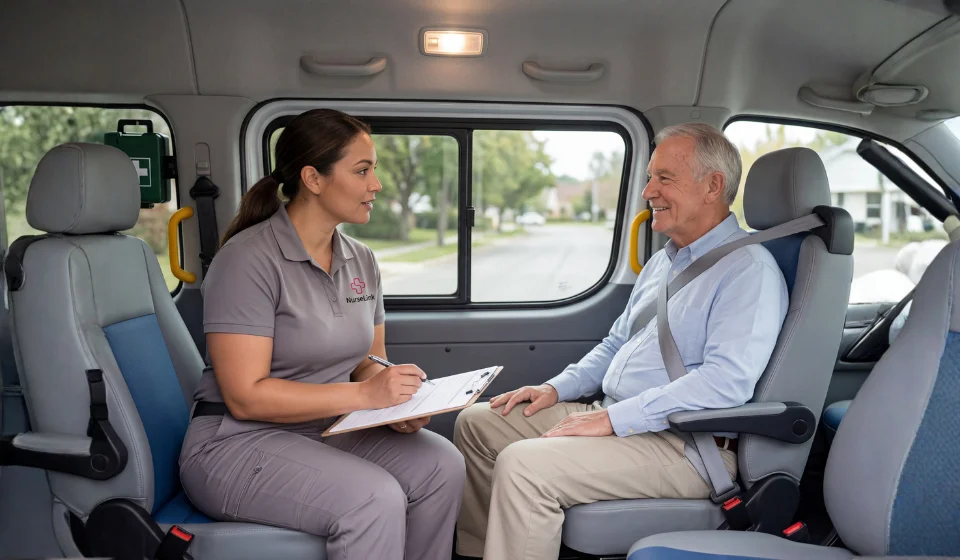
The transport officer assigned to her journey was a registered nurse with experience in the transport of medically complex elderly patients. She was briefed comprehensively on the client’s clinical profile, her oxygen requirements, her communication preferences and the emotional significance of the day. She reviewed the route to the venue, confirmed the vehicle’s oxygen equipment was correctly configured for the journey and made contact with the family in advance to introduce herself and go through the plan for the day.
The family, who had been managing the anxiety of the preceding weeks with the particular combination of hope and dread that families in this situation know well, described the pre-wedding call from the transport officer as the first moment they had felt genuinely confident that the day was going to be possible.
A Vehicle & Equipment Matched To Her Needs
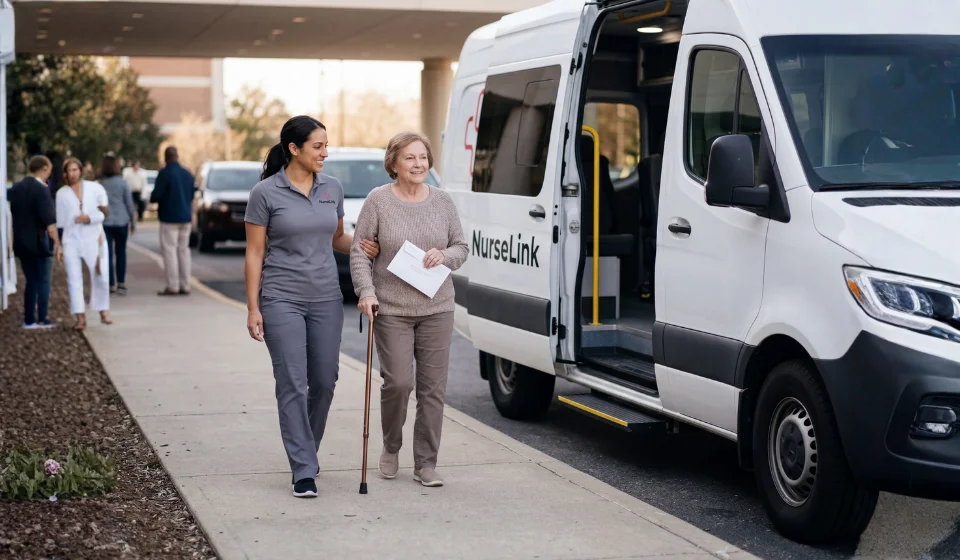
NurseLink Healthcare confirmed a vehicle equipped with onboard oxygen support for the journey. The vehicle was configured specifically for her comfort and her clinical requirements, with appropriate positioning support for the journey and the transfer equipment needed to move her safely between the vehicle and her wheelchair at the venue.
Departure timing was planned to allow a relaxed, unhurried transfer from the facility, a comfortable journey to the venue and arrival with enough time for her to settle before the ceremony began. The return journey was similarly planned, with the expectation that the day would be tiring and that the trip home needed to accommodate a woman who had given a great deal of herself to be there.
Presence Without Intrusion On The Day
The transport officer’s role on the day of the wedding was one that required a particular kind of professional balance. She was there to monitor her condition, manage her oxygen, assist with any physical needs and ensure that any clinical concern was identified and addressed promptly. She was not there to be a clinical presence in a family moment.
She managed this with the discretion and the warmth that the day required. She settled her into the venue, ensured she was comfortable and positioned where she could see the ceremony clearly, handed her care to the family with a clear and quiet briefing on what to watch for and remained nearby and accessible throughout the day without hovering or inserting herself into moments that belonged to the family.
During the reception, when the energy of the day and the emotion of the ceremony had tired her more than the morning had suggested it might, the transport officer identified the signs of increasing fatigue and gently and privately raised with her daughter the possibility of an earlier departure than originally planned. The conversation was handled with the same tact that had characterised the whole day, and the decision to leave after the first hour of the reception was made calmly and without disrupting anyone else’s celebration.
She was in the vehicle, comfortable, settled and on oxygen, watching through the window as her granddaughter came out to say goodbye at the car, before the rest of the family had noticed she was leaving. That goodbye, in the car park of a wedding venue in regional Victoria, was one of the last long conversations the two of them had.
The Return Journey & Handover
The return journey to the facility was managed with attention to her post-event fatigue. She was quieter on the way home than she had been on the way there, which the transport officer had anticipated and which she monitored carefully without drawing attention to it. Her oxygen saturation remained within acceptable parameters throughout the return journey. She arrived back at the facility tired but stable, and was handed over to the facility’s nursing team with a full account of the day, her clinical status throughout and any observations relevant to her ongoing care.
The facility’s nursing team, reviewing her condition on return, noted that while she was fatigued, there was no clinical deterioration attributable to the journey. She was settled into bed, and by her own account to the nurse who helped her that evening, she had had a wonderful day.
Outcomes & Impact
She Attended Her Granddaughter's Wedding
The outcome the family had hoped for and feared might not be possible was the outcome that occurred. She was present at her granddaughter’s wedding. She saw the ceremony. She sat at the reception table surrounded by three generations of a family she had spent her life building. She was in the photographs. She danced, briefly and carefully, with her son-in-law, who held her hands and moved slowly and did not let go.
That she was there is a fact that will remain true for as long as any of the people who were also there are alive to remember it.
The Day Was Clinically Safe
The clinical planning and the quality of the transport officer’s monitoring throughout the day meant that a journey that carried genuine clinical risk was managed without adverse outcome. Her heart failure did not decompensate during the day. The early departure that the transport officer identified as appropriate was made before her condition deteriorated rather than in response to deterioration. She returned to the facility fatigued but stable. The clinical risk of the day was real, and it was managed correctly.
Her Family Was Fully Present
Because the clinical responsibility for the day was held entirely by the NurseLink Healthcare transport officer, her family was able to be present at the wedding as her family. Her daughter did not spend the ceremony watching her mother’s chest rise and fall. Her granddaughter did not leave her own reception to check whether her grandmother needed anything. The people who loved her were free to be with her, in the way that a wedding is supposed to allow, because someone else was carrying the clinical watch.
A Memory That Belongs To The Family
She passed away several weeks after the wedding. The family, in the period following her death, described the wedding as something they returned to repeatedly in how they spoke about her final months. Not because it had been without difficulty, but because it had happened. She had been there. And the transport that had made it possible had been provided with a quality of care and a quality of human understanding that the family felt, and said, had honoured the significance of the day.
A Reflection From Her Granddaughter
In a message to the NurseLink Healthcare care coordinator in the weeks following her grandmother’s passing, her granddaughter wrote the following:
“I always wanted her there. I just didn’t know if it was going to be possible. The NurseLink nurse who was with her that day made it possible, and she made it beautiful. She looked after my grandmother so carefully and so kindly, and she made sure we could just be a family. My grandmother was in every photo. She danced. She cried when we said our vows. I will never be able to explain what it means to me that she was there, and I will never forget the people who made it happen.”
Key Takeaways From This Case Study
Some journeys are clinical and human in equal measure. A transport booking for a frail elderly patient to attend a family wedding is not simply a medical transfer. It is a moment of profound significance for a person and a family, and the transport provider that understands this brings something to the engagement that a purely clinical approach cannot. NurseLink Healthcare’s approach to this journey held both dimensions simultaneously.
Clinical planning before the day protects the day itself. The careful pre-journey clinical assessment, the consultation with the GP, the briefing of the transport officer and the configuration of the vehicle and equipment were what made it possible for the day to unfold without clinical incident. Thorough preparation is what allows the clinical presence on the day to be unobtrusive rather than dominant.
A clinically qualified transport officer permits families to be present. When a qualified transport officer properly holds the clinical responsibility for a medically complex patient, the family members who would otherwise feel obliged to monitor and manage are freed to simply be family. That freedom is not a peripheral benefit. It is central to the quality of the experience for everyone involved.
Dignity in transport means understanding what the journey means. For a woman in her late eighties with advanced heart failure, the journey to her granddaughter’s wedding was not a risk to be managed. It was a life event to be made possible. Transport that approached it only as the former would have delivered something technically adequate and humanly inadequate. NurseLink Healthcare understood the difference.
Conclusion
Some journeys matter more than others. Not clinically, necessarily, but humanly, in the way that certain moments carry the full weight of a life and a family’s love for each other in a single afternoon.
The woman at the centre of this case study had one of those journeys. She travelled forty minutes from her aged care facility to a wedding venue in regional Victoria, watched her granddaughter be married and came home tired and happy. She was in the photographs. She was in the memory. And she was there because the transport that carried her understood that getting her there was not a logistical task. It was a privilege.
NurseLink Healthcare provided that transport with the clinical rigour her condition required and the human understanding her family deserved. We are honoured to have been part of a day that meant so much.
If someone you love has an important occasion they are determined to attend, regardless of their medical situation, we encourage you to reach out to the NurseLink Healthcare team. We would be honoured to help make it possible.
Latest Post
Getting Him Home, Then Getting Him Better
Getting Him There, Getting Him Home, Getting Him Through
When Getting To Care Is Part Of The Challenge
Getting There Made The Difference
Showing Up For Someone Nobody Else Was Showing Up For
Getting There Safely
Every Appointment, Every Time
One More Day With Her Family
The Journey Home

The First Step Out The Door
Every Tuesday & Thursday
Bridging The Gap To Treatment
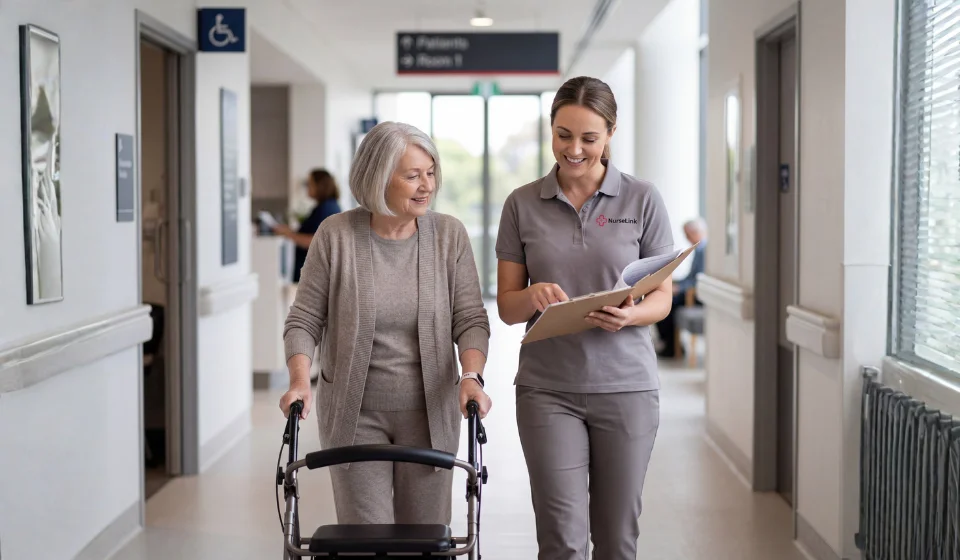
More Than A Ride Home
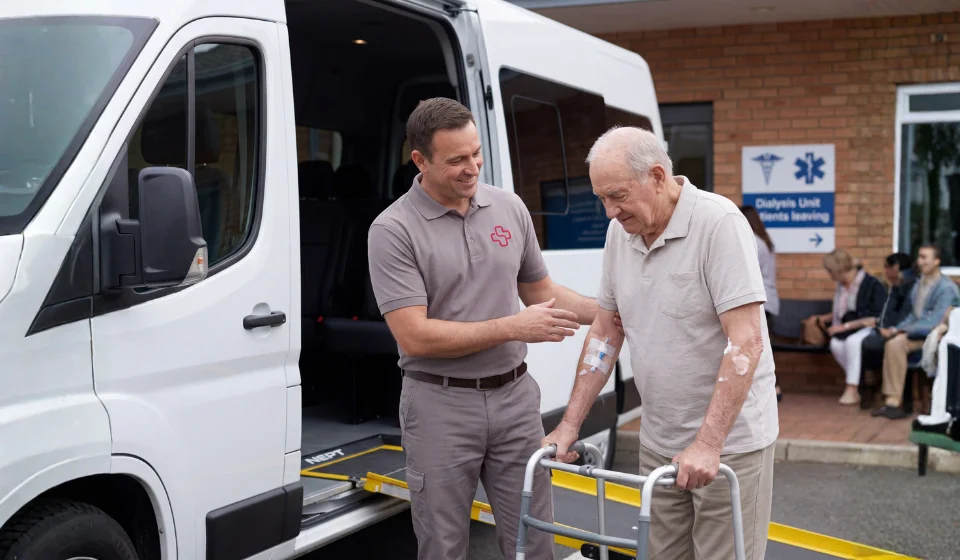
Every Trip Counted
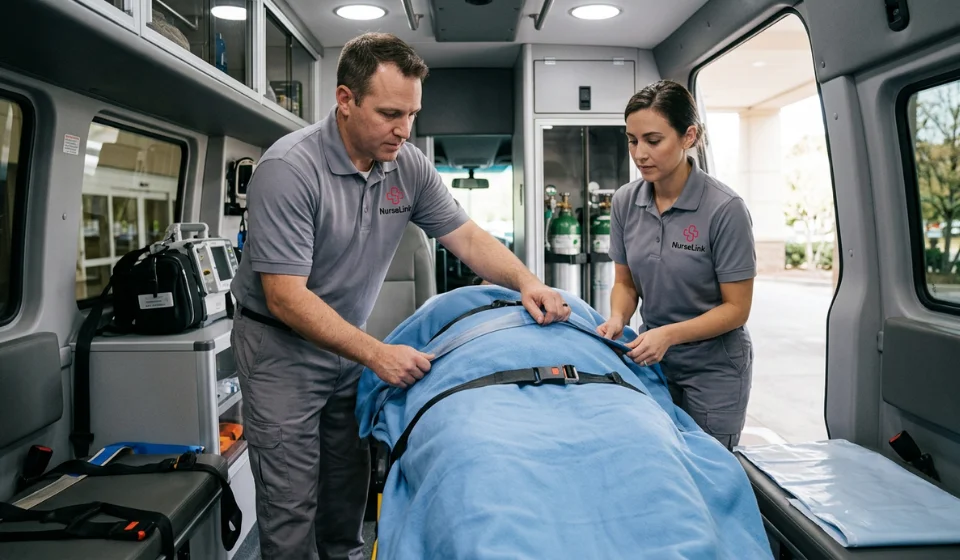
The Right Equipment. The Right Team. The Right Outcome.
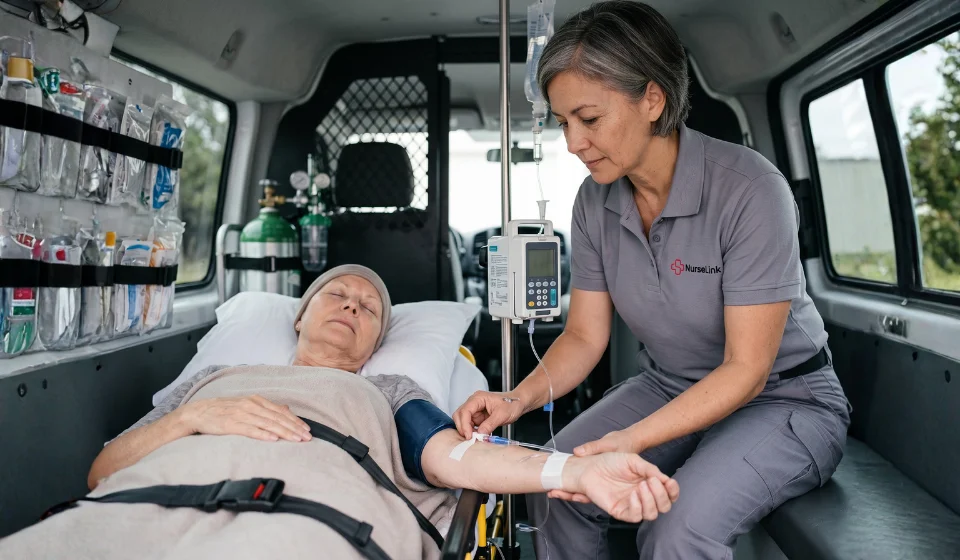
Maintaining Treatment Continuity During Cancer Care
Safe Non-Emergency Patient Transport
Ensuring Safe & Consistent Medical Access
A Safe Journey Home After Surgery