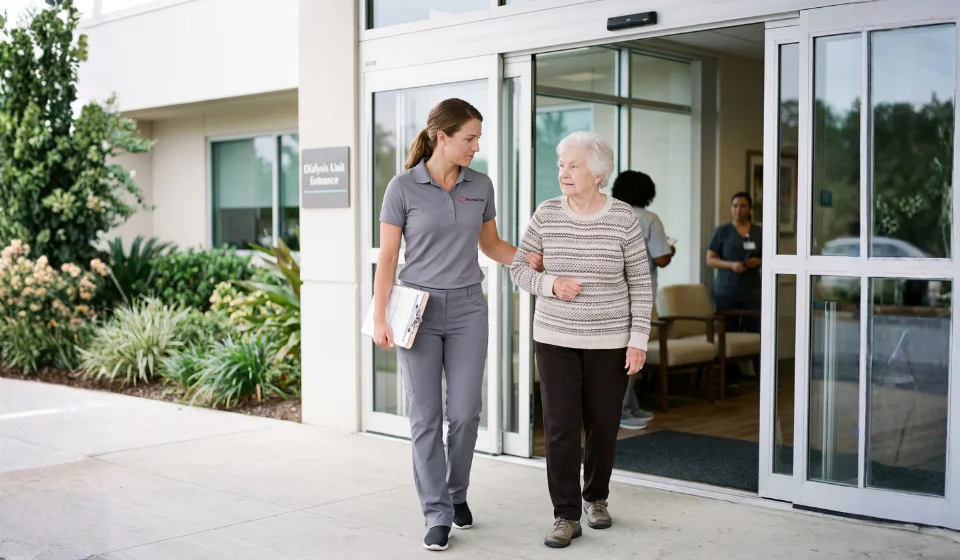
When Getting To Care Is Part Of The Challenge

How NurseLink Supported A Young Victorian Woman With Endometriosis
A Case Study In Patient-Centred Transport For A Young Woman Navigating A Painful Condition
Introduction
Endometriosis is one of the most underdiagnosed and undertreated conditions in women’s health. It affects roughly one in nine Australian women, causes pain that can be severe and debilitating and takes, on average, more than six years from the onset of symptoms to diagnosis. The women who live with it during those years are not simply managing a medical condition. They are managing a condition that has frequently been minimised, misunderstood or attributed to causes that do not reflect the clinical reality of what is happening in their bodies, by a healthcare system that has historically found women’s pain easier to dismiss than to investigate.
When a young woman with endometriosis finally accesses specialist care, the relief of being properly seen and properly diagnosed is real and significant. What follows the diagnosis is a treatment pathway that is often intensive and that requires consistent engagement with a specialist team, regular procedures, careful monitoring and the particular kind of ongoing clinical relationship that endometriosis management at its best involves. And for a young woman who lives outside the city where her specialist is based, who is managing the physical exhaustion and the pain that her condition produces and who does not have reliable access to the transport she needs to get to her appointments, the gap between a treatment plan and a completed one can become the next barrier in a long series of barriers.
Non-emergency patient transport for a young woman in this situation is not simply a logistical service. It is the practical support that makes the treatment possible, provided in a way that understands what she is managing and that treats the journey with the sensitivity that her condition and her experience require.
At NurseLink Healthcare, we understand that transport is never just transport. This case study documents how our team supported a young woman with severe endometriosis in regional Victoria through a sustained period of specialist treatment in Melbourne, and how the consistent, sensitive transport we provided became one of the things that made completing her treatment possible.
To protect the privacy of the client, all identifying details have been kept confidential throughout this case study.
The Client & Her Situation
The client is a woman in her late twenties who lives in a regional Victorian town approximately ninety minutes from Melbourne. She had been managing symptoms of endometriosis since her late teens, a period of nearly a decade during which she had seen multiple GPs, had her symptoms attributed to stress and period pain and had been told, on more than one occasion, that what she was experiencing was normal and that she would learn to manage it.
She had not learned to manage it, because it was not normal and because the pain, which was cyclical but also chronic and which had worsened progressively across the years, was not something that management strategies were adequately addressing. She had missed days of work. She had cancelled social plans more often than she could count. She had sat through clinical appointments feeling both unheard and guilty for taking up a doctor’s time with something that was apparently manageable.
The specialist referral that had eventually been made, by a GP who had listened more carefully than the ones who came before, had led to a diagnosis of severe endometriosis that had, by the time it was confirmed, progressed to a stage that required both surgical intervention and an ongoing medical management programme. Her specialist, based at a clinic in Melbourne, had developed a treatment plan that included an initial surgical procedure followed by a series of follow-up appointments, hormone therapy management and regular monitoring across a treatment period of twelve to eighteen months.
The treatment plan was the right one. The specialist was excellent. The clinic was well-regarded. And the clinic was ninety minutes from her home, in a city she did not drive to regularly, at times that were determined by her specialist’s schedule rather than by what was convenient for her, after appointments that often left her exhausted, in pain or recovering from procedures that made the drive home in a car she had to manage herself both difficult and inadvisable.
She had managed the first several appointments by asking friends to drive her, which had worked for the initial phase and had become, as the frequency and the duration of the appointments had increased, more difficult to sustain without feeling that she was imposing. Her specialist’s practice manager, who had encountered this problem before, had mentioned NurseLink Healthcare.
Understanding What She Actually Needed
The initial conversation NurseLink Healthcare had with the client was one that the care coordinator approached with specific awareness of the particular experience of a young woman who had spent years not being properly heard about her own health.
She was, initially, somewhat guarded. Not unfriendly, but careful in the way of a person who has learned that services do not always deliver what they promise and that asking for help sometimes produces more complication than it resolves. The care coordinator, who recognised the guardedness for what it was, did not try to dissolve it with reassurances. She asked specific questions and answered the questions she was asked with the same specificity.
What emerged was a clear picture of what the client needed. She needed transport to her Melbourne appointments that she could rely on completely, because managing the uncertainty of whether her transport was going to work on a day when she was already managing pain and anxiety about a procedure was more than she wanted to add to what she was already carrying. She needed the vehicle to be comfortable, because the journey of ninety minutes each way was significant for a person whose pelvic pain made certain positions uncomfortable for extended periods. She needed the return journey to be managed with the understanding that she might be significantly more fatigued or more sore after an appointment than she had been before it, and that the return journey needed to accommodate this rather than expecting her to be in the same condition as the outward one.
She also said something that the care coordinator noted because it was both simple and important. She said she was tired of having to explain her condition and have it treated as something to be managed around rather than taken seriously. She needed the transport arrangement to take it seriously from the outset rather than requiring her to educate the transport officer about why certain things mattered.
The care coordinator confirmed that NurseLink Healthcare would take it seriously, and that the transport officer assigned to her appointments would be briefed on her condition and its specific implications for the management of the journey before they met.
The NurseLink Healthcare Solution
A Transport Officer Briefed & Prepared
NurseLink Healthcare identified a transport officer for this engagement whose experience included patient transport for women managing gynaecological conditions and whose manner the care coordinator had assessed as well suited to the specific requirements of this engagement. She was professional, warm and practically attentive in a way that did not require the patient to manage the transport officer’s response to her condition rather than simply being transported.
Before the first appointment, the transport officer was briefed comprehensively on the client’s condition, its specific implications for the management of the journey, the comfort requirements that the ninety-minute drive required and the specific way in which the return journey after certain types of appointments might differ from the outward one. She was told that the client had a long history of not being taken seriously about her condition and that one of the things NurseLink Healthcare was providing was transport that did not replicate that experience.
The transport officer understood this and confirmed it in the way that the care coordinator valued most, not with an elaborate assurance but with the practical, specific acknowledgment of a professional who had heard what was required and was going to deliver it.
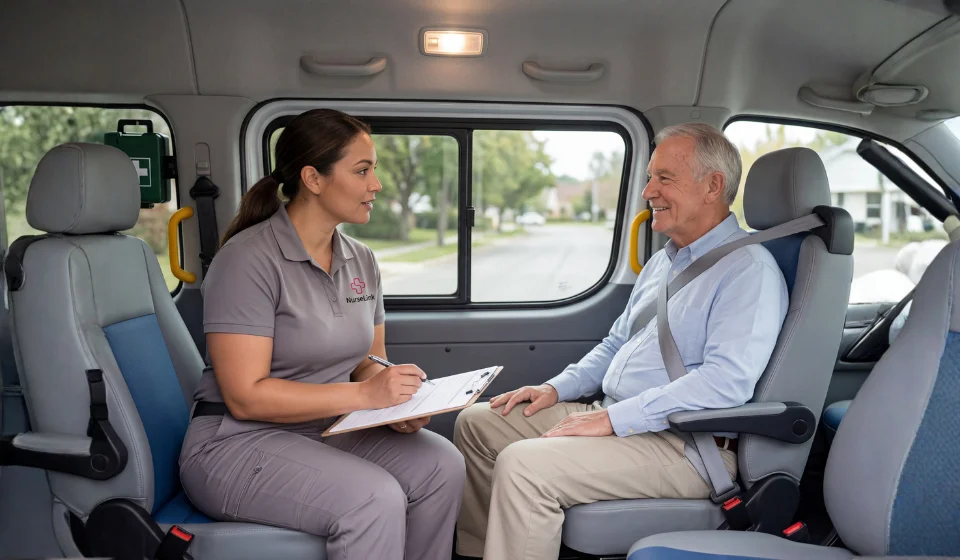
She made contact with the client the day before the first appointment, a brief and direct call that confirmed the pickup time and gave the client the opportunity to ask any questions she had about the arrangement. The client asked one, whether the vehicle was comfortable for someone with pelvic pain. The transport officer described the vehicle’s seating and confirmed the adjustments that had been made to the configuration. The client said that was good and that she would see her in the morning.
Comfortable, Reliable Transport Every Time
The vehicle NurseLink Healthcare confirmed for the engagement was selected with attention to the specific comfort requirements of a patient with pelvic pain managing a ninety-minute journey. The seating configuration, the temperature management and the approach to the journey, including route choices that minimised the sharp braking and the sudden movements that could exacerbate her discomfort, were all considered in advance.
From the first appointment, the transport officer arrived at the agreed time. The journey was managed with the attention to comfort and smoothness that the briefing had specified. The client was not required to explain her condition or justify the specific requirements she had communicated, because they had already been communicated and had already been taken seriously before she got in the vehicle.
She arrived at her specialist appointments with the journey behind her rather than consuming her. She was not arriving depleted by the effort of managing her own transport or managing an arrangement that had required more of her than it should have. She arrived, as the transport officer had understood was the goal, in the best possible condition for the appointment itself.
The Return Journey Managed Around How She Actually Was
The return journey from her Melbourne appointments was the element of the transport arrangement that the client had identified as most important and that the transport officer managed with the specific attentiveness it required.
After surgical procedures, after appointments that had involved examinations or treatments that left her in pain, or simply after appointments that had been long and emotionally as well as physically tiring, she was not in the same condition on the return journey as she had been on the outward one. The transport officer checked in with her at the start of the return journey with a brief, practical question about how she was and adjusted the management of the journey accordingly. If she needed the temperature adjusted, it was adjusted. If she needed quiet, the conversation that had characterised the outward journey was not imposed on the return. If she needed to stop, they stopped.
This attentiveness was not elaborate. It was the ordinary, practical responsiveness of a transport officer who had been briefed properly and who understood that her role on the return journey was to get the client home as comfortably as possible, calibrated to how the client actually was rather than how the standard return journey assumed she would be.
The client mentioned this to the care coordinator at a review call several months into the engagement, noting that the return journey had been the thing she had been most anxious about when the arrangement began and that it had, consistently, been managed better than she had hoped.
Consistent Scheduling That Removed The Logistics From Her List
NurseLink Healthcare coordinated the transport schedule with her specialist clinic’s appointment system, maintaining a standing arrangement across the full treatment period rather than managing each appointment as a separate booking. Her specialist’s appointments were confirmed to NurseLink Healthcare by the clinic and the transport was arranged without the client needing to manage the coordination herself.
This meant that the logistical dimension of getting to and from her Melbourne appointments was removed from the list of things she was managing, which was a list that already included her condition, her treatment, her work and the ordinary demands of daily life. The transport was handled. She knew it was handled. She did not have to think about it beyond knowing when to be ready.
Her specialist’s practice manager, who had been the person who suggested NurseLink Healthcare and who maintained occasional contact with the care coordinator across the engagement, noted that the client had been attending her appointments with a consistency that was meaningfully better than her earlier pattern and that the practice attributed in part to the reliable transport arrangement.
Outcomes & Impact
She Attended Every Scheduled Appointment
For the duration of NurseLink Healthcare’s involvement, she attended every scheduled specialist appointment without a transport-related gap. The treatment programme her specialist had developed proceeded on schedule, without the disruptions that missed appointments would have introduced into a clinical programme where the timing of interventions mattered. Her specialist, reviewing her progress at regular intervals, had the benefit of a patient who was engaging consistently with her treatment rather than one whose engagement was shaped by the availability of transport.
Her Treatment Progressed As Planned
The clinical outcome of consistent specialist attendance across a complex treatment programme was the clinical outcome her specialist had planned for. The surgical intervention was followed up appropriately. The hormone therapy management was monitored and adjusted at the intervals her treatment required. The monitoring appointments that tracked her response to treatment were completed on schedule. The treatment programme that had been designed to manage her endometriosis as effectively as the current state of the clinical evidence allowed was delivered in full, without the gaps that transport barriers had introduced into other areas of her healthcare across the preceding years.
The Exhaustion Of Managing Her Own Transport Was Removed
The specific relief that the transport arrangement provided was not simply the practical resolution of a logistical problem. It was the removal of a source of exhaustion that had been adding to the load of a young woman who was already managing significantly more than she should have had to manage. The energy that had been going into arranging transport, managing the anxiety of uncertain arrangements and recovering from journeys that she had managed at her own expense was available, with the NurseLink Healthcare arrangement in place, for other things.
She mentioned this to the care coordinator at a review call, not with elaborate gratitude but with the quiet acknowledgment of a person who has noticed the difference that a specific change has made. She said that the transport being sorted had made the whole treatment period feel more manageable. The care coordinator, who understood what she was describing, received this as the meaningful feedback it was.
She Felt Taken Seriously
The outcome that was hardest to measure and that mattered most to the care coordinator, who had understood from the first conversation what the client’s history had been, was the one that the client articulated most simply. She said that from the first appointment, the transport had felt like something that took her condition seriously. She had not had to explain herself. She had not had to justify why certain things mattered. She had been treated as a person with a real condition that had real implications for how she needed to be transported, and that treatment had been consistent across every appointment of the engagement.
For a young woman who had spent nearly a decade not being taken seriously about her own health, this was not a minor outcome. It was the difference between a transport arrangement that added to her experience of not being heard and one that quietly, practically and consistently contributed to a different experience.
A Reflection From The Client
Near the end of her formal treatment period, she shared the following with the NurseLink Healthcare care coordinator:
“I spent so long having to fight to be taken seriously about my pain. By the time I finally had a specialist and a treatment plan, I was exhausted before the treatment had even started. The transport was one more thing I was going to have to manage. NurseLink made it so I didn’t have to manage it. The driver knew about my condition before I got in the car. The return journeys were handled around how I actually was, not how the appointment assumed I would be. I never missed an appointment. My treatment went the way it was supposed to go. That sounds like it should be straightforward, but for me, after everything that came before, it really wasn’t. I am grateful.”
Key Takeaways From This Case Study
Transport barriers can undermine treatment programmes that have taken years to access. A young woman who has spent years reaching a correct diagnosis and an appropriate treatment plan deserves transport support that makes consistent attendance possible. The gap between a good treatment plan and a completed one is often a practical gap that the right transport arrangement can close.
Endometriosis transport requires specific preparation, not generic patient transport. The comfort requirements of a patient with pelvic pain, the specific management of return journeys after procedures or examinations and the particular sensitivity that a condition with a history of being dismissed requires from the people providing care, are specific clinical and interpersonal requirements that generic transport does not meet. NurseLink Healthcare’s preparation of the transport officer for this engagement was what made the arrangement work.
Being taken seriously is a clinical outcome as well as a human one. A patient who has spent years having her condition minimised arrives at a transport arrangement with a specific need that goes beyond logistics. Transport that treats her condition seriously from the outset, without requiring her to educate the transport officer or justify her requirements, contributes to a clinical encounter in which she arrives in a better psychological state than one that replicates her previous experience of not being heard.
Removing logistical burden from a chronically ill patient has clinical benefits beyond the practical. The energy a young woman with endometriosis spends managing uncertain transport arrangements, recovering from journeys managed at her own expense and managing the anxiety of whether her appointment logistics will work, is energy that is not available for her recovery and her treatment engagement. Transport that removes this burden returns that energy to where it belongs.
Conclusion
Endometriosis takes enough from the women who live with it. It takes years of unexplained pain, years of not being believed, years of a life shaped around a condition that the healthcare system has historically not taken seriously enough. When a young woman finally reaches the right specialist and the right treatment, the practical barriers that stand between her and completing that treatment deserve to be removed rather than added to her load.
NurseLink Healthcare provided the transport that removed one of those barriers. Consistent, comfortable, sensitive and managed by a transport officer who took her condition seriously before she got in the car. She completed her treatment. Her specialist had a patient who attended consistently. And a young woman who had spent a decade not being heard had, in at least this one dimension of her care, the experience of being properly taken care of.
If you or someone you love is managing a condition that requires regular specialist treatment and transport is the practical barrier between a good prescription and a completed one, we encourage you to reach out to the NurseLink Healthcare team. We are here to make sure the journey is never the reason treatment does not go as far as it should.
Latest Post
Getting Him Home, Then Getting Him Better

Getting Him There, Getting Him Home, Getting Him Through
When Getting To Care Is Part Of The Challenge

Getting There Made The Difference
Showing Up For Someone Nobody Else Was Showing Up For
Getting There Safely
Every Appointment, Every Time
One More Day With Her Family
The Journey Home

The First Step Out The Door
Every Tuesday & Thursday

Bridging The Gap To Treatment
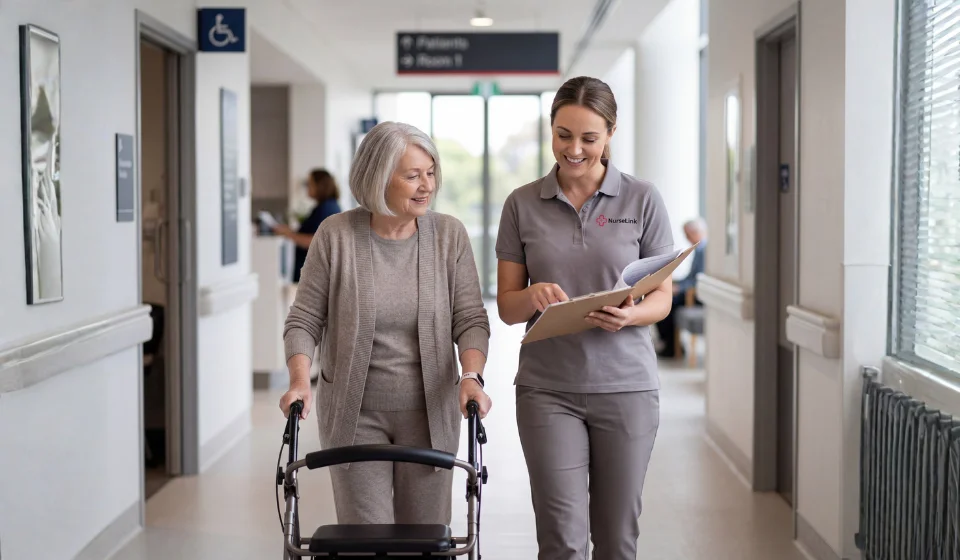
More Than A Ride Home
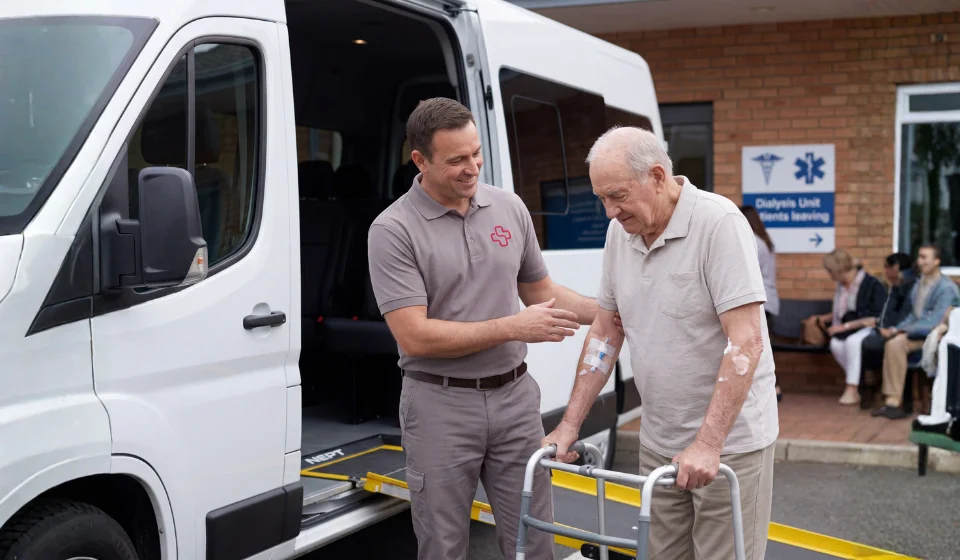
Every Trip Counted
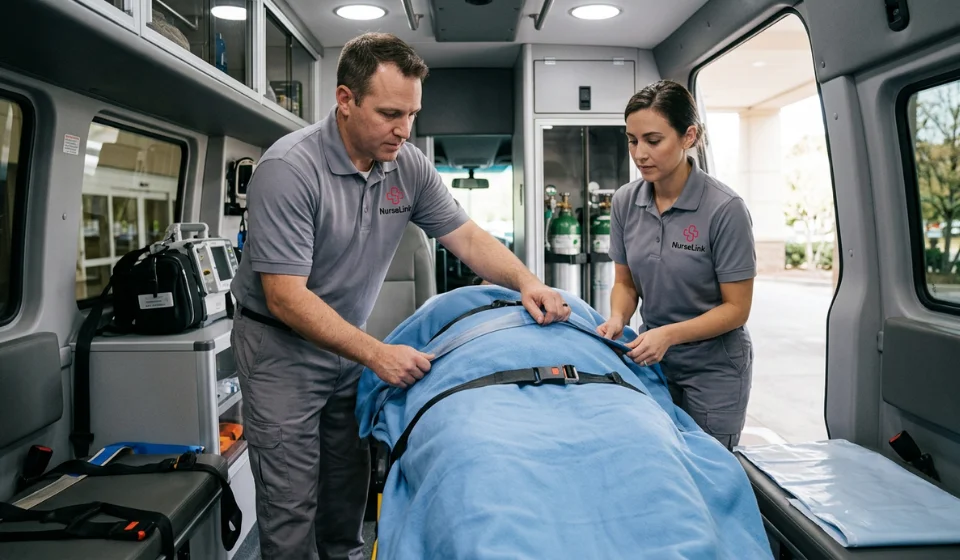
The Right Equipment. The Right Team. The Right Outcome.
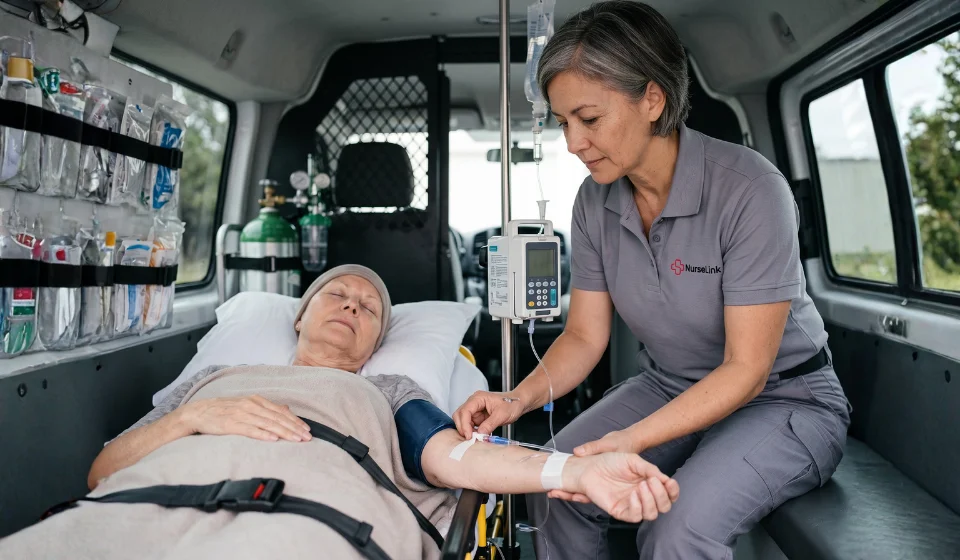
Maintaining Treatment Continuity During Cancer Care
Safe Non-Emergency Patient Transport
Ensuring Safe & Consistent Medical Access
A Safe Journey Home After Surgery