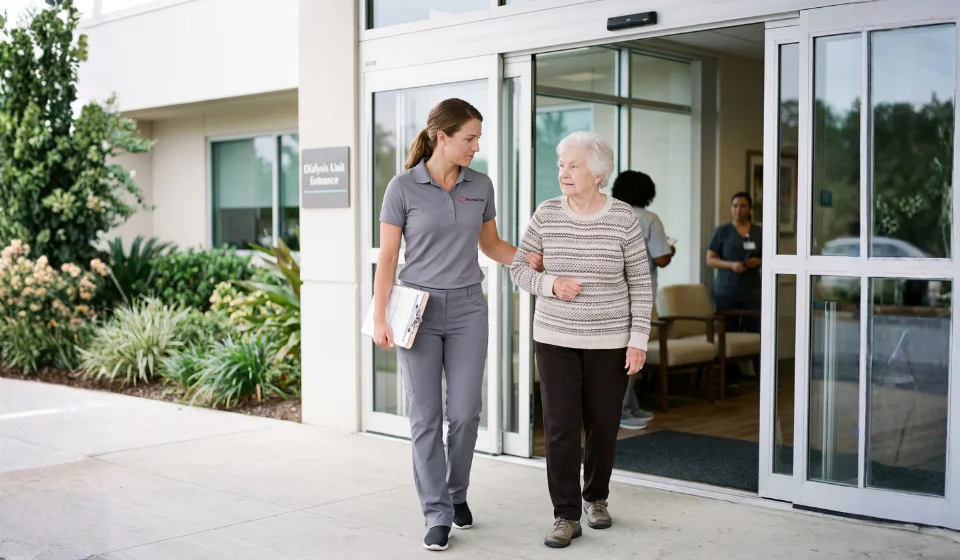
Getting Him There, Getting Him Home, Getting Him Through
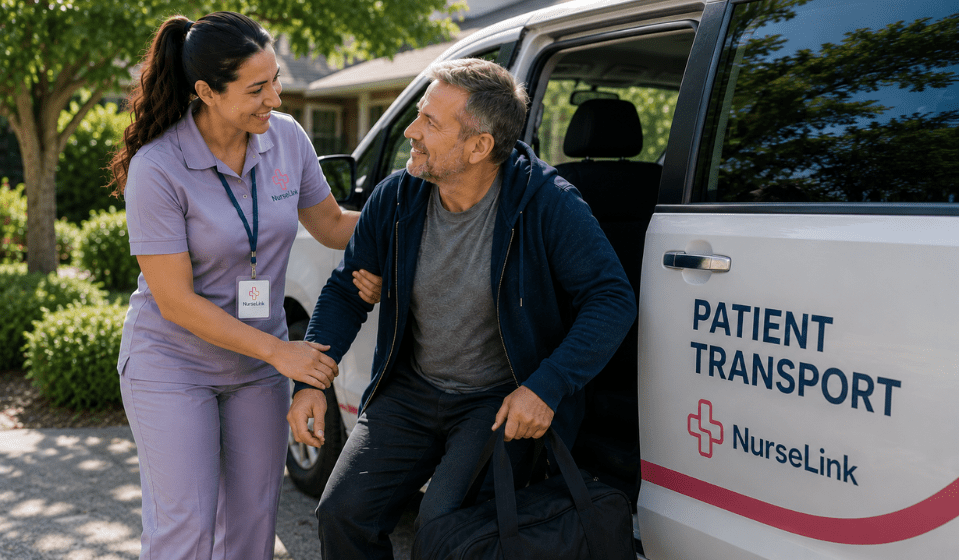
How NurseLink Supported A Patient To Keep Working Through Months Of Chemotherapy
A Case Study In Patient Transport That Protected A Career, A Family Budget & A Man's Sense Of Himself
Introduction
Chemotherapy takes something from a person well beyond the disease it is treating. It takes energy, in a way that is difficult to fully anticipate until it has happened. It takes reliability, because a person who feels reasonably capable on a Monday cannot always predict how depleted a Thursday treatment will leave him. And for a patient who is still trying, understandably and often out of financial necessity as much as personal identity, to keep working through treatment, it takes something else too: the margin that used to exist between managing an illness and managing a job, a margin that chemotherapy tends to close almost entirely.
Getting to and from treatment is, for many patients, a bigger practical obstacle than people outside the experience tend to appreciate. Driving after chemotherapy is frequently unsafe or simply impossible, given the nausea, fatigue and occasional disorientation that many regimens cause. Public transport, even when technically available, can be a genuinely difficult undertaking for someone who has just spent hours receiving treatment that has left him drained in ways that are hard to predict from session to session. For a man trying to hold a job together at the same time, the transport problem is not a side issue. It sits close to the centre of whether the whole arrangement, treatment and work and everything else, can actually be sustained.
This case study documents how NurseLink Healthcare provided non-emergency patient transport for a man in his early fifties in Melbourne, undergoing several months of chemotherapy while continuing to work, and how reliable, well-timed transport became one of the quiet but essential pieces that let him keep both his treatment and his job on track.
To protect the privacy of the client, all names and identifying details have been kept confidential throughout this case study.
The Client & His Situation
The client is a man in his early fifties, married with two teenage children, working as a project manager for a mid-sized construction firm in Melbourne’s outer east. He had been diagnosed with cancer following a period of vague but persistent symptoms that had eventually prompted investigation, and had begun a chemotherapy regimen scheduled across several months, with treatment sessions occurring every second week at a hospital some distance from both his home and his workplace.
He had made an early and deliberate decision, discussed carefully with his oncologist and his family, to continue working through as much of his treatment as he reasonably could. This was partly financial, given that his income was a significant part of the family’s budget and his sick leave entitlements would not comfortably stretch across the full length of treatment. But it was, by his own account, just as much about identity and normalcy. He did not want cancer to be the only thing defining his days, and continuing to work, in whatever modified form his energy allowed, felt to him like holding onto a piece of the life he intended to keep once treatment was over.
The practical difficulty was transport. His treatment sessions left him, without exception, unfit to drive for the remainder of that day and often into the following one, given the nausea and fatigue that hit hardest in the hours after each infusion. His wife worked full time herself and could not reliably take time off every second week without it becoming, over the length of treatment, a serious problem for her own job. His children were too young to drive. Public transport, even setting aside how unwell he generally felt after treatment, involved a route and a duration that his oncologist advised strongly against given his post-treatment condition.
He had managed the first couple of sessions through a combination of his wife taking leave and a colleague offering a lift, arrangements that both parties made clear, kindly but honestly, were not sustainable across the full length of his treatment. His oncology social worker, aware of the pattern developing, suggested NurseLink Healthcare’s non-emergency patient transport service as a way of resolving the problem properly rather than patching it together session by session.
Understanding What He Actually Needed
The initial conversation between NurseLink Healthcare and the client focused, as much as anything, on the practical rhythm his work and treatment schedule required, because it became clear early in the conversation that a generic transport arrangement would not adequately serve a man trying to hold a full-time job together around his treatment.
He needed transport to his treatment sessions timed precisely enough that he could attend a partial morning at work beforehand on the days his energy allowed, without cutting it close enough to arrive at the hospital rushed or stressed. He needed, just as importantly, reliable transport home afterwards, at a time that could not always be predicted precisely in advance given that infusion duration sometimes varied session to session, which meant the transport arrangement needed to accommodate some flexibility around pickup timing without becoming unreliable as a result.
He also needed, though he raised it almost apologetically, a driver who understood that he generally did not feel like talking much on the way home, given how unwell the sessions frequently left him, while being perfectly happy to chat on the way in, when his energy was usually still reasonably intact. This asymmetry, a sociable outward journey and a quiet, undemanding return journey, became one of the more specific and important details the care coordinator noted from the initial assessment.
His wife, present for part of the conversation, added that her biggest concern was simply knowing, reliably, that he had arrived safely and been collected safely, given how depleted he sometimes was by the end of a session and how much easier her own workday became if she was not managing background anxiety about whether the transport arrangement would hold.
The NurseLink Healthcare Solution
A Transport Officer Matched To The Rhythm Of His Treatment & His Work
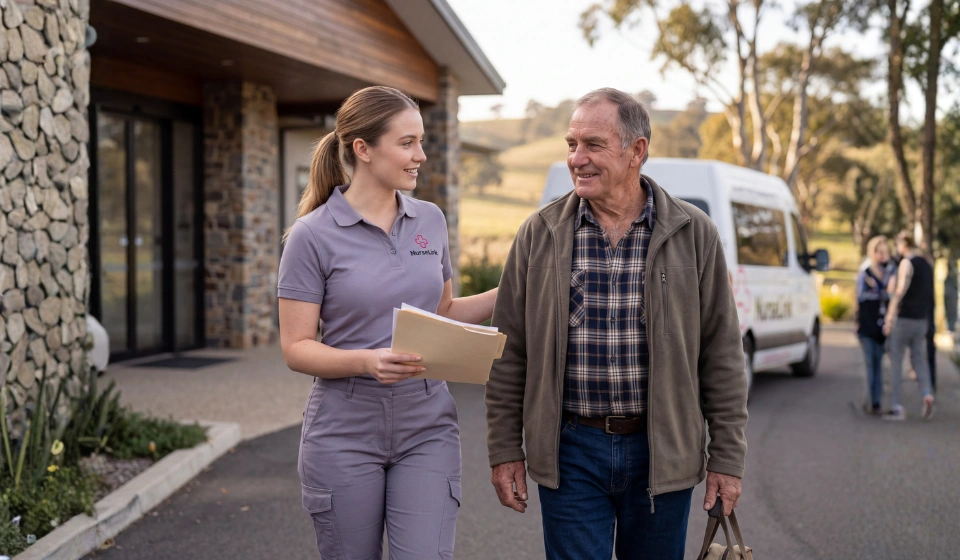
NurseLink Healthcare assigned a transport officer with experience in oncology patient transport, chosen for a manner that could comfortably shift between friendly conversation on good days and quiet, undemanding companionship on harder ones, reading the client’s state accurately at each pickup rather than defaulting to a fixed approach regardless of how he was actually feeling.
Before the arrangement began, the transport officer was briefed thoroughly on his schedule, his stated preferences about conversation on the way home, and the broader context of a man trying to hold his job together around a demanding treatment regimen, so that punctuality on both legs of each journey was understood as something that mattered well beyond simple convenience.
Getting Him There On Time, Without Rushing His Mornings
On the days his energy allowed a partial morning at work, the transport officer coordinated pickup times that let him leave his workplace with enough margin to arrive at the hospital settled rather than flustered, adjusting slightly session to session based on brief check-in messages about how his morning was going. This flexibility, built around his actual capacity on any given day rather than a fixed assumption, meant he was able to preserve a meaningful part of his working pattern across the length of treatment rather than abandoning mornings at work altogether out of transport uncertainty.
Reading The Room On The Way Home
The transport officer became, across the length of the engagement, genuinely skilled at gauging his state at each afternoon pickup and adjusting accordingly. On the sessions that left him particularly unwell, she kept the drive home quiet, offering only the practical reassurances he needed and otherwise letting him rest in silence. On sessions that had gone more easily, she was happy to talk, picking up threads from earlier conversations about his children’s school activities or a renovation project he was slowly working through at home, conversations he later said he genuinely valued on the days he had the energy for them.
Reliable, Consistent Communication With His Wife
A simple message was sent to his wife when he had been collected from each session and again once he had arrived home, giving her the reassurance she had asked for without requiring her to manage the logistics herself or take time away from her own work to check in. This small, consistent routine meant she was able to focus on her own job with confidence that her husband’s transport, and by extension a meaningful part of his wellbeing during treatment, was being properly managed.
Adjusting As His Treatment Progressed
As the months of treatment progressed and the cumulative fatigue of chemotherapy began to affect him more heavily in the later sessions, the arrangement adjusted accordingly, with fewer attempts at a partial workday beforehand and longer, quieter journeys home as his resilience after each session diminished somewhat over time. The transport officer’s familiarity with his pattern by this stage meant these adjustments happened naturally, without requiring a formal renegotiation of the arrangement each time his needs shifted.
Outcomes & Impact
He Completed His Full Treatment Course On Schedule
Across the several months of his chemotherapy regimen, he did not miss or need to reschedule a single treatment session due to transport difficulties, a consistency his oncology team identified as a meaningfully positive factor in his ability to complete the prescribed course without the delays or gaps that transport-related disruptions can sometimes cause.
He Kept His Job Through Treatment
He was able to maintain his employment throughout the full length of treatment, including a genuine, if reduced, working pattern for much of the course, an outcome that mattered enormously to him both financially and personally. His employer, kept appropriately informed of his general capacity by the client himself, was able to support a workable arrangement precisely because his attendance pattern, while reduced, remained reliable and predictable rather than chaotic.
His Wife's Own Working Life Was Protected
Because the transport arrangement removed the need for his wife to take regular leave to manage his sessions, her own job and income remained stable across a period that would otherwise have placed significant strain on both her career and the family’s finances. She described this, at a review conversation partway through his treatment, as one of the more practically significant outcomes of the whole arrangement, even though it was not the one most visibly connected to his cancer care.
He Retained A Sense Of Normalcy Through A Difficult Period
Perhaps the outcome that mattered most to him personally was the least measurable one. Being able to continue working, even in a reduced form, and being transported by someone who understood and respected the different moods each journey required, gave him a sense of continued agency and normalcy through a period that could easily have felt entirely defined by illness. He described this, toward the end of his treatment course, as something he had not expected transport arrangements to be able to provide, and something he had come to value considerably.
A Reflection From The Client
Near the end of his treatment course, he shared the following with the NurseLink Healthcare care coordinator:
“I did not want cancer to take my job as well as everything else it was already taking. The transport NurseLink arranged is a big part of why it did not. My driver knew when I wanted to talk about my kids and when I just needed to sit quietly with my eyes closed, and she got that right almost every single time without me having to explain it. My wife kept her own job. I kept mine, mostly. I finished every single round of treatment on the day it was supposed to happen. It sounds like a small thing to be grateful for, reliable transport, but when you are that depleted, reliable is everything.”
Key Takeaways From This Case Study
Transport reliability directly affects treatment completion. Patients undergoing demanding regimens like chemotherapy depend on consistent transport to avoid missed or rescheduled sessions, and disruptions to that consistency can meaningfully affect treatment continuity.
Patient transport needs to flex around a working patient’s actual daily capacity, not a fixed schedule. Coordinating pickup times around a client’s genuine energy levels, rather than a rigid assumption, allowed this client to preserve a meaningful working pattern across his treatment course.
Reading a patient’s state accurately matters as much as punctuality. A transport officer who adjusted her approach, conversational or quiet, based on how a client was actually feeling after each session provided a form of care that went well beyond simple logistics.
Supporting a patient’s family is part of supporting the patient. Reliable communication that reassured his wife protected her own working life and reduced the family’s overall strain during an already difficult period, illustrating how patient transport ripples outward to the wider household.
Continuity of transport staff builds the kind of familiarity that improves care. A consistent transport officer who came to understand this client’s patterns and preferences over months of sessions delivered a materially better experience than an unfamiliar driver would have been able to provide at each session.
Conclusion
Chemotherapy asks a great deal of a patient, and for those trying to hold a job and a family routine together alongside it, reliable transport is not a peripheral convenience. It is part of what makes the whole arrangement sustainable. For the man at the centre of this case study, NurseLink Healthcare provided transport that got him to treatment on time, home again with the right kind of company for how he was actually feeling, and gave both him and his wife the stability that let the rest of their working lives continue through a genuinely difficult period.
He completed his full treatment course without a single missed session. He kept his job. And he is, cancer treatment behind him, getting on with the renovation project he spent a good many quiet drives home thinking about.
If you or someone you love is managing ongoing cancer treatment and transport is one more thing standing in the way, we encourage you to reach out to the NurseLink Healthcare team. We are here to make sure getting there and back is never the reason treatment, or the rest of life alongside it, does not go as planned.
Latest Post
Getting Him Home, Then Getting Him Better
Getting Him There, Getting Him Home, Getting Him Through

When Getting To Care Is Part Of The Challenge

Getting There Made The Difference
Showing Up For Someone Nobody Else Was Showing Up For
Getting There Safely
Every Appointment, Every Time
One More Day With Her Family
The Journey Home

The First Step Out The Door
Every Tuesday & Thursday

Bridging The Gap To Treatment
More Than A Ride Home
Every Trip Counted
The Right Equipment. The Right Team. The Right Outcome.
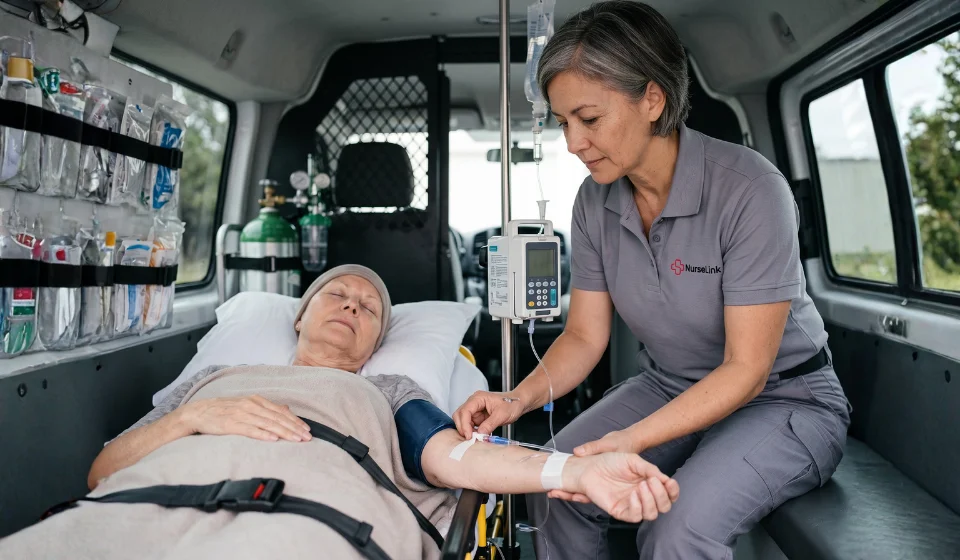
Maintaining Treatment Continuity During Cancer Care
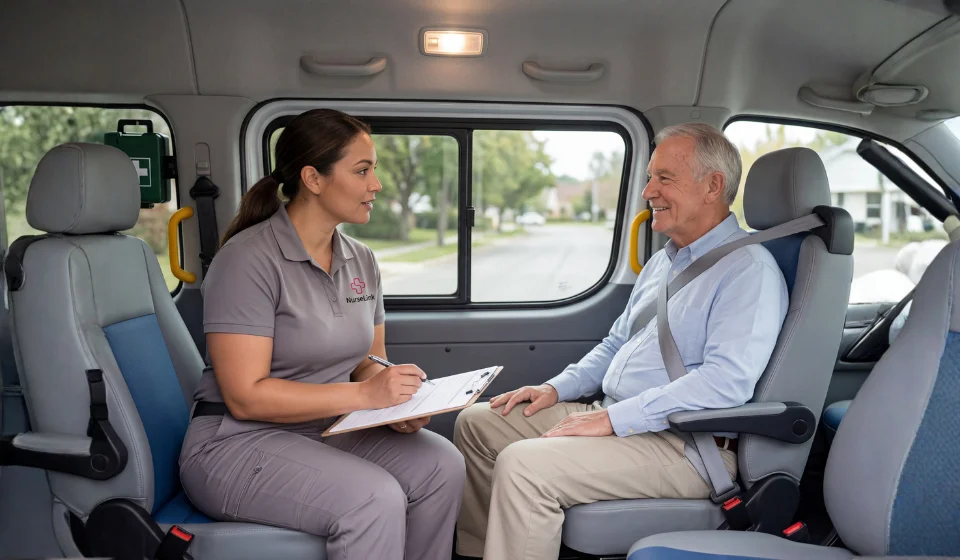
Safe Non-Emergency Patient Transport
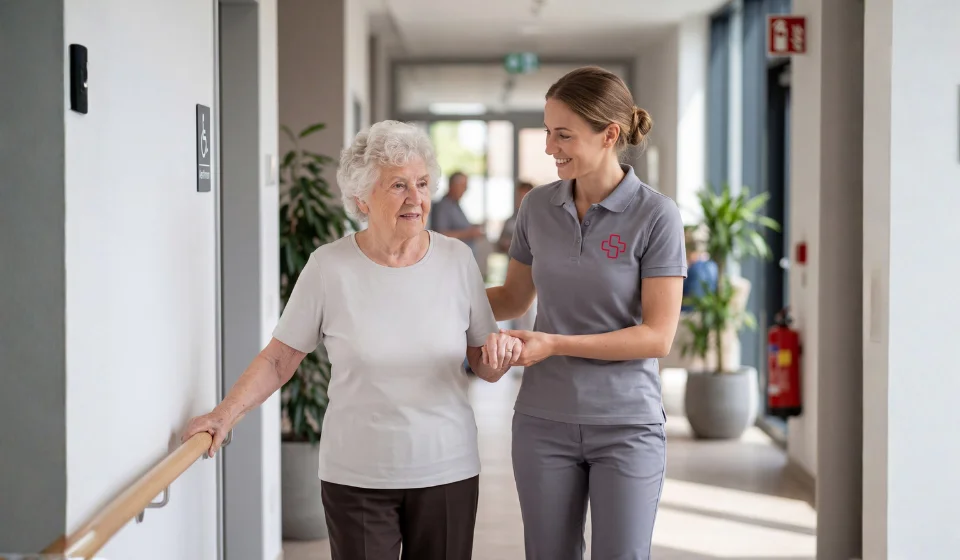
Ensuring Safe & Consistent Medical Access
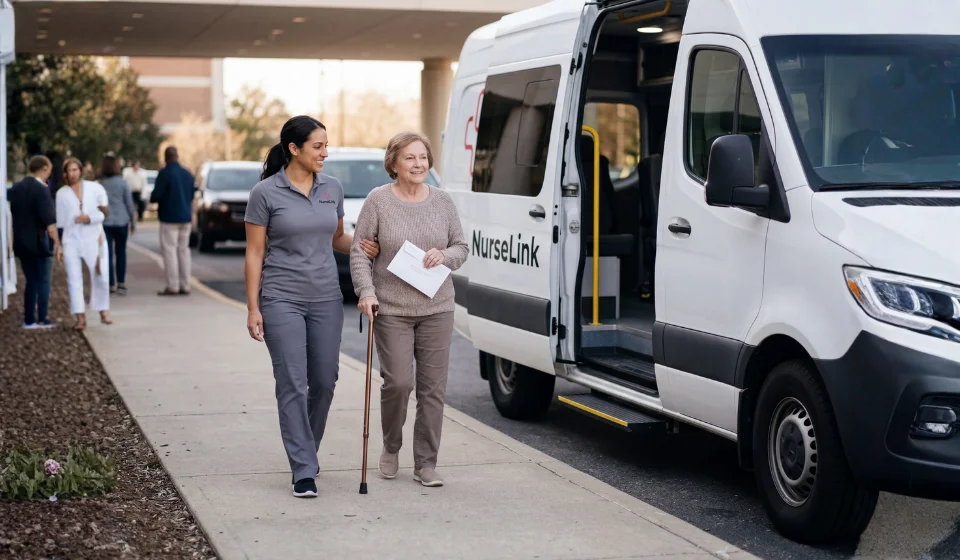
A Safe Journey Home After Surgery