Getting Him Home, Then Getting Him Better
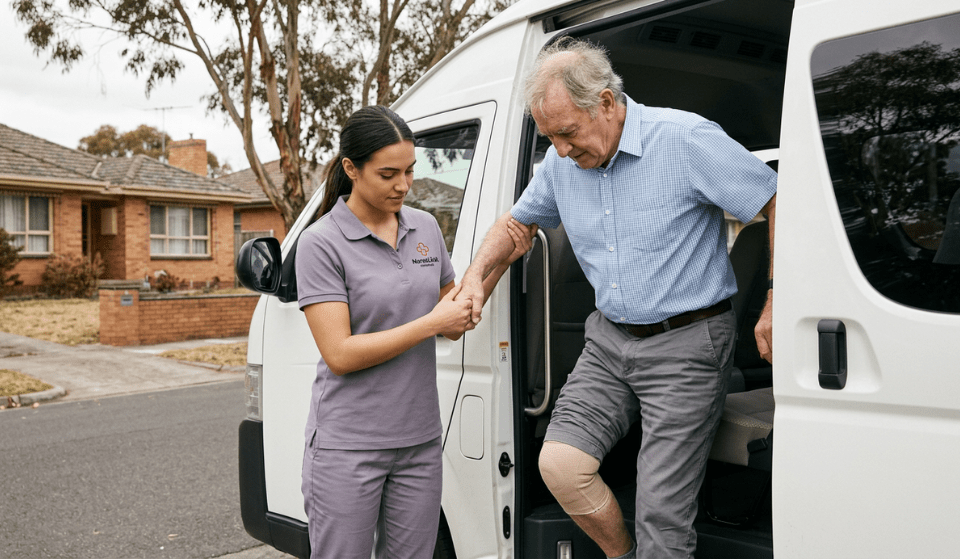
How NurseLink Supported A Melbourne Man's Full Recovery From Knee Replacement Surgery, One Appointment At A Time
A Case Study In Discharge & Follow-Up Transport That Let A Recovery Actually Happen
Introduction
The period immediately following major joint replacement surgery is one of the more transport-intensive phases of an otherwise routine recovery, and it is also, for a certain kind of patient, one of the most poorly planned for. Hospitals are, understandably, focused on the surgery and the immediate post-operative care. Discharge planning tends to assume, often correctly but not always, that a patient will have someone available to collect him, to drive him to the string of follow-up appointments that a hip or knee replacement requires in the following weeks, physiotherapy, surgical review, wound checks, and to do so safely, given that a patient in the early weeks of recovery from major joint surgery is, in a great many cases, not supposed to be driving himself at all.
For a patient whose spouse cannot drive, whether through her own health limitations, never having held a licence, or simply age and circumstance, this assumption breaks down immediately and completely. The surgery itself might go perfectly. The rehabilitation protocol might be exactly right. But if the patient cannot reliably get to the appointments that protocol depends on, the recovery it is designed to produce does not fully happen, and the gap between a successful operation and a successful recovery becomes, quietly, a transport problem rather than a medical one.
This case study documents how NurseLink Healthcare supported a man in his late seventies in Melbourne through his discharge home and the full sequence of follow-up appointments required after a total knee replacement, after it became clear that his wife, who did not drive, would not be able to provide the transport his recovery protocol required.
To protect the privacy of the client and his family, all names and identifying details have been kept confidential throughout this case study.
The Client & His Situation
The client is a man in his late seventies living with his wife in Melbourne’s eastern suburbs, a retired accountant who had spent much of the previous two years managing worsening osteoarthritis in his right knee, a condition that had gradually curtailed activities he had once enjoyed without a second thought, gardening, his weekly walk with a group of friends from his old workplace, simply moving comfortably around his own home. His orthopaedic surgeon had recommended a total knee replacement, a procedure he had approached, by his own account, with more relief than apprehension, given how significantly the condition had already narrowed his daily life.
His wife, several years younger than him, had never held a driver’s licence, a fact of their fifty-year marriage that had rarely caused any real difficulty given that he had always been the one who drove, and given that their needs, day to day, rarely required transport she could not arrange through him or, occasionally, through their son who lived across the city. But a knee replacement recovery protocol is transport-intensive in a way that ordinary daily life is not. His surgeon’s post-operative plan included regular physiotherapy sessions in the early weeks, a surgical review appointment, and a wound check, all requiring transport at a point in his recovery when he was explicitly advised not to drive himself, given both the physical limitations of the healing knee and the lingering effects of the pain medication he was managing in the early weeks.
Their son, keen to help but managing a demanding job and a young family of his own across the city, could not reliably provide the volume of transport the recovery schedule required without it becoming, across several weeks, a genuine strain on his own work and family commitments. The hospital’s discharge planner, reviewing the family’s situation ahead of his surgery, flagged the transport gap early and suggested the family arrange non-emergency patient transport for both his discharge home and his subsequent appointments, rather than leaving the family to patch together an arrangement that was unlikely to hold across the full recovery period.
Understanding What He Actually Needed
The initial conversation between NurseLink Healthcare and the family, arranged ahead of his surgery so the transport arrangement would be ready from the moment of discharge, focused on both the practical schedule his recovery would require and the specific comfort needs of a patient in the early stages of joint replacement recovery.
He needed transport home from hospital on the day of his discharge, in a vehicle and with a driver attentive to the particular discomfort of a freshly operated knee during transfers and the journey itself, avoiding the abrupt movements and rough handling that could genuinely set back an early recovery. He then needed reliable transport to each of the follow-up appointments his surgeon’s protocol required over the following weeks, physiotherapy sessions initially twice weekly, tapering as his recovery progressed, along with his surgical review and wound check appointments, all scheduled with enough consistency that his rehabilitation could proceed exactly as prescribed rather than around the limitations of an improvised transport arrangement.
He was, by his own description, not a particularly demanding patient in terms of what he expected from the arrangement, but he was clear about two things. He wanted the transport officer to understand and respect the physical care his knee required during transfers in and out of the vehicle, given how genuinely painful an careless movement could be in the early weeks. And he wanted his wife kept properly informed of his appointments and his return times, given that she would, on most occasions, be at home managing her own day without him and without the ability to simply check on his whereabouts herself.
His wife, present for the initial conversation, added that she needed the arrangement to be something she did not have to actively manage or worry about, given that organising and monitoring transport was not a role she had ever had within their marriage and one she did not feel confident stepping into under the added pressure of her husband’s recovery.
The NurseLink Healthcare Solution
Careful, Well-Timed Discharge Transport
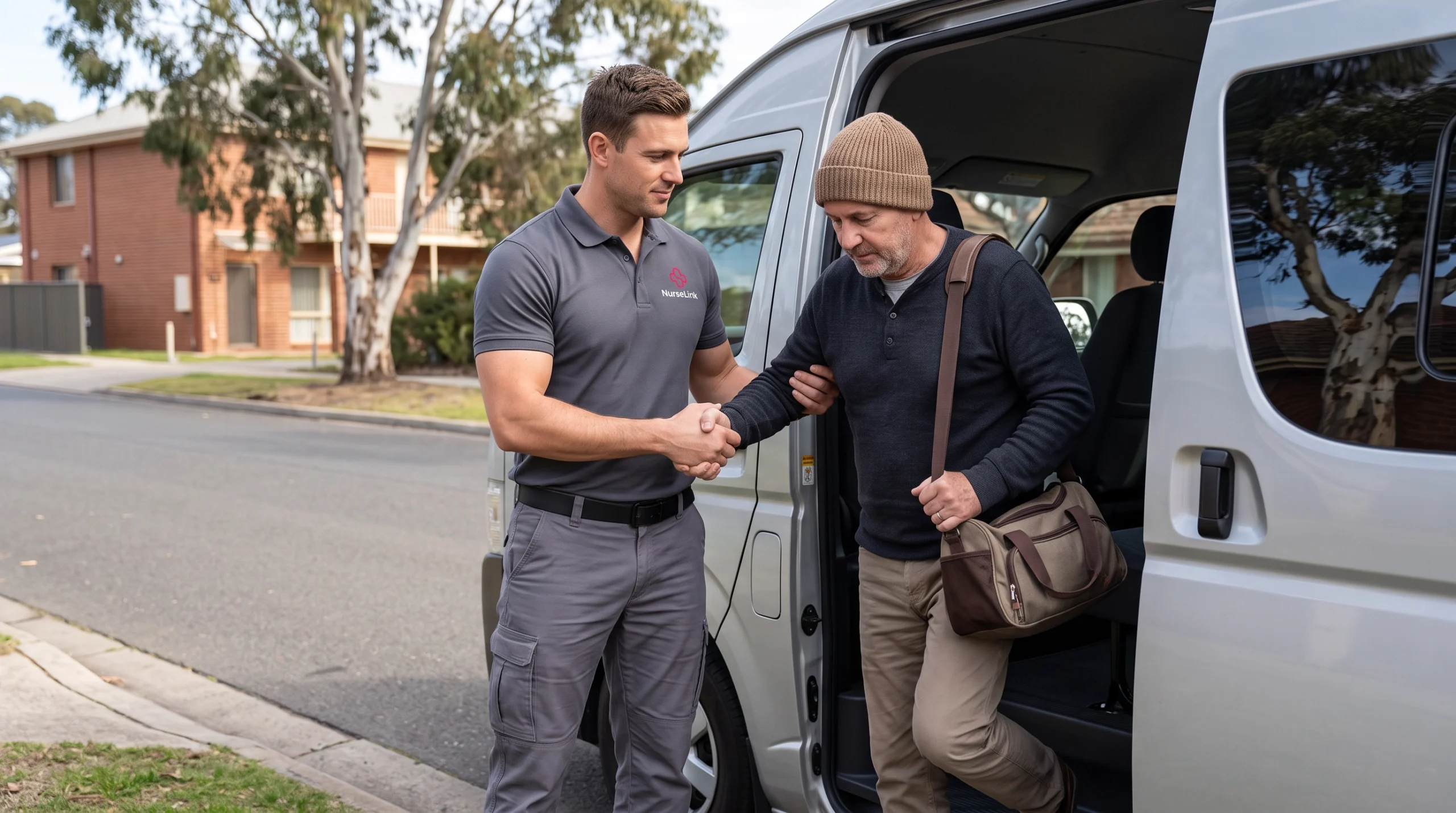
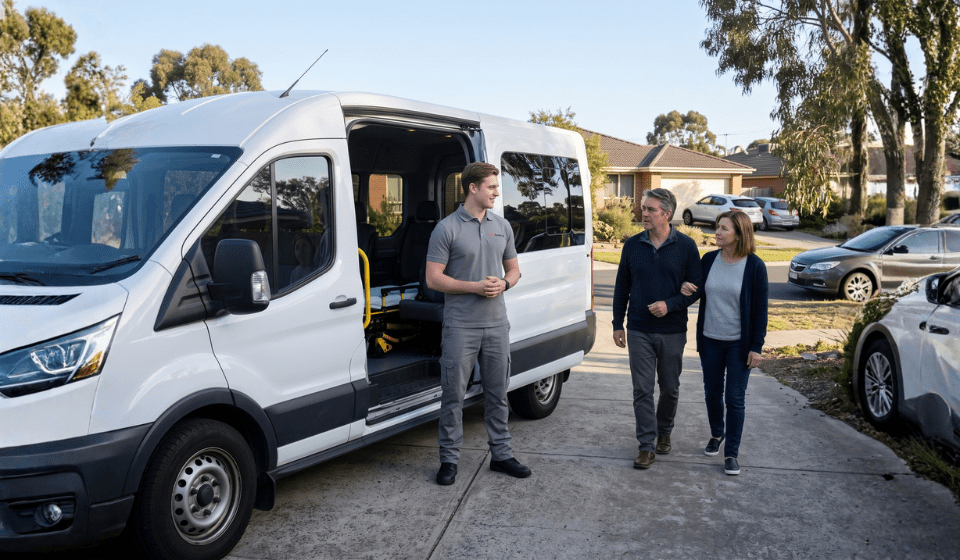
NurseLink Healthcare coordinated directly with the hospital’s discharge planning team to arrange his transport home on the day of discharge, with the transport officer briefed in advance on his surgery, his mobility limitations in the immediate post-operative period and the specific care required during transfers, given how vulnerable a freshly operated knee is to careless movement. The transport officer managed his transfer into the vehicle patiently and carefully, adjusted the seating position to accommodate his knee comfortably for the journey, and drove with particular attention to smoothness, avoiding the abrupt braking and sharp turns that could have caused him genuine pain or risked his surgical site during the journey home.
A Consistent Transport Officer Across The Full Recovery Schedule
Rather than varying drivers across his sequence of follow-up appointments, NurseLink Healthcare assigned the same transport officer to the full course of his recovery transport wherever rostering allowed, a deliberate choice that meant he did not need to re-explain his situation and comfort requirements at each appointment, and that built, across the weeks of the arrangement, a familiarity and trust that made each journey progressively easier for him.
Attentive, Comfortable Transport To Every Physiotherapy And Review Appointment
Across the following weeks, the transport officer collected him reliably for each physiotherapy session, his surgical review and his wound check, timed precisely enough that he arrived with adequate time to settle before each appointment without the discomfort of rushing on a still-healing knee. The transport officer remained attentive to his physical comfort at each stage of the journey, adjusting the level of assistance he offered as the client’s mobility genuinely improved across the weeks, providing more support in the earliest appointments and gradually stepping back as his recovery progressed and he required less assistance with each transfer.
Genuine Conversation That Made The Recovery Period Less Isolating
Across the weeks of the engagement, the drives to and from his appointments became, by his own account, something he came to enjoy rather than simply endure. He and the transport officer discovered a shared interest in cricket, and their conversations across the recovery period ranged comfortably from the sport to his working life as an accountant to, as his recovery progressed and his spirits lifted alongside it, plans for returning to his gardening and his weekly walking group once his knee was fully healed. For a man whose recovery period had, out of medical necessity, considerably narrowed his usual social contact, these conversations became a small but genuinely valued part of his week.
Keeping His Wife Reliably Informed Without Requiring Her Involvement
A simple message was sent to his wife confirming his collection for each appointment and again when he was on his way home, an arrangement designed specifically so she did not need to actively manage or monitor the transport herself, addressing directly the concern she had raised in the initial conversation. This small, consistent routine let her follow his recovery progress comfortably from home, without the burden of coordination that neither she nor her husband wanted her to carry.
Outcomes & Impact
He Attended Every Appointment His Recovery Protocol Required
Across the full course of his post-surgical recovery, he did not miss a single physiotherapy session, surgical review or wound check appointment due to transport difficulties, allowing his rehabilitation to proceed exactly according to his surgeon’s prescribed protocol rather than being compromised by the gaps an improvised family arrangement might otherwise have introduced.
His Recovery Progressed On Schedule
His orthopaedic surgeon, reviewing his progress at the scheduled surgical review appointment, noted that his knee’s range of motion and overall recovery trajectory were tracking well against expected benchmarks, a result he attributed in part to the consistency of his physiotherapy attendance across the critical early weeks of rehabilitation.
His Wife Managed Her Own Days With Confidence
By removing the need for her to organise or monitor his transport herself, the arrangement let his wife manage her own daily routine without the added strain of a coordination role she had never held and did not want to take on under the pressure of his recovery. She described, at a review conversation partway through his recovery, feeling genuinely relieved that she could simply trust the arrangement was working, rather than needing to actively track or worry about it.
Their Son Was Freed From An Unsustainable Commitment
Their son, who had been genuinely willing but realistically limited in how much transport he could provide alongside his own job and young family, was able to remain involved in his father’s recovery in the ways that mattered most to him, visiting and supporting where he could, without carrying a transport commitment that would very likely have become unsustainable across the full length of the recovery period.
He Returned To The Life His Knee Had Been Taking From Him
By the end of his structured recovery period, he had returned to his weekly walking group with his former colleagues and had resumed light gardening, the two activities his worsening knee had gradually taken from him over the preceding two years. He described this return, at the conclusion of the engagement, as the outcome that had made the entire surgery and recovery process worthwhile.
A Reflection From The Client
Near the end of his structured recovery period, he shared the following with the NurseLink Healthcare care coordinator:
“My wife has never driven a day in her life, and after fifty years of marriage that has never once been a problem until I needed a new knee. NurseLink solved it completely, from the day I came home from hospital right through every single physio appointment after. My driver knew exactly how to help me in and out of the car without it hurting, and we talked cricket the whole way through most weeks, which made the whole recovery feel a lot less lonely than it might have otherwise. I am back walking with my old workmates and back in my garden. My knee is better. So, frankly, is my week, now that I have someone to argue with about the test series.”
Key Takeaways From This Case Study
Post-surgical recovery protocols are often more transport-intensive than families anticipate. The sequence of physiotherapy, review and wound check appointments required after major joint surgery represents a genuine and recurring transport burden that many families are not adequately prepared for at the point of discharge.
Careful physical handling during transport matters clinically in the early recovery period. Attentive, gentle transfers and smooth driving genuinely protect a healing surgical site and reduce unnecessary pain, making the manner of the transport a clinically relevant factor and not simply a matter of comfort.
Consistency of transport staff builds trust and eases repeated appointments. A single, familiar transport officer across a full recovery schedule reduces the friction and repeated explanation that a rotating roster of unfamiliar drivers would otherwise require.
Reliable transport protects family members from unsustainable commitments. Both the client’s wife, who could not drive, and his son, who had limited capacity, were protected from strain that an improvised family transport arrangement would very likely have placed on them across the full length of his recovery.
Genuine conversation during recovery transport reduces the isolation that a recovery period can bring. For a patient whose recovery has narrowed his usual social contact, a transport officer who builds real rapport provides a meaningful source of connection alongside the practical service being delivered.
Conclusion
A successful joint replacement depends on far more than a well-executed surgery. It depends on a rehabilitation protocol being followed exactly as prescribed, which depends, in turn, on a patient reliably reaching every appointment that protocol requires. For the man at the centre of this case study, NurseLink Healthcare provided discharge and follow-up transport that let his recovery proceed exactly as planned, protected his wife and son from an unsustainable transport burden, and gave him, across the weeks of his recovery, some genuinely enjoyable cricket conversation along the way.
He completed his full recovery schedule without a single missed appointment. He is back walking with his old workmates. And he is, by all accounts, back in his garden exactly where he wanted to be.
If you or someone you love is facing major surgery and transport for discharge and recovery appointments is a genuine concern, we encourage you to reach out to the NurseLink Healthcare team. We are here to make sure a successful surgery gets the successful recovery it deserves.
Latest Post
Getting Him Home, Then Getting Him Better
Getting Him There, Getting Him Home, Getting Him Through

When Getting To Care Is Part Of The Challenge
Getting There Made The Difference
Showing Up For Someone Nobody Else Was Showing Up For
Getting There Safely
Every Appointment, Every Time
One More Day With Her Family
The Journey Home
The First Step Out The Door
Every Tuesday & Thursday

Bridging The Gap To Treatment
More Than A Ride Home
Every Trip Counted
The Right Equipment. The Right Team. The Right Outcome.
Maintaining Treatment Continuity During Cancer Care
Safe Non-Emergency Patient Transport
Ensuring Safe & Consistent Medical Access
A Safe Journey Home After Surgery