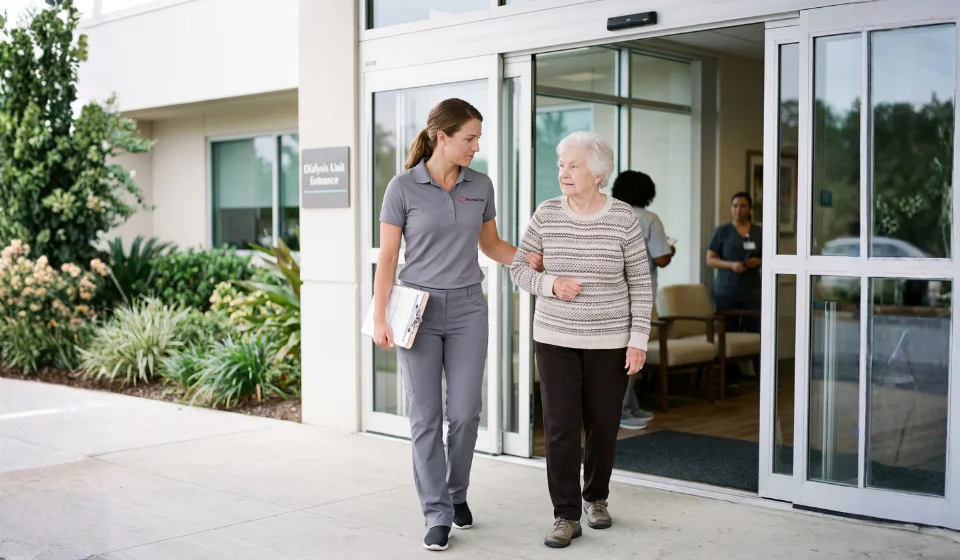
Bridging The Gap To Treatment

How NurseLink Connected a Rural Victorian Man To Essential Treatment
Introduction
A Real Example How NEPT Helped A Brain Tumour Patient Access Care
A brain tumour diagnosis changes everything in an instant. The conversation with the specialist, often delivered gently but unable to soften the weight of what is being said, sets in motion a treatment pathway that is frequently intensive, multidisciplinary and, for many Victorians, located a considerable distance from where they actually live.
For people in metropolitan Melbourne, the geography of treatment is manageable, even if everything else about the diagnosis is not. For people living in rural and regional Victoria, the geography itself can become one of the most significant barriers to receiving the care they urgently need. Radiotherapy courses that run daily for weeks. Scans that need to happen on specific timelines to track tumour response. Specialist reviews with neuro-oncology teams based at major Melbourne hospitals, often the only place in the state where that particular expertise exists.
When the person facing all of this is also dealing with the physical effects of the tumour itself, the cognitive changes it may be causing, the fatigue of treatment and the simple human reality of trying to process a diagnosis that has upended their life, the additional burden of arranging and managing transport for every single appointment can become the difference between a treatment plan that happens as scheduled and one that quietly starts to fall behind.
Non-emergency patient transport exists to remove exactly this barrier. At NurseLink Healthcare, we understand that for patients facing serious diagnoses, particularly those living outside metropolitan areas, reliable transport is not a peripheral consideration. It is often the thing that determines whether treatment happens at all.
This case study documents how our team supported a man in his forties, living in a rural area of Victoria, following a recent brain tumour diagnosis, after he had begun missing appointments at his treating hospital in Frankston due to the simple absence of a workable transport solution.
To protect the privacy of the client, all names and identifying details have been kept confidential throughout this case study.
The Client & His Situation
The client is a man in his early forties who lives in a small rural community in regional Victoria, several hours from Melbourne by car. He had worked for many years in agricultural machinery maintenance, a trade that suited a man who liked working with his hands and being outdoors, and he lived with his partner and their two children, both still in primary school, on a property a short distance from the town centre.
The symptoms that led to his diagnosis had developed gradually over several months. Headaches that he had put down to stress and poor sleep. Some changes in his vision that he had mentioned to his partner but had not thought urgent enough to act on immediately. A few episodes of unusual confusion that had frightened his partner more than they had frightened him, because he had not fully registered, in the moment, that anything unusual was happening at all.
When he eventually saw his local GP, the referral for imaging was made quickly, and the scan results led to an urgent referral to a specialist team based in Melbourne. The diagnosis, a brain tumour requiring a course of radiotherapy alongside ongoing monitoring and specialist review, was confirmed not long after, at a hospital in Frankston with the neuro-oncology expertise his condition required.
The treatment plan that followed was significant. A course of radiotherapy delivered over several weeks, requiring attendance on most weekdays during that period. Regular MRI scans to monitor the tumour’s response to treatment. And ongoing specialist reviews with the neuro-oncology team, scheduled at intervals throughout his treatment and continuing well beyond it.
For a man living several hours from Frankston, with two young children, a partner who also worked, and a body that was simultaneously dealing with the tumour itself and the effects of radiotherapy, the practical question of how he was actually going to get to all of these appointments had not been part of the conversation when the treatment plan was first explained to him. It became, very quickly, one of the most pressing questions in his life.
The Problem That Was Quietly Derailing His Treatment
In the first weeks following his diagnosis, the family had managed transport themselves. His partner had driven him to Frankston for his initial appointments, a round trip that consumed most of a day each time, on top of needing to arrange care for their children and, increasingly, manage her own work commitments around these absences.
Once the radiotherapy course began, requiring attendance on consecutive weekdays for several weeks, this arrangement became unsustainable almost immediately. His partner could not take that much time away from work without jeopardising her own employment, something the family could not afford given the financial pressure his diagnosis was already placing on them. Other family members and friends in the area offered to help where they could, but a daily commitment of this scale, for weeks on end, was simply beyond what informal support from a rural community, however willing, could realistically sustain.
Within the first two weeks of his radiotherapy course, he missed three scheduled sessions. Not because he did not want to attend, and not because his condition prevented it, but because, on those particular days, there had simply been no one available to drive him the several hours each way, and he had no other means of getting there.
His treating team at the hospital flagged the missed sessions with concern. Radiotherapy courses for brain tumours are planned with specific timing in mind, and gaps in the schedule are not simply rescheduled without consequence. The treatment’s effectiveness depends, in part, on the course being delivered as planned. A social worker attached to his treating team, recognising that the issue was logistical rather than clinical, made contact with him to understand what was happening, and it was through that conversation that NurseLink Healthcare’s non-emergency patient transport service was identified as a potential solution.
Understanding What He Actually Needed
The initial conversation between NurseLink Healthcare and the client, and separately with his partner, made clear that this was not a situation that could be solved with an occasional or ad hoc transport booking. What was needed was a structured, ongoing transport arrangement that could reliably cover the remaining weeks of his radiotherapy course, his upcoming scans, and his specialist review appointments, scheduled well in advance and delivered with complete consistency, for a man who was already managing more than enough.
He was honest, in that first conversation, about how the previous weeks had affected him. He had felt, on the days he missed treatment, a particular kind of helplessness that went beyond the practical inconvenience. He was facing a serious diagnosis, doing everything that was being asked of him, and was still falling behind through no fault of his own. That feeling, he said, had been almost harder to sit with than the diagnosis itself.
What he needed, in practical terms, was transport that would be there, every single time, for a journey of several hours each way, scheduled around appointment times that the hospital had set and that he had no flexibility to change. He needed the journey itself to be manageable, given that radiotherapy often left him fatigued and occasionally nauseated, particularly as the course progressed. And he needed, given the length of the round trip, for the logistics of the day, including the timing of his appointment and the return journey, to be planned sensibly so that an already long day did not become an exhausting one.
His partner’s primary need was simpler to state but no less important. She needed to know that he was safe, that he would get there, and that she could go to work without carrying the weight of wondering whether today would be another missed session.
NurseLink Healthcare built the transport arrangement around exactly this.
The NurseLink Healthcare Solution
A Structured Schedule Built Around His Treatment Plan
NurseLink Healthcare worked directly with the client and, with his consent, with his treating team at the hospital, to map out the full remaining schedule of his radiotherapy course in advance. Rather than managing transport on a session by session basis, which would have left him facing the same uncertainty each week, NurseLink Healthcare established a standing transport arrangement that covered every remaining weekday session for the duration of his radiotherapy course, locked in from the outset.
This meant that from the point NurseLink Healthcare’s involvement began, he knew, with certainty, exactly how he was getting to every remaining radiotherapy appointment for the rest of his course. The uncertainty that had defined the previous two weeks, and the missed sessions that had resulted from it, simply stopped being a factor.
A Long Journey Made Manageable
A round trip of several hours is a significant undertaking for anyone, and for a man undergoing daily radiotherapy for a brain tumour, the cumulative toll of that journey, repeated day after day, required genuine consideration. NurseLink Healthcare’s transport officers approached each journey with an awareness of how he was likely to be feeling, particularly as the radiotherapy course progressed and fatigue became more pronounced.
Departure times were planned to allow him to arrive at the hospital with time to settle before his appointment, rather than rushing in at the last minute. The return journey accounted for the fact that radiotherapy sessions, while often relatively brief in themselves, could leave him needing rest immediately afterward, and the vehicle environment on the return trip was managed accordingly, calm, quiet, with stops included where needed for him to stretch or rest during the longer return journey.
The Same Transport Officer, Wherever Possible
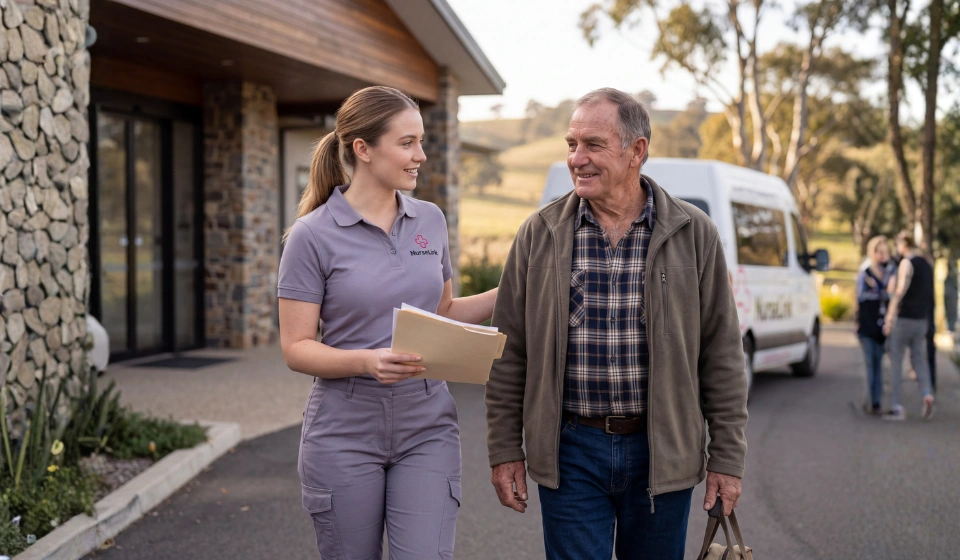
Recognising that he would be making this journey repeatedly over several weeks, NurseLink Healthcare prioritised consistency in who was driving him. The same transport officer was rostered for the majority of his radiotherapy sessions, meaning that over the course of his treatment, the daily journey became something he did not have to brace for or explain himself to anew each time. His transport officer came to understand how he was likely to be feeling on a given day, what conversation he wanted or did not want, and the particular rhythm that a several hour round trip, repeated daily, settles into when the same two people are making it together.
For a man whose life had been upended by his diagnosis, and who was now spending more hours in transit each week than he had ever anticipated, this consistency became, in its own quiet way, one of the more stable elements of an otherwise disorienting period.
Coordination Beyond Radiotherapy
NurseLink Healthcare’s involvement did not end with the radiotherapy course. As his treatment plan moved into its ongoing phase, including scheduled MRI scans to monitor his tumour’s response and specialist reviews with his neuro-oncology team, NurseLink Healthcare continued to provide transport for each of these appointments, coordinated well in advance around the dates provided by the hospital.
This meant that as his treatment pathway evolved, from intensive daily radiotherapy to a pattern of periodic scans and reviews, the transport arrangement evolved with it, without him needing to renegotiate or re-establish the arrangement each time his appointment schedule changed. NurseLink Healthcare simply continued to be there, for whatever the treatment plan required next.
Keeping His Family Informed
Throughout the engagement, NurseLink Healthcare maintained communication with his partner regarding the transport schedule, confirming bookings in advance and providing updates if any aspect of a journey needed to be adjusted. This meant she always knew what each day looked like for him, without needing to manage the logistics herself on top of everything else she was carrying.
Outcomes & Impact
He Completed His Radiotherapy Course Without Further Missed Sessions
From the point NurseLink Healthcare’s transport arrangement began, he did not miss another scheduled radiotherapy session. The course was completed as planned, on the timeline his treating team had set, without the gaps that had marked its earliest weeks. For a treatment where timing and completeness matter clinically, this outcome was significant in ways that went well beyond logistics.
His Treatment Continued On Schedule
The scans and specialist reviews that followed his radiotherapy course took place as scheduled, with transport arranged well in advance for each. His treating team, who had flagged concern about the early missed sessions, had no further cause for concern regarding his attendance throughout the remainder of his treatment pathway.
He Was Able To Focus On His Treatment, Not The Logistics Of Getting There
Perhaps the most significant outcome, from his own perspective, was the shift in what he had to think about. In the weeks before NurseLink Healthcare’s involvement, a meaningful portion of his mental energy, energy that was already in short supply given everything he was facing, had been consumed by the logistics of transport, the guilt of missed sessions and the worry of what the next appointment would require. Once the transport arrangement was in place, that entire category of concern was simply removed. He could direct what energy he had toward his treatment, his recovery and his family.
His Family Found Some Stability In A Genuinely Difficult Time
His partner, in a conversation with the NurseLink Healthcare care coordinator partway through his radiotherapy course, described the transport arrangement as the first thing, since his diagnosis, that had simply worked without her having to manage it. In a period defined by uncertainty on almost every front, that reliability mattered more than she had expected it to.
A Reflection From The Client
Reflecting on the experience, the client shared the following with the NurseLink Healthcare care coordinator:
“When you get told you have a brain tumour, you think the hard part is going to be the treatment, the radiotherapy, all of that. And it is hard. But for those first couple of weeks, the hardest part was actually just getting there. Missing those sessions made me feel like I was failing at the one thing I was supposed to be able to do, which was just show up. NurseLink fixed that. Every single day, the car was there, and I didn’t have to think about it anymore. That sounds like a small thing. It wasn’t a small thing. It gave me back the energy I needed for everything else.”
Key Takeaways From This Case Study
Geography should not determine treatment outcomes. A patient living in rural Victoria has the same need for consistent, timely treatment as a patient living in metropolitan Melbourne. When transport becomes the barrier between a patient and their treatment plan, the clinical consequences fall on the patient, regardless of how far they live from the hospital. Non-emergency patient transport exists to remove that barrier.
Missed treatment sessions are rarely about willingness. A patient who misses a radiotherapy session is, in the vast majority of cases, not a patient who does not want to be there. Recognising transport as the underlying issue, as the social worker in this case study did, and connecting the patient with a genuine solution, can be the difference between a treatment plan that proceeds and one that quietly falls apart.
Long journeys require thoughtful planning, not just a vehicle. A round trip of several hours, undertaken repeatedly by a patient managing the effects of serious illness and treatment, is not simply a longer version of a short trip. It requires consideration of timing, fatigue, comfort and the cumulative toll of repetition. NurseLink Healthcare’s approach to this engagement reflected that understanding.
Consistency transforms a difficult journey into a manageable one. For a patient making the same long trip repeatedly over weeks, the presence of a familiar transport officer turns a gruelling logistical exercise into something with at least one element of stability. That stability matters more than it might initially appear.
Conclusion
A brain tumour diagnosis asks an enormous amount of the person who receives it, and of the family around them. The treatment pathway that follows is demanding enough without the added burden of simply trying to get there, particularly for those living outside the reach of Melbourne’s hospitals.
For the client at the centre of this case study, the difference between a treatment plan that was falling behind and one that proceeded exactly as it needed to was, in the end, a reliable car arriving at the right time, every time, for as long as it was needed.
NurseLink Healthcare provided that reliability, and in doing so, helped remove one significant barrier from an already overwhelming time, so that this man, his partner and their two children could direct their energy toward what actually mattered.
If you or someone you love is facing a serious diagnosis and the distance to treatment feels like an obstacle you cannot overcome, we encourage you to reach out to the NurseLink Healthcare team across Victoria. We would be honoured to help close that distance.
Latest Post
Getting Him Home, Then Getting Him Better
Getting Him There, Getting Him Home, Getting Him Through

When Getting To Care Is Part Of The Challenge

Getting There Made The Difference
Showing Up For Someone Nobody Else Was Showing Up For
Getting There Safely
Every Appointment, Every Time
One More Day With Her Family
The Journey Home

The First Step Out The Door
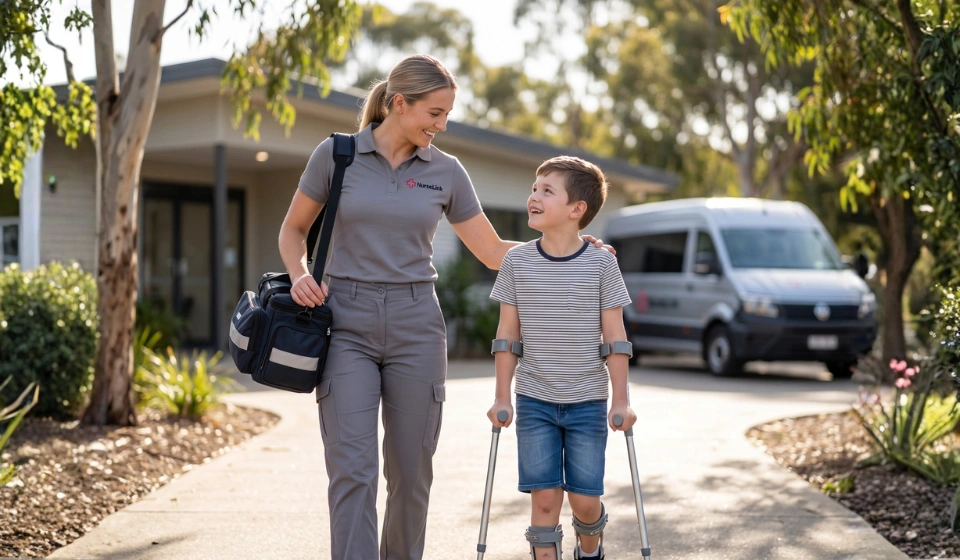
Every Tuesday & Thursday
Bridging The Gap To Treatment
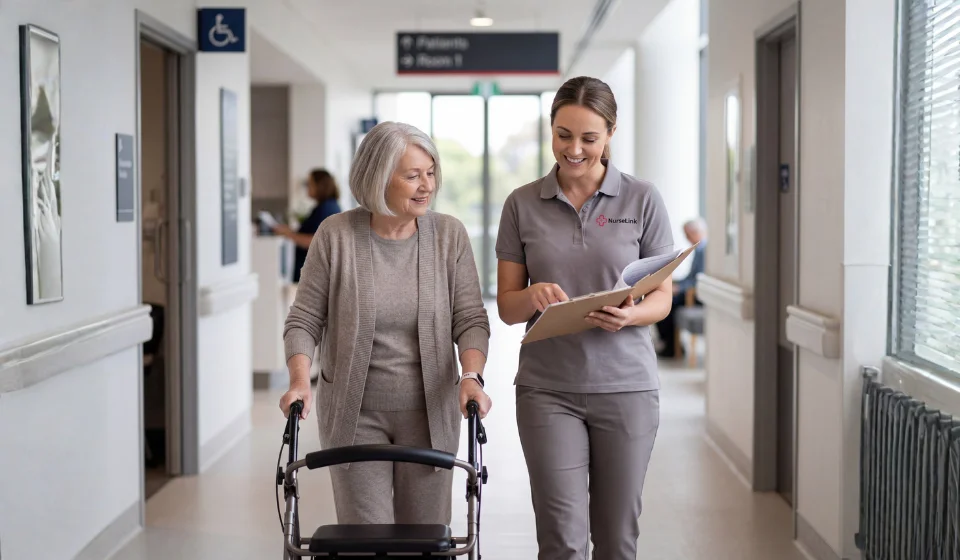
More Than A Ride Home
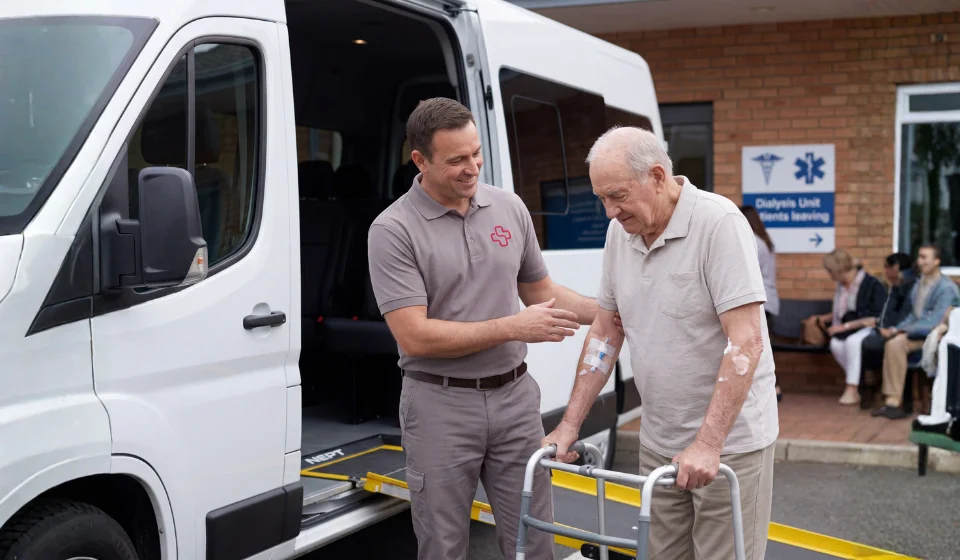
Every Trip Counted
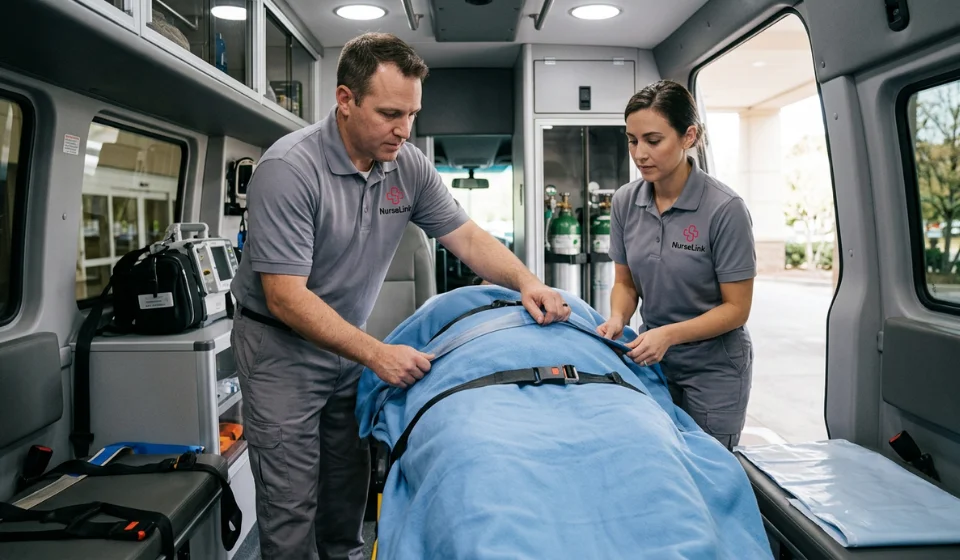
The Right Equipment. The Right Team. The Right Outcome.
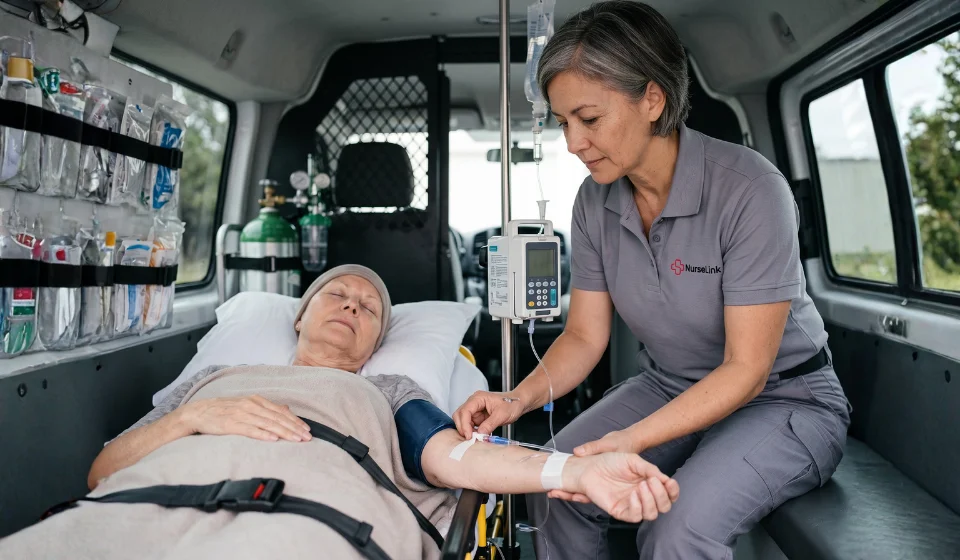
Maintaining Treatment Continuity During Cancer Care
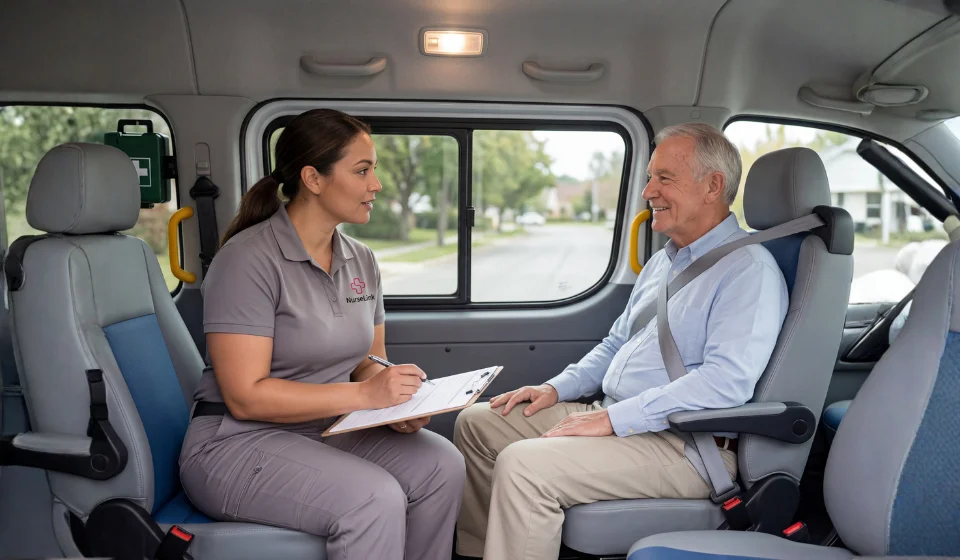
Safe Non-Emergency Patient Transport
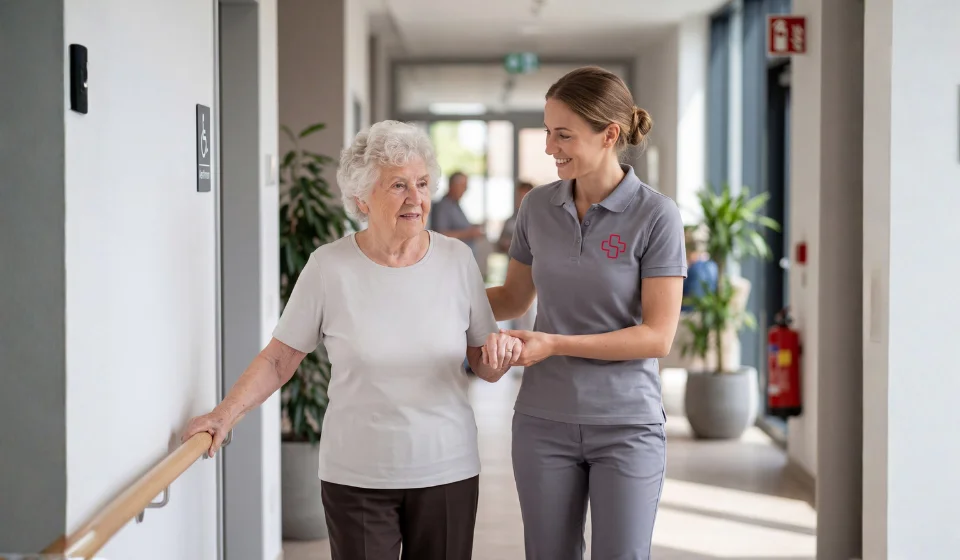
Ensuring Safe & Consistent Medical Access
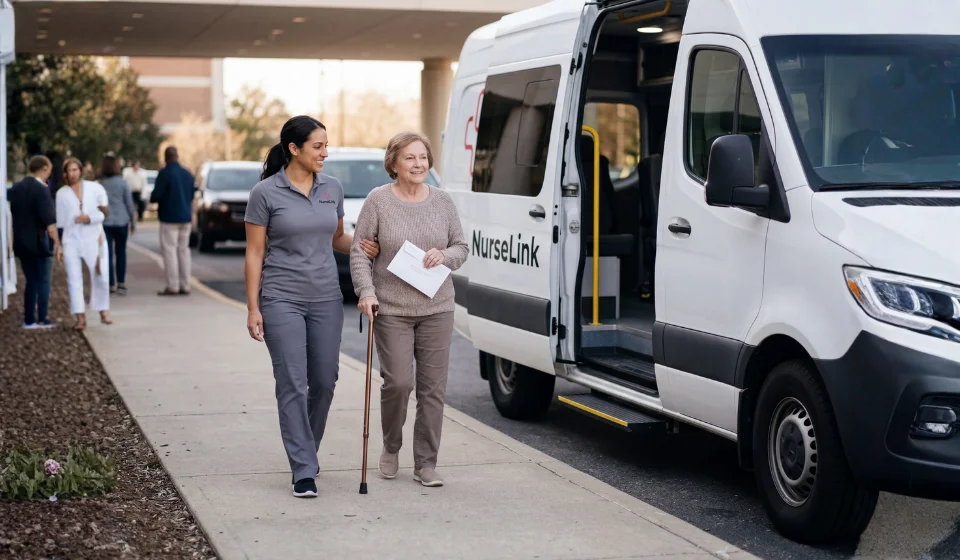
A Safe Journey Home After Surgery