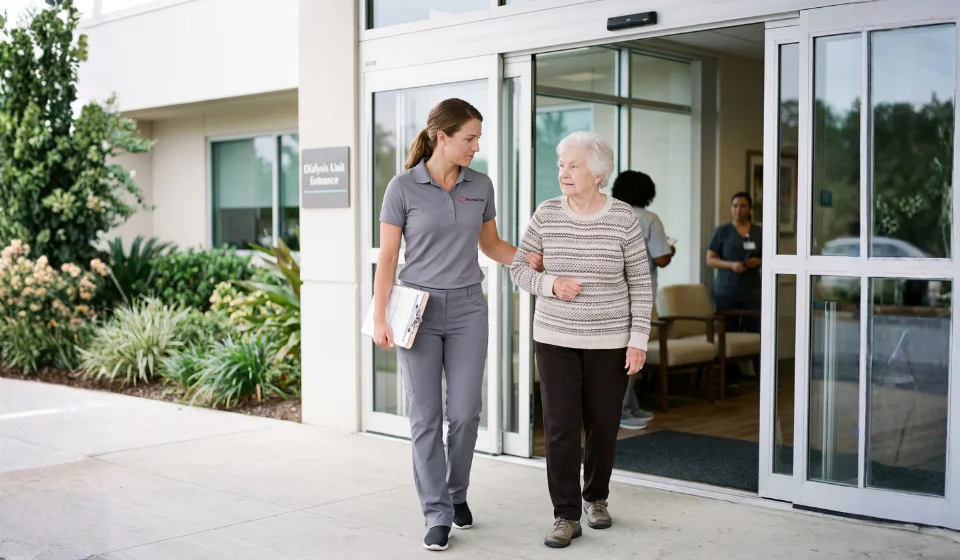
More Than A Ride Home
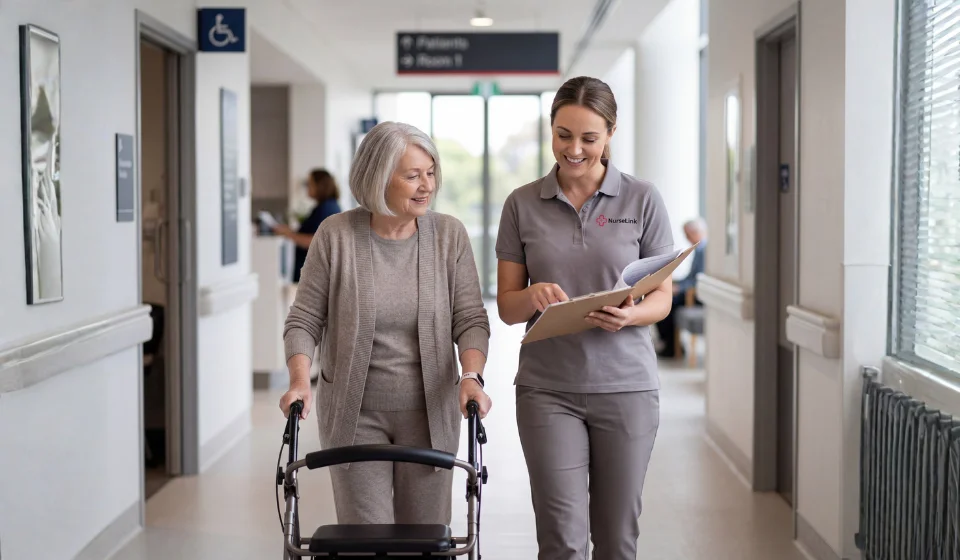
How NurseLink Healthcare Provided Reliable NEPT During Hip Replacement Recovery in Victoria
A Real-World Example Of NEPT Built Around Consistency, Dignity And Two People Who Needed More Than Just A Vehicle
Introduction
Recovery from hip replacement surgery is, for most patients, a carefully staged process. The surgery itself may be planned and routine from a clinical perspective, but what follows it is anything but simple. The weeks and months after a hip replacement involve a dense schedule of follow-up appointments, physiotherapy sessions, wound checks, imaging and specialist reviews, all of which are essential to a safe and successful recovery and none of which the patient can attend on their own.
For younger patients with family support, reliable transport and full mobility in their household, navigating this schedule is demanding but manageable. For an elderly patient living with a spouse who is also older and no longer able to drive, it presents a genuinely serious logistical problem. Every appointment requires a solution. Every missed appointment carries a clinical consequence. And the cumulative stress of trying to arrange transport for a schedule that does not pause, from a household that has no independent means of getting anywhere, falls heavily on two people who are already managing the physical and emotional demands of a significant surgical recovery.
Non-emergency patient transport, done well, is far more than the provision of a vehicle. It is the reliable, consistent, clinically aware link between a patient’s home and the healthcare system that is managing their recovery. It requires punctuality, appropriate equipment, an understanding of the patient’s clinical and mobility needs and the kind of steady, respectful presence that makes a vulnerable person feel safe rather than simply conveyed.
At NurseLink Healthcare, our non-emergency patient transport services are built around exactly this understanding. This case study documents how our team supported an elderly man in Victoria through the post-operative recovery period following a hip replacement, providing the consistent, dignified transport he needed to attend every appointment in his recovery schedule, while relieving his elderly wife of a burden she had no means of carrying alone.
To protect the privacy of the client and his family, his name and all identifying details have been kept confidential throughout this case study.
The Client's Background & His Situation
The client is a man in his late seventies who lives with his wife in a suburban area of regional Victoria. The couple have lived in the same home for over three decades, having settled there after raising their family and seeing their children move interstate and overseas. They are largely self-sufficient, close to their community and accustomed to managing their daily lives independently, though neither of them drives any longer. His wife surrendered her licence several years earlier following a vision impairment diagnosis, and the client himself had stopped driving in his early seventies after his doctor advised him it was no longer safe to do so.
The loss of independent transport had been a gradual adjustment for the couple, managed over time through a combination of community buses, taxis, occasional lifts from a neighbour and, when necessary, calls to their adult children. It was not an ideal arrangement but it had been workable for the ordinary rhythms of their life. Medical appointments, shopping trips and social visits had been navigated without major incident.
The hip replacement changed the equation entirely. The surgery had been recommended following years of progressively worsening osteoarthritis in his left hip that had reached the point at which his mobility and quality of life were significantly affected. The procedure was performed at a private hospital in the nearest regional centre, approximately forty minutes from their home, and was clinically successful. His surgical team was pleased with the outcome and outlined a recovery pathway that would require him to attend follow-up appointments at the hospital, as well as regular physiotherapy sessions, a post-operative wound review and several GP visits, across a period of approximately twelve weeks.
The discharge coordinator reviewing his home situation identified the transport gap immediately. His wife was present at the discharge meeting and was clear about what they were facing. She was in her mid-seventies, did not drive, had her own mobility limitations from arthritis and was already managing the considerable demands of supporting her husband through his early recovery at home. The idea of organising transport for every appointment in a twelve-week schedule, from a regional location with limited public transport options, using a patchwork of taxis and favours, was not a plan. It was a source of significant anxiety for both of them.
The discharge coordinator referred the couple to NurseLink Healthcare to discuss a structured non-emergency patient transport arrangement that could cover the full recovery period.
Understanding What The Client & His Wife Actually Needed
The initial conversation NurseLink Healthcare had with the client and his wife was built around understanding the full picture of their situation, not just the transport schedule. What did a typical week look like for them now? What were the practicalities of getting the client from their front door to a vehicle, given his current mobility limitations and the equipment he was using? What were his wife’s own physical limitations, and what role was she realistically able to play in the process of getting him in and out of transport? What had their experience of organised transport been in the past, and what had worked or not worked about it?
The client was a direct and practical man. He was not interested in fuss. He wanted to know that someone would turn up when they said they would, that they would know what they were doing, that they would get him to his appointments on time and bring him home safely, and that his wife would not have to worry about any of it. He had spent a working life in logistics and had a deep, instinctive impatience with systems that did not function reliably.
His wife’s concerns were equally specific but differently expressed. She had been his primary support since he came home from hospital and was managing the domestic responsibilities of their household largely on her own while also attending to his recovery needs. Her anxiety was not dramatic but it was constant, a low-level vigilance that came from being the only person available if something went wrong. She needed to know that when her husband got into a NurseLink Healthcare vehicle, he was genuinely in good hands, and that she could use that time to rest rather than to worry.
The transport schedule was mapped out in full from the information provided by his surgical team and GP: two hospital follow-up appointments, eight physiotherapy sessions across six weeks, one wound review, two GP visits and a final orthopaedic review at the twelve-week mark. Several of the appointments fell on consecutive days in the early weeks of recovery, when his mobility was most limited and the clinical stakes of any mishap were highest.
The care plan NurseLink Healthcare developed addressed not just the logistics of the schedule but every practical and clinical consideration that would determine whether the transport arrangement actually served the client’s recovery well.
The NurseLink Healthcare Solution Delivered
A Dedicated Transport Officer Who Knew The Client
One of the most significant decisions NurseLink Healthcare made in establishing this arrangement was to allocate a consistent transport officer to the client’s schedule rather than rostering different staff across different appointments. For an elderly patient in post-operative recovery, the familiarity of a known face, a known voice and a known way of doing things is not a small comfort. It is a genuine clinical and practical asset.
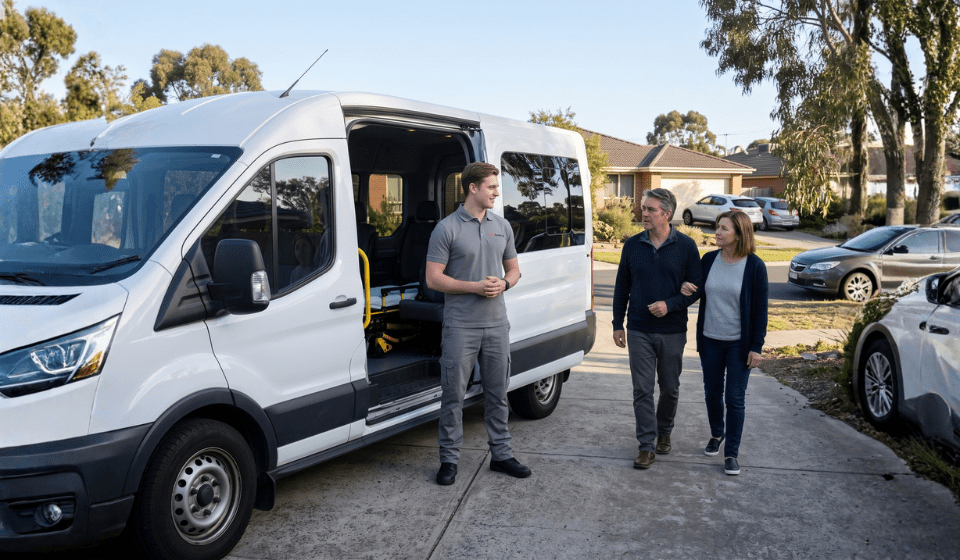
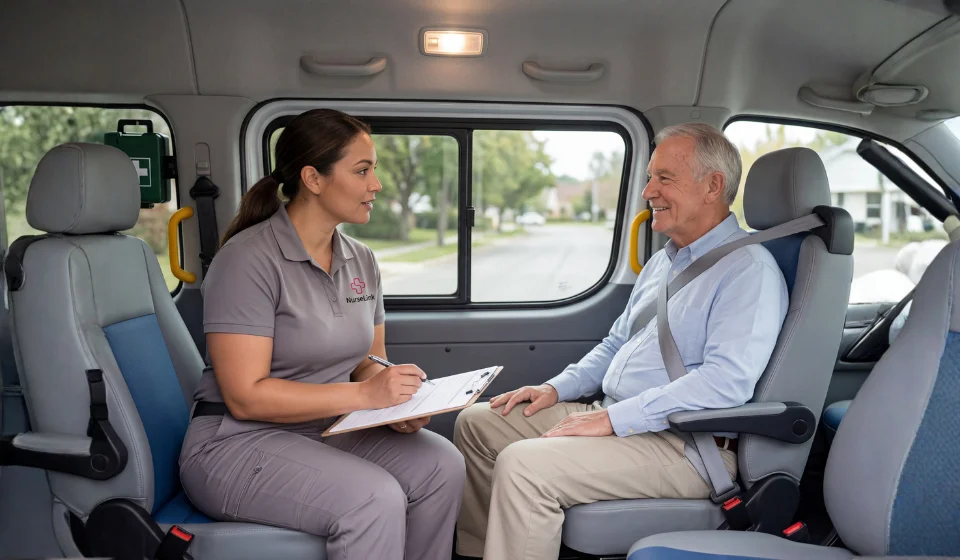
The client’s primary transport officer met with him and his wife before the first appointment, at their home, to walk through the practicalities. How the vehicle was set up. How the transfer from front door to vehicle would be managed given his current mobility. What to bring to each appointment type. How long each journey would typically take and what to expect on arrival. By the time the first appointment arrived, the process was already familiar rather than unknown, and the anxiety that typically accompanies a first experience was significantly reduced.
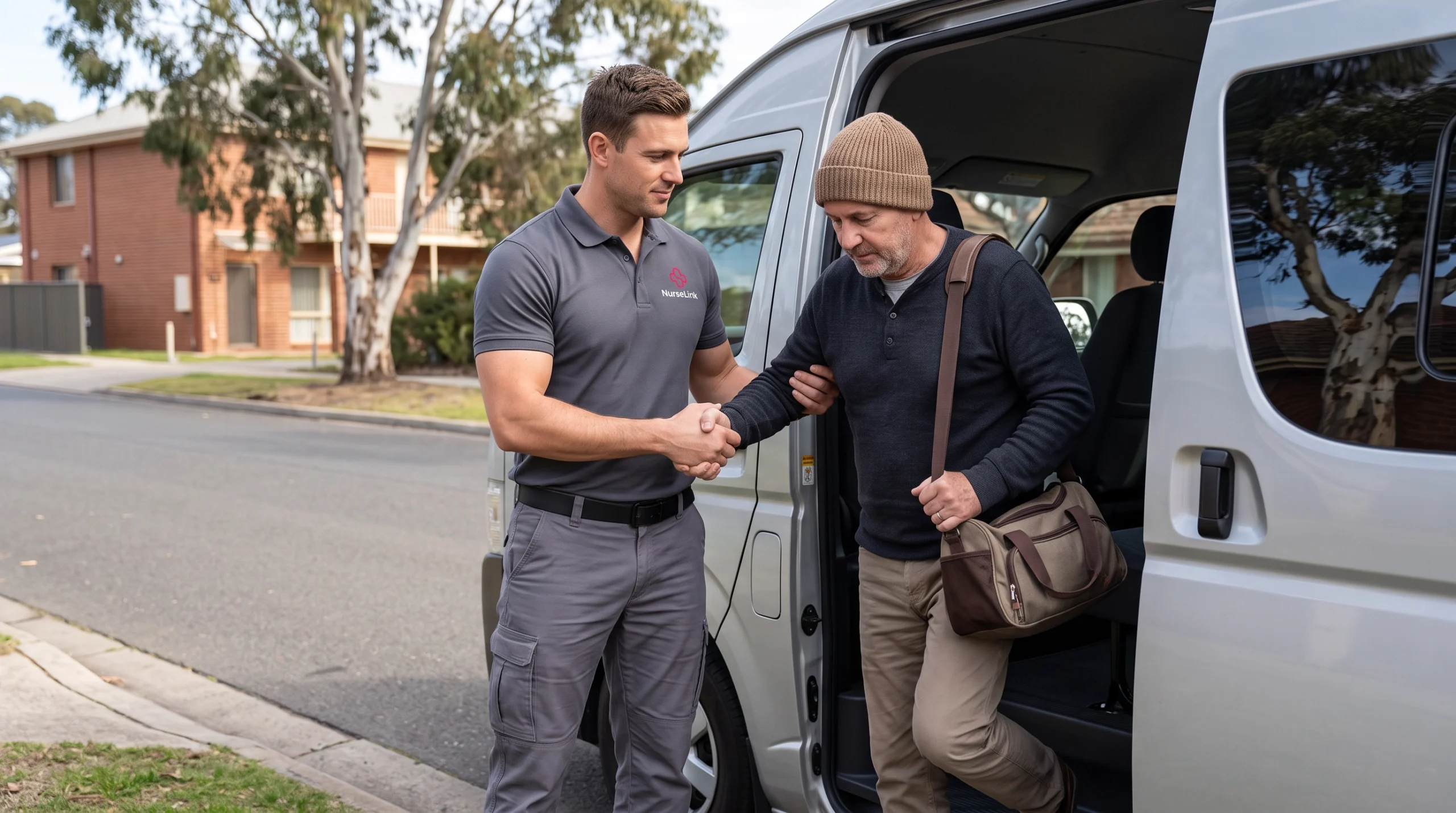
The transport officer’s familiarity with the client deepened over the weeks of the arrangement. He came to know the client’s pace, his preferences and the particular way his mobility varied depending on how his recovery was progressing on a given day. He knew which side the client preferred to be assisted from, how long he needed to settle into the vehicle comfortably and when to offer assistance and when to simply stand by and let the client manage at his own speed.
A Dedicated Transport Officer Who Knew The Client
In the early weeks following hip replacement surgery, a patient’s mobility is at its most restricted and the risk of a fall or an awkward transfer is at its highest. The vehicle and equipment used for transport during this period must be appropriate to the patient’s actual physical situation, not a generic solution applied without clinical thought.
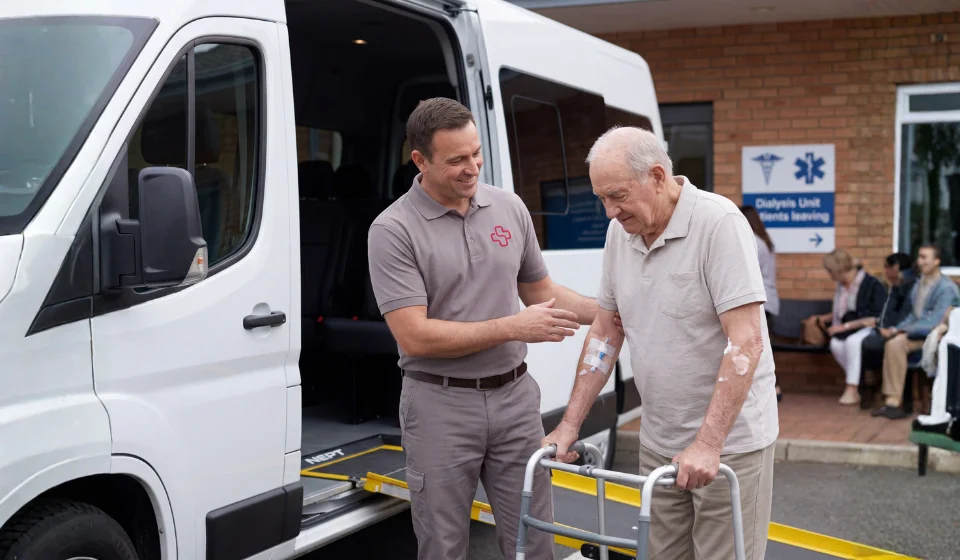
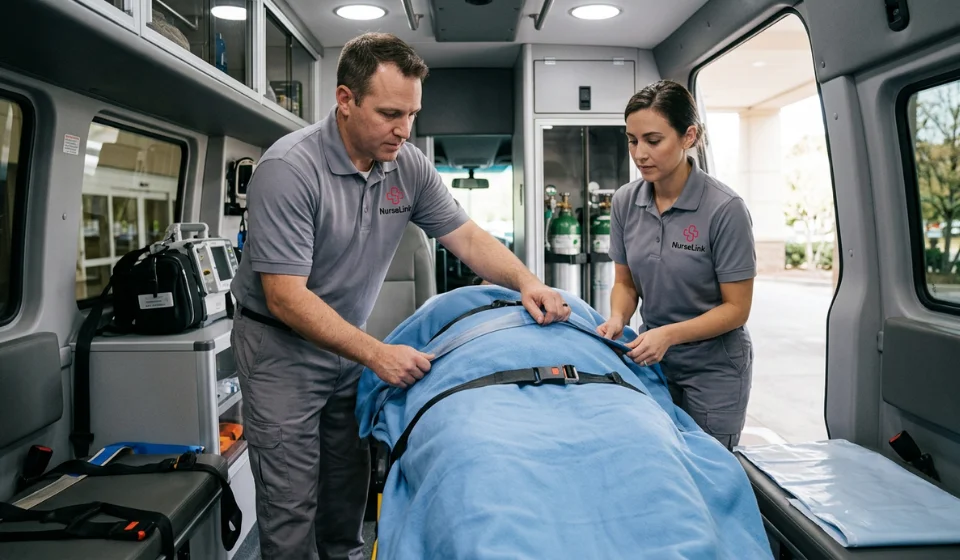
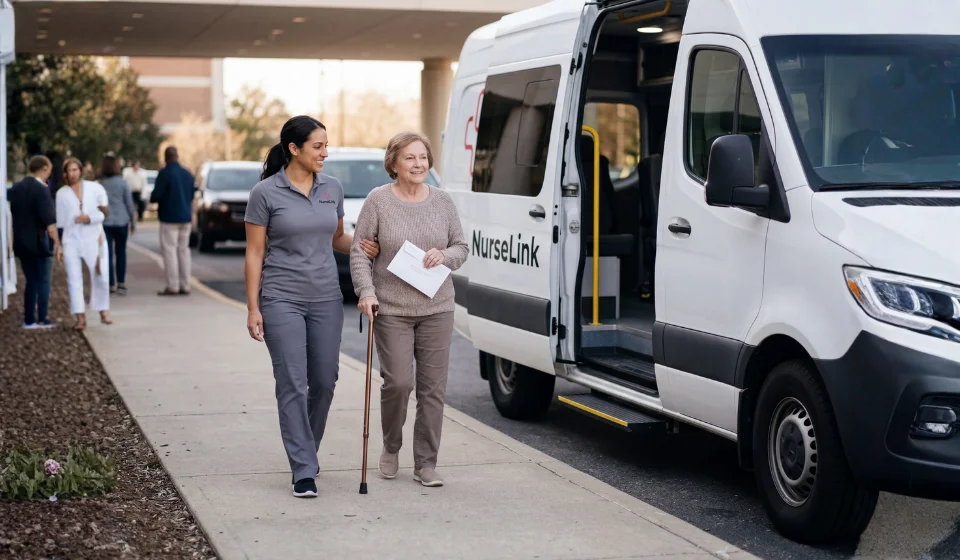
NurseLink Healthcare ensured that the vehicle used for the client’s appointments was appropriately equipped for his post-operative mobility requirements. The transfer process was managed with the careful, unhurried precision that his condition required, with the transport officer trained in safe patient handling and transfers and familiar with the specific precautions relevant to hip replacement recovery, including the movement restrictions that are a standard feature of post-operative hip care.
As his recovery progressed and his mobility improved, the level of hands-on assistance required during transfers was progressively reduced, reflecting his returning capability rather than applying a fixed level of support regardless of his progress.
Punctuality And Reliability As A Clinical Priority
For a post-operative patient with a dense appointment schedule, punctuality is not simply a courtesy. A late arrival for a physiotherapy session shortens the time available for treatment. A missed appointment can delay the progression of a rehabilitation programme. And for an elderly patient who has been waiting anxiously since early in the morning, the uncertainty of not knowing when transport will arrive is its own form of stress with its own physiological consequences.
NurseLink Healthcare treated punctuality as a clinical responsibility rather than a logistical target. Every appointment in the client’s schedule was confirmed the evening before, with the client and his wife advised of the precise pickup time and any relevant details about the journey. The transport officer arrived on time, without exception, across the full twelve weeks of the arrangement. In one instance, a significant road delay on the route to the hospital prompted an early call to the client and a direct communication to the treating physiotherapy clinic to advise of the expected revised arrival time, ensuring that the appointment was held and the session was not lost.
This level of coordination was something the client, with his background in logistics, noticed and appreciated specifically.
Door To Door Support That Went Beyond The Vehicle
The NurseLink Healthcare transport arrangement was not defined by the journey between home and clinic. It encompassed the full experience of each appointment from the moment the transport officer arrived at the front door to the moment the client was safely back inside his home at the end of the day.
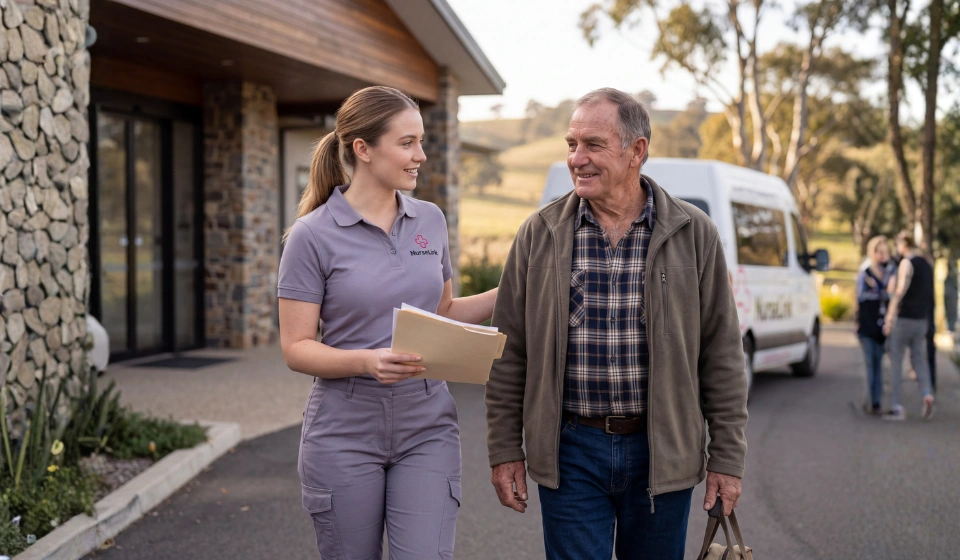
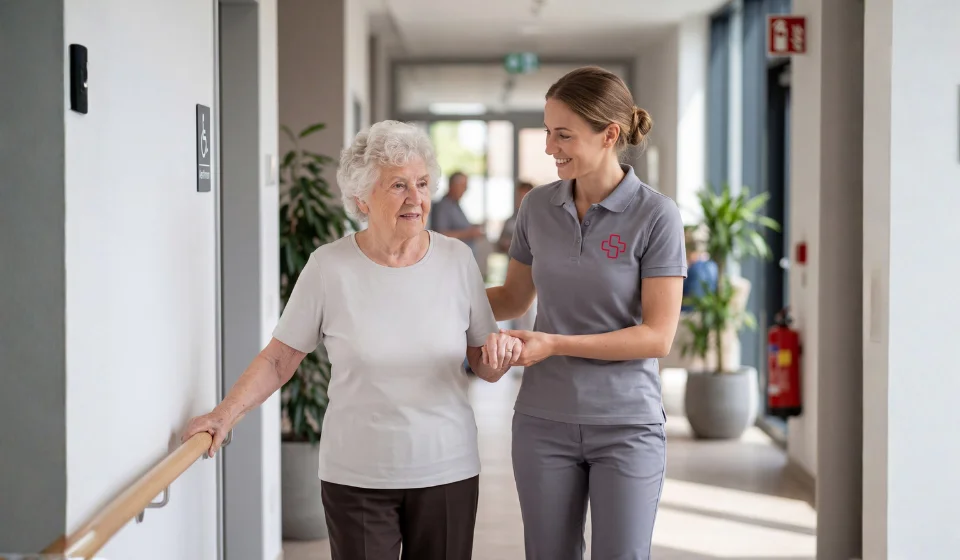
At the clinic or hospital, the transport officer accompanied the client to the relevant department, ensured he was signed in and settled before departing to wait, and was available to assist with any practical needs during the waiting period. On several occasions, the client’s appointments ran over their scheduled time, and the transport officer waited without complaint and without any pressure on the client to hurry his clinical encounter. The principle throughout was that the transport arrangement existed to serve the client’s healthcare, not to impose its own schedule on it.
On return, the transport officer accompanied the client back into the house, confirmed that his wife was aware he was home and, on occasions when the appointment had been physically taxing, checked briefly on how the client was feeling before leaving. These moments were small in themselves but meaningful in aggregate, and they reflected a standard of care that went well beyond what a taxi or community bus service could have provided.
Clear Communication With His Wife
Throughout the arrangement, NurseLink Healthcare maintained a simple but consistent communication structure with the client’s wife. She was informed of departure and expected return times before each appointment. If an appointment was running late, she received a message advising her of the revised return time so that she was not left waiting and worrying without information. Following each appointment, a brief note was provided covering how the client had presented during transport, any relevant observations and confirmation that he had been returned home safely.
For a woman who could not be present at her husband’s appointments and had no independent means of getting to him if she needed to, this communication structure provided a quality of reassurance that made a measurable difference to her daily experience during his recovery.
Outcomes And Impact
Every Appointment Was Attended Without Exception
Across the full twelve weeks of the recovery schedule, the client attended every single appointment on his treatment plan. Not one was missed, cancelled due to transport failure or attended late in a way that affected the quality of the clinical encounter. For a patient in post-operative recovery, where each appointment plays a specific role in a structured rehabilitation pathway, this consistency produced a recovery trajectory that his surgical and physiotherapy teams described as excellent.
His Recovery Progressed On Schedule
His orthopaedic surgeon, reviewing him at the twelve-week mark, noted that his recovery had progressed in line with the best outcomes typically seen following this procedure. His physiotherapist credited his consistent attendance and engagement with the rehabilitation programme as a primary factor in the strength and range of movement he had recovered. The transport arrangement that had made that attendance possible was, in clinical terms, an integral part of his recovery.
His Wife's Burden Was Significantly Relieved
The impact on the client’s wife was one of the most significant outcomes of the engagement. The weeks following a spouse’s major surgery are demanding in every dimension, and for a woman managing her own physical limitations without the ability to drive or to readily access help, the added weight of the transport problem had been a genuine source of distress.
With NurseLink Healthcare managing every appointment reliably and communicating with her clearly throughout, she was able to direct her energy toward her husband’s recovery at home rather than toward the constant logistical problem of getting him to and from his appointments. She described the arrangement, in conversation with the NurseLink Healthcare coordinator, as having taken an enormous weight off her shoulders at a time when she had very little left to spare.
The Client's Confidence In His Recovery Was Strengthened
For many elderly patients following major surgery, the experience of being dependent on external support for basic activities like getting to medical appointments can be disempowering and demoralising. The quality of the NurseLink Healthcare transport arrangement, and in particular the consistency and respect with which the client was treated throughout, produced the opposite effect. He felt supported rather than managed, capable rather than diminished, and the reliable presence of his transport officer at each appointment gave him a confidence in the process that carried over into his broader approach to his recovery.
A Reflection From His Wife
The client’s wife shared her experience of the NurseLink Healthcare arrangement several weeks after its conclusion:
“When he came home from hospital, I didn’t know how we were going to manage all the appointments. We can’t drive anymore and there’s only so much you can ask of the neighbours. I was worried sick about it on top of everything else. The NurseLink team sorted it all out from the beginning. The same person came every time, always on time, always knew exactly what he needed. My husband is not an easy man to impress but he trusted him completely. And knowing that someone would call me when they left and when they were on the way back, that made all the difference. I could actually rest. I knew he was in good hands.”
Key Takeaways From This Case Study
Non-emergency patient transport is a clinical service, not a logistical one. Transport that does not account for a patient’s specific mobility needs, post-operative precautions and clinical schedule is not fit for purpose in a recovery context. NEPT providers must understand the clinical picture of the patients they are transporting and build their service around it.
Consistency of personnel is as important in transport as it is in any other form of care. An elderly post-operative patient who is collected by a different person each time receives a different quality of service to one who has a consistent, familiar transport officer who knows them and their needs. The investment in continuity pays dividends in safety, comfort and clinical outcome.
The spouse at home is part of the care equation. When a patient lives with an elderly spouse who has no independent means of transport, the homebound partner’s wellbeing is directly affected by the quality of the transport arrangement. Communication with the family member at home is not supplementary. It is part of the service.
Punctuality in NEPT is a clinical responsibility. Appointments in a post-operative recovery schedule are not interchangeable or expendable. A transport provider that treats arrival times as approximate is not providing a service that is fit for the healthcare context it operates in.
Door to door means exactly that. Quality non-emergency patient transport does not begin and end at the vehicle. It encompasses the full experience from front door to clinical encounter and back again, with the patient’s safety, comfort and dignity maintained throughout.
Conclusion
Hip replacement surgery gives thousands of Australians each year a meaningful restoration of mobility and quality of life. But the surgery is only the beginning. The recovery that follows it requires consistent attendance at a structured programme of appointments that cannot be skipped, delayed or disrupted without consequence. For elderly patients without independent transport, the gap between a successful surgery and a successful recovery is bridged by the reliability of the support around them.
At NurseLink Healthcare, we understand that non-emergency patient transport is not a peripheral service. It is the practical link between a patient’s home and the healthcare that is working to restore their health and independence. We provide that link with the consistency, clinical awareness and genuine care that every patient deserves.
This case study is an example of transport support at its most purposeful. An elderly man who needed to get to his appointments safely, reliably and with dignity. A wife who needed to know her husband was in good hands and that she could rest. NurseLink Healthcare provided the arrangement that made both possible.
If you or someone you care about is navigating a post-operative recovery or a demanding medical appointment schedule and needs dependable, professional non-emergency patient transport, reach out to the NurseLink Healthcare team today. We would welcome the opportunity to help.
Latest Post
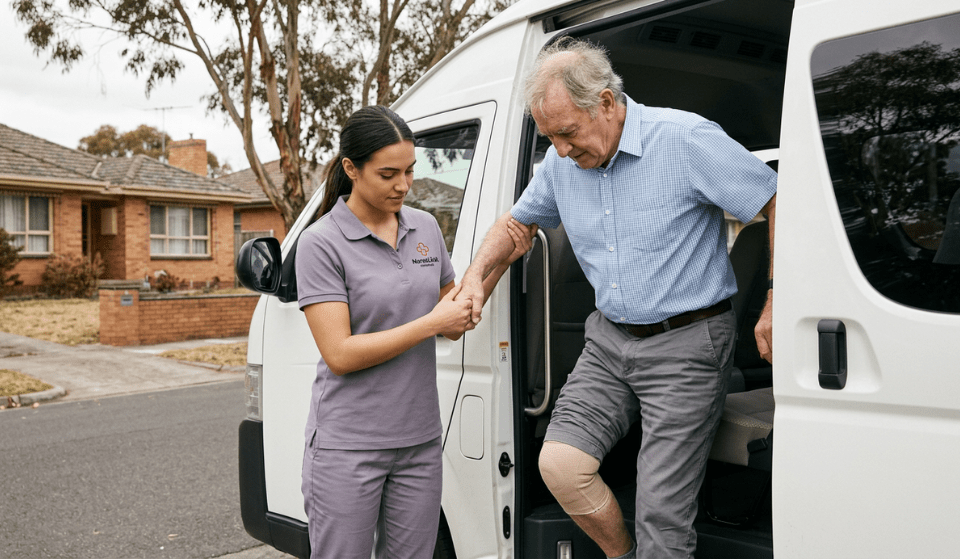
Getting Him Home, Then Getting Him Better
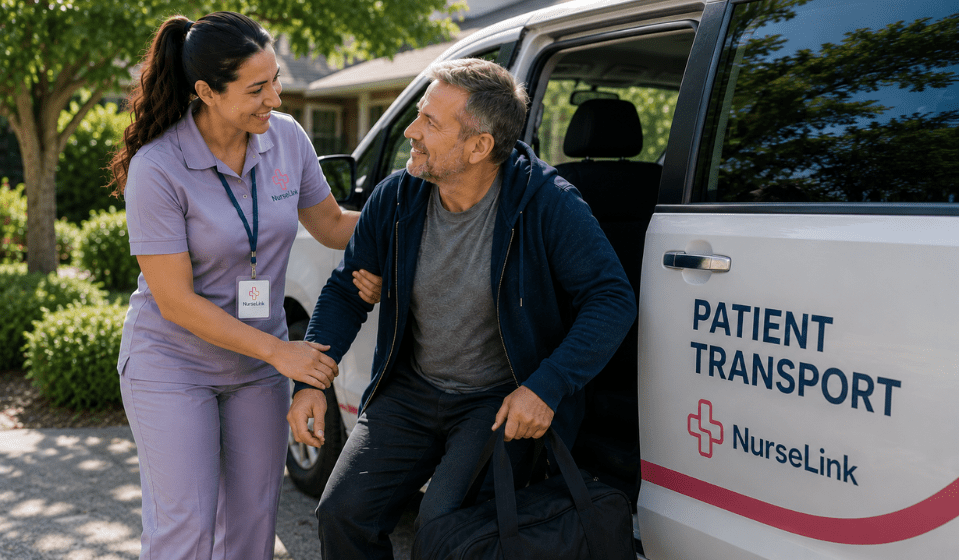
Getting Him There, Getting Him Home, Getting Him Through

When Getting To Care Is Part Of The Challenge

Getting There Made The Difference
Showing Up For Someone Nobody Else Was Showing Up For
Getting There Safely
Every Appointment, Every Time
One More Day With Her Family
The Journey Home
The First Step Out The Door
Every Tuesday & Thursday

Bridging The Gap To Treatment
More Than A Ride Home
Every Trip Counted
The Right Equipment. The Right Team. The Right Outcome.
Maintaining Treatment Continuity During Cancer Care
Safe Non-Emergency Patient Transport
Ensuring Safe & Consistent Medical Access
A Safe Journey Home After Surgery