
The Right Equipment. The Right Team. The Right Outcome.
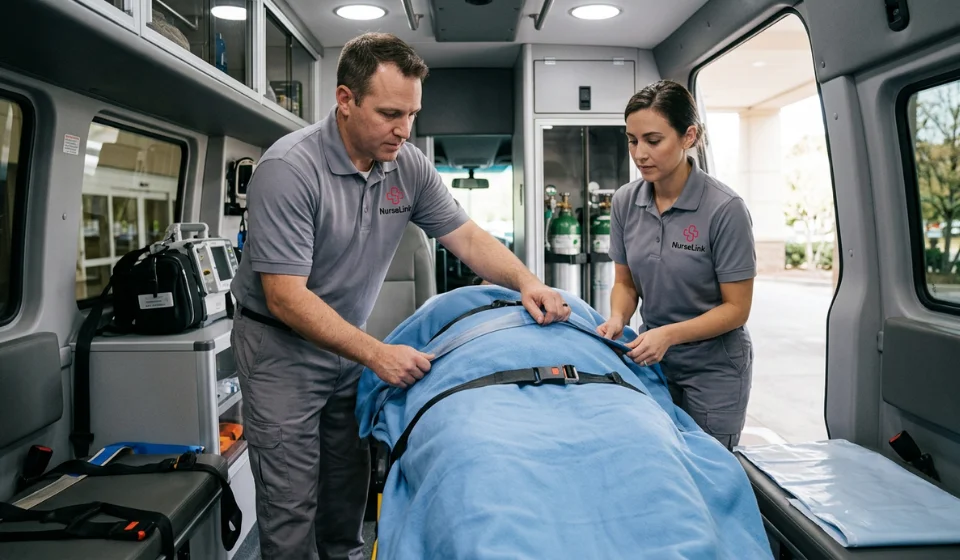
A Real-World Example Of Specialised Patient Transport Done With Skill And Respect
Introduction
How NurseLink Healthcare Delivered Safe, Dignified NEPT For A Bariatric Patient Following A Lengthy Hospital Admission
Non-emergency patient transport is often thought of as a straightforward service. A vehicle, a driver, a patient, a destination. For the majority of transfers, that picture is not far from the reality. But for a growing number of patients, transport needs are anything but straightforward, and the gap between what standard transport can offer and what the patient actually requires can be significant.
Bariatric patients represent one of the most consistently underserved groups in patient transport. Their needs are specific, their dignity is frequently at stake and the consequences of poorly planned transport go beyond discomfort. Inadequate equipment, undertrained staff and a lack of genuine planning can result in injury, clinical deterioration and a profound sense of humiliation that affects how a patient engages with their ongoing care.
At NurseLink Healthcare, we believe that every patient deserves transport that is genuinely suited to their needs, regardless of how complex those needs may be. This case study documents how our NEPT team supported a bariatric patient in Victoria through a series of medically necessary transfers following a lengthy hospital admission, and what it took to deliver that support safely, effectively and with the dignity the patient deserved. To protect the privacy of the patient and his family, all identifying details have been kept confidential throughout this case study.
The Patient's Background & His Situation
The patient is a man in his early fifties residing in suburban Victoria who had been admitted to a metropolitan hospital following a serious deterioration in his diabetic condition. What had begun as a manageable chronic condition had progressed over time, compounded by other health factors, to the point where he required urgent inpatient intervention. His admission extended over several weeks as his treating team worked to stabilise his condition, manage associated complications and prepare a discharge and ongoing care plan.
Throughout his admission, the patient required treatment at multiple facilities. Specialist consultations, diagnostic procedures and specific therapeutic interventions meant that transfers between the primary hospital and satellite facilities were necessary on several occasions during his stay. Each of these transfers presented a logistical challenge that the standard hospital transport arrangements were not equipped to manage.
The patient was a larger man whose weight and physical dimensions exceeded the capacity of standard patient transport vehicles and equipment. A routine transport stretcher, a standard wheelchair and a regular patient transport van were not viable options. Attempting to use equipment that was not rated or designed for his size would have created genuine safety risks for both the patient and the transport staff, as well as exposing him to the kind of undignified and distressing experience that no patient should have to endure.
The patient was also managing active diabetes complications throughout this period, which meant his clinical condition required monitoring during any transfer. He was not a straightforward passenger who could simply be loaded into a vehicle and dropped at a destination. He needed staff who understood his medical situation, could recognise signs of deterioration during transit and knew what to do if his condition changed unexpectedly while away from the ward.
The hospital’s discharge planning team had encountered difficulties sourcing appropriate transport for the patient on several occasions during his admission. Standard NEPT providers had either declined the booking on equipment grounds or had arrived with vehicles and equipment that were unsuitable, requiring the transfer to be cancelled. The situation was raised with the patient’s care coordinator, who contacted NurseLink Healthcare to discuss whether a reliable solution could be put in place.
Understanding What The Patient Actually Required
When NurseLink Healthcare was first engaged, our team did not simply take a booking and dispatch a vehicle. Our first step was a detailed conversation with the hospital’s discharge planning team and the patient’s nursing staff to build a thorough picture of what safe and appropriate transport would actually look like for this patient.
Several key areas were assessed and documented before any transfer was confirmed. The patient’s weight and physical dimensions were recorded accurately so that appropriate equipment could be confirmed as available and correctly rated before the booking was accepted. His current clinical status and the specific diabetes-related complications being managed were reviewed so that transport staff could be briefed on what to monitor during transit and what would constitute a concern requiring escalation. The nature of each transfer, including the origin, destination, distance, expected duration and any time-sensitive clinical requirements, was mapped out in detail. The patient’s own preferences and concerns were sought directly, including how he wished to be assisted, what had made previous transport experiences difficult and what would help him feel safe and respected during the journey.
This last point deserves particular emphasis. The patient had experienced difficult and at times humiliating transport encounters in the past, both during this admission and in earlier healthcare interactions. He was understandably apprehensive about the process and had expressed to nursing staff that he found the experience of being transferred deeply uncomfortable, not only physically but emotionally. Our team treated this as clinically relevant information, because it is. A patient who is distressed and resistant during a transfer is harder to support safely than one who feels respected and at ease.
From this assessment, NurseLink Healthcare confirmed that we could meet the patient’s requirements and outlined precisely how each transfer would be managed.
The NurseLink Healthcare Solution Delivered
Bariatric-Rated Equipment Confirmed Before Every Booking
Every transfer arranged for this patient was confirmed only after the specific equipment required had been verified as available and correctly rated for his needs. This included a bariatric-rated stretcher with appropriate weight capacity, a bariatric-rated transport vehicle with sufficient interior dimensions and a hydraulic loading system that allowed safe and smooth boarding without manual handling risk. Nothing was assumed or left to chance. If the required equipment was not available for a given date and time, the booking was not accepted until it was confirmed.
Trained Staff On Every Transfer
Every transfer was staffed by personnel who had received specific training in bariatric patient handling. This is not a standard feature of all patient transport services, and its absence is one of the most common causes of poor outcomes in bariatric transport. Our staff understood the correct manual handling techniques, the use of bariatric-specific transfer aids and the importance of clear communication with the patient throughout every stage of the journey. They also understood the clinical context relevant to a patient managing active diabetes complications, including the signs that would warrant concern during transit.
A Consistent Approach To Dignity And Respect
From the first transfer, our team established a consistent approach to how they interacted with the patient. They introduced themselves by name, explained what would happen at each step before it happened, asked for the patient’s input on positioning and comfort and moved at a pace that suited him rather than rushing through the process in the name of efficiency. This approach was maintained across every subsequent transfer, regardless of which staff members were rostered. The patient later told nursing staff that the difference in how he was treated by the NurseLink team compared to previous transport experiences was significant and had made a genuine difference to how he felt about the process.
Clinical Monitoring During Transit
Given the patient’s active medical situation, each transfer included active monitoring of his condition during the journey. Staff were briefed on the specific indicators relevant to his diabetes management and knew the escalation pathway to follow if concerns arose. On one occasion during a longer transfer, the patient reported feeling unwell and our staff responded promptly, monitoring him closely for the remainder of the journey and communicating directly with the receiving facility so that clinical staff were ready to assess him on arrival. The situation resolved without further incident, but the response demonstrated exactly why having clinically aware transport staff matters for patients in this category.
Coordination With The Hospital Team
Throughout the engagement, NurseLink Healthcare maintained direct communication with the hospital’s discharge planning team and ward nursing staff. Transfer times were confirmed and reconfirmed, any changes to the patient’s condition that might affect transport planning were communicated promptly and the documentation accompanying each transfer was accurate and complete. This level of coordination meant that transfers ran smoothly within the broader rhythm of the patient’s clinical care rather than creating disruption or uncertainty.
Discharge Transport Planning
As the patient’s admission drew toward its conclusion, NurseLink Healthcare worked with the discharge planning team to arrange the final transfer home. This required additional planning, as the patient’s home environment needed to be considered in the logistics. The route, the access arrangements at the patient’s home and the handover to the homecare support that had been arranged for his return were all factored into the discharge transport plan. The patient arrived home safely, comfortably and without incident.
Outcomes & Impact
Every Transfer Was Completed Safely
Across the full period of the engagement, every transfer involving the patient was completed without incident. There were no equipment failures, no manual handling injuries to the patient or staff and no transfers that needed to be cancelled or rescheduled due to inadequate resources. For a patient whose previous transport experiences had included cancelled bookings and unsuitable equipment, this consistency was itself a meaningful outcome.
The Patient's Dignity Was Maintained Throughout
The patient and his family specifically acknowledged that the experience of being transported by the NurseLink Healthcare team had been respectful and dignified in a way that previous transport had not been. This matters beyond the emotional dimension. A patient who feels respected is more likely to engage cooperatively with the transfer process, more likely to communicate concerns during transit and more likely to maintain a positive attitude toward his ongoing care. Dignity in transport is not a courtesy. It is a factor in clinical safety.
A Clinical Concern Was Identified And Managed During Transit
The occasion on which the patient reported feeling unwell during a transfer demonstrated the practical value of having clinically aware staff managing bariatric patient transport. A standard transport driver without clinical awareness would not have known how to assess the situation, what to monitor or how to communicate effectively with the receiving facility. The outcome in this case was good, and that outcome was directly connected to the quality of the staff involved.
The Hospital Team's Discharge Planning Was Supported
The reliability of NurseLink Healthcare’s service meant that the hospital’s discharge planning team could schedule transfers with confidence that they would proceed as planned. The reduction in cancelled or problematic bookings freed up planning time and reduced the stress on ward staff who had previously needed to manage transport difficulties on top of their clinical responsibilities.
The Patient Returned Home Without Incident
The discharge transfer was completed smoothly, with the patient arriving home safely and transitioning into his post-discharge care arrangement without complication. For a man who had spent several difficult weeks in hospital managing a serious health deterioration, arriving home comfortably and without the added distress of a poorly managed transport experience was a genuinely positive end to a challenging admission.
Patient Reflection
The patient shared his experience following his discharge:
“I have had some really bad experiences with transport in the past. Being a bigger person, you notice very quickly when the people helping you have not done this before or do not have the right equipment. The NurseLink team were completely different. They knew what they were doing, they treated me like a person and I never once felt embarrassed or uncomfortable. That sounds like a small thing but when you are already going through something difficult, it makes a real difference.”
Key Takeaways From This Case Study
Equipment must be confirmed before a booking is accepted, not after. Bariatric patient transport that proceeds without verified, appropriately rated equipment creates safety risks for the patient and staff and frequently results in cancellations that disrupt clinical care. Confirmation of equipment suitability is a non-negotiable first step.
Staff training in bariatric handling is a distinct and specific requirement. General patient transport training does not cover the manual handling techniques, equipment operation and communication approaches required for bariatric patients. Providers who do not invest in this training should not be accepting bariatric bookings.
Dignity is a clinical consideration, not just an ethical one. Patients who have experienced undignified transport become anxious, resistant and harder to support safely. Treating the emotional dimension of bariatric transport as seriously as the physical and logistical dimensions produces better outcomes across the board.
Clinical awareness in transport staff saves lives. For patients with active health conditions being managed alongside their transport needs, having staff who can recognise and respond to clinical changes during transit is the difference between a safe transfer and a dangerous one.
Coordination with the clinical team makes transport part of the care pathway. When transport providers communicate effectively with hospital staff, transfers happen smoothly, clinical handovers are complete and the patient experiences a joined-up service rather than a series of disconnected interactions.
Conclusion
Bariatric patient transport is one of the areas where the gap between adequate and inadequate service is most visible and most consequential. A patient who cannot be transported safely and with dignity is a patient whose access to care is compromised, whose recovery may be affected and whose experience of the healthcare system is shaped by encounters that should never have happened.
At NurseLink Healthcare, our NEPT service is built to meet the needs of patients whose transport requirements go beyond what standard services can provide. We invest in the right equipment, train our staff appropriately and approach every transfer with the same commitment to safety, clinical awareness and genuine respect for the person in our care.
This case study is an example of patient transport at its most demanding. A patient with complex physical and clinical needs, a history of poor transport experiences and a situation that required consistent, reliable and dignified support across multiple transfers. NurseLink Healthcare delivered that support without exception.
If your facility is managing patients whose transport needs exceed what standard NEPT services can accommodate, reach out to the NurseLink Healthcare team. We have the equipment, the training and the experience to get it right.
Latest Post
Getting Him Home, Then Getting Him Better
Getting Him There, Getting Him Home, Getting Him Through

When Getting To Care Is Part Of The Challenge

Getting There Made The Difference
Showing Up For Someone Nobody Else Was Showing Up For

Getting There Safely
Every Appointment, Every Time
One More Day With Her Family
The Journey Home

The First Step Out The Door
Every Tuesday & Thursday

Bridging The Gap To Treatment
More Than A Ride Home
Every Trip Counted
The Right Equipment. The Right Team. The Right Outcome.
Maintaining Treatment Continuity During Cancer Care
Safe Non-Emergency Patient Transport

Ensuring Safe & Consistent Medical Access
A Safe Journey Home After Surgery