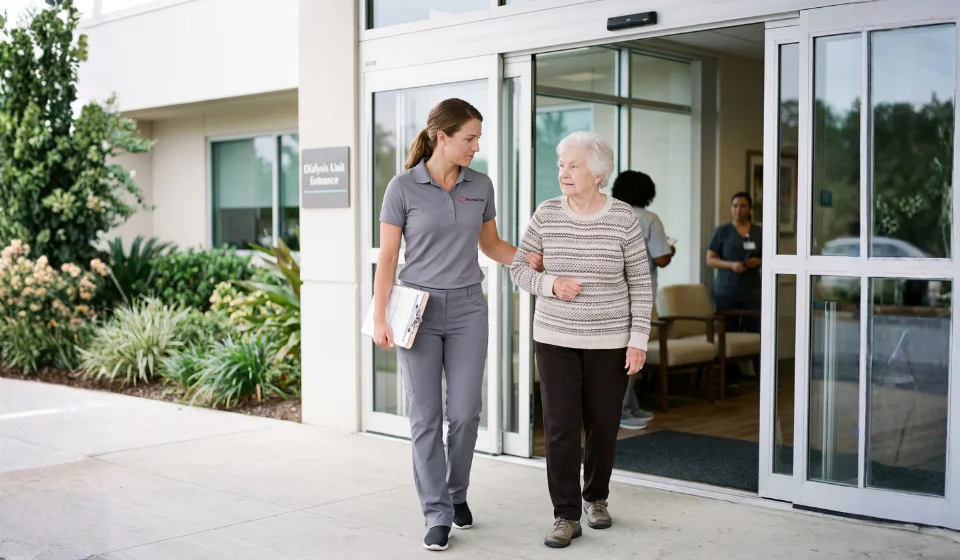
Getting There Made The Difference
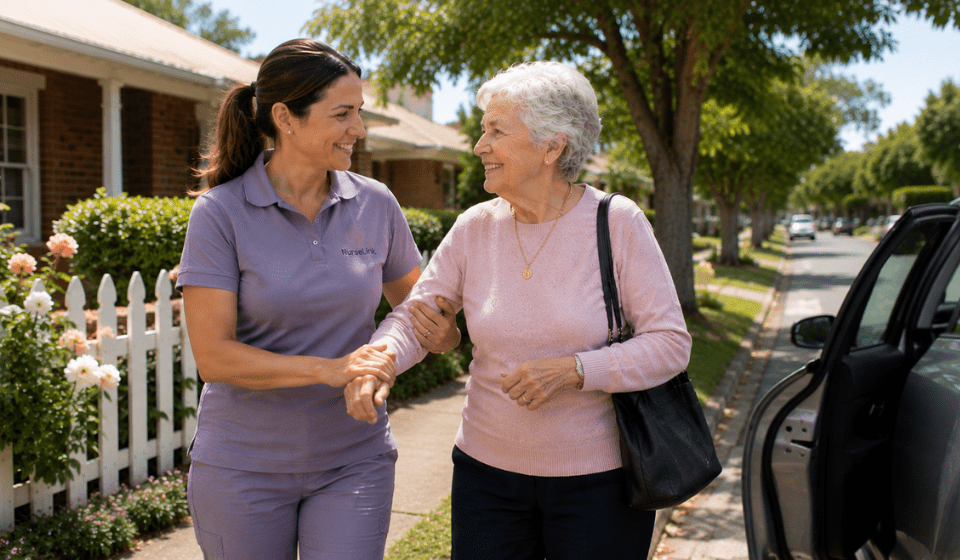
How NurseLink Supported A Retired Melbourne Teacher Through Her Full Cardiac Rehabilitation Programme
A Case Study In Reliable, Friendly Patient Transport That Turned A Logistical Problem Into A Non-Issue
Introduction
Cardiac rehabilitation works. The evidence for it is clear and has been for decades. For people who have experienced a heart attack, cardiac surgery or another significant cardiac event, a structured rehabilitation programme reduces the risk of future events, improves physical fitness, builds confidence and supports the psychological recovery that a cardiac event makes necessary alongside the physical one. It is not a supplementary service. It is a core component of cardiac care, and the patients who complete it consistently fare better than those who do not.
Completing it consistently is the challenge. Cardiac rehabilitation programmes are typically delivered across weeks or months, requiring attendance at a clinic or rehabilitation centre on a regular schedule that does not always align neatly with a patient’s transport options, family circumstances or the practical realities of daily life. For a patient who cannot drive, who does not have a family member available to provide transport at the required frequency and who does not have an obvious alternative, the gap between a rehabilitation programme that has been prescribed and one that is actually attended can become the thing that determines how far the recovery goes.
For an older patient living with a spouse who has stopped driving, this gap is particularly common and particularly frustrating. The programme is available. The patient wants to attend. The clinical benefit is real and the patient’s cardiologist has been clear about it. The only thing missing is a reliable, comfortable way to get there and back.
Non-emergency patient transport that resolves this gap is not dramatic. It is not the most clinically complex service that NurseLink Healthcare provides. But it is, for the patients who need it, genuinely important, because the recovery it makes possible is genuinely important and the consistency it provides is what the recovery depends on.
This case study documents how NurseLink Healthcare supported a retired teacher in her seventies in Melbourne, Victoria, through the full course of her cardiac rehabilitation programme after her husband stopped driving, and how the reliable, friendly transport our team provided gave her the consistency she needed to complete a programme that made a real difference to her health and her confidence.
To protect the privacy of the client and her family, all names and identifying details have been kept confidential throughout this case study.
The Client & Her Situation
The client is a woman in her mid-seventies who lives with her husband in Melbourne’s eastern suburbs. She had taught primary school for thirty-five years before retiring in her early sixties, and retirement had suited her well. She volunteered at a local community garden, was part of a long-running book club and maintained the particular kind of active social life that a person who spent her career surrounded by people tends to build and value.
Her husband, who was several years older, had stopped driving the previous year after his optometrist had recommended he do so on the basis of changes to his vision that had made night driving unsafe and daytime driving inadvisable. He had accepted this with the particular pragmatic resignation of a man who understood the reasoning and disliked the implication, and the couple had adjusted to the practical changes that the decision required, as couples who have been managing life together for a long time tend to do.
Her cardiac event had occurred without significant warning, which cardiac events often do. She had been managing what she thought was persistent indigestion for a week before her GP, reviewing her symptoms with the specific attentiveness that a woman in her mid-seventies deserves, had referred her for investigation. The investigation had identified a significant blockage and she had undergone a cardiac procedure that her cardiologist described as both necessary and successful.
The recovery had gone well. She was discharged from hospital with a management plan that included medication, dietary guidance and a referral to a cardiac rehabilitation programme at a centre not far from their home. The programme was structured across several months, with attendance required twice a week for the exercise sessions and monthly for the group education and support sessions that the programme included.
Her cardiologist had been clear about the importance of the programme. She had nodded and agreed and then come home and worked out that the rehabilitation centre, while not far in distance, was not easily accessible by public transport and that her husband could not drive her and that her children, who lived in other suburbs and had their own commitments, could not reliably provide twice weekly transport across several months without it becoming a burden she was not comfortable placing on them.
She had mentioned this to her cardiac rehabilitation coordinator at the initial assessment, who had suggested NurseLink Healthcare.
Understanding What She Actually Needed
The initial conversation NurseLink Healthcare had with the client was one of the more straightforward assessments the care coordinator had conducted, which was a reflection of how clearly she understood her own situation and how directly she communicated about it.
She needed reliable transport to and from her cardiac rehabilitation sessions twice a week, and to her monthly education sessions, for the duration of the programme. She needed a vehicle that was comfortable for a woman who was in the early stages of her cardiac recovery and who found certain positions uncomfortable for extended sitting. She needed the pickup to be at the agreed time because she was a person who valued punctuality and because arriving at her rehabilitation sessions flustered from a late or unreliable transport arrangement was not a good way to begin the exercise component of her programme.
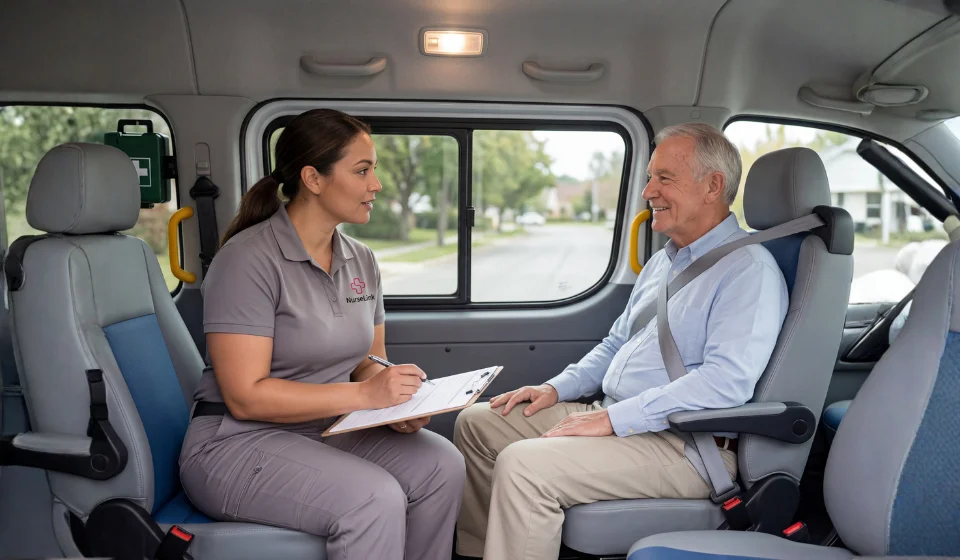
She also said something that the care coordinator noted because it was both straightforward and entirely reasonable. She said she hoped the transport officer would be someone she could have a conversation with, because the drive to the rehabilitation centre was long enough that sitting in silence felt slightly awkward and she was a sociable person who found that a pleasant conversation on the way to an appointment made the appointment itself feel less like an appointment.
She was not asking for a companion or for anything beyond the ordinary human warmth of two people sharing a car journey in a friendly rather than a purely transactional way. She was describing, with the directness of a retired teacher who had spent her career communicating clearly, the specific quality of the transport experience that would work best for her.
Her husband, who was present for the conversation, added that he would feel considerably better about the arrangement if the transport officer was reliable and communicated clearly, because the adjustment to not being able to drive his wife to her appointments was one he was finding more difficult than he had expected, and knowing that she was in good hands would help.
The NurseLink Healthcare Solution
A Transport Officer Who Was The Right Fit
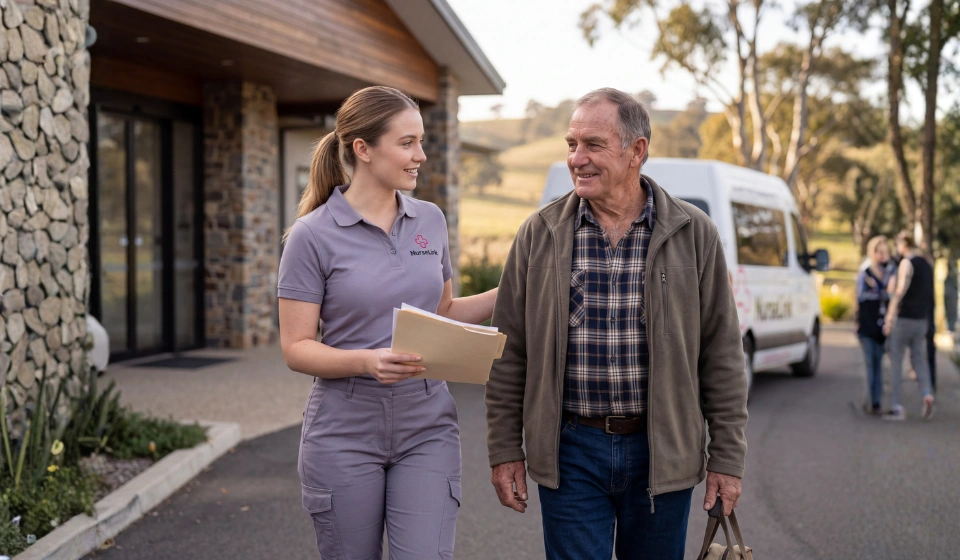
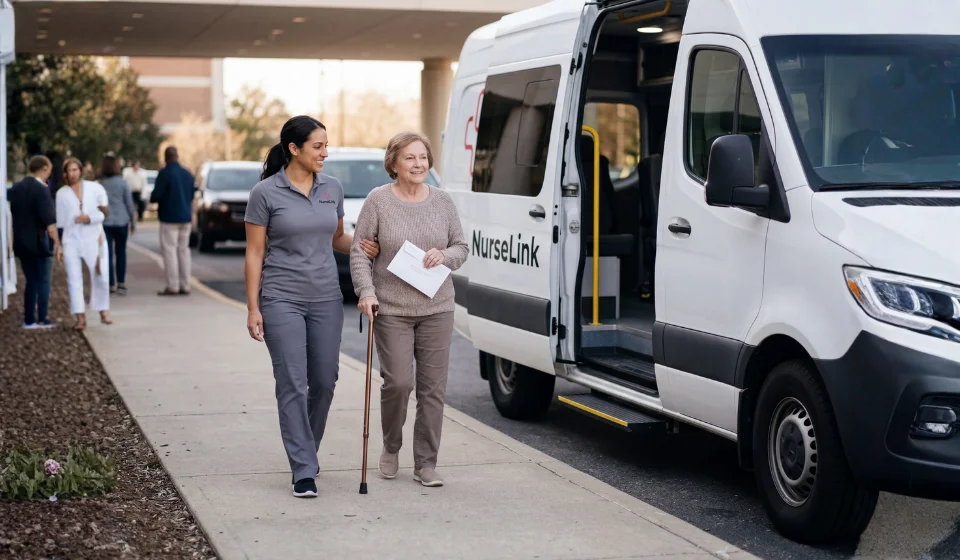
NurseLink Healthcare assigned a transport officer to her cardiac rehabilitation transport whose manner and approach the care coordinator had assessed as well matched to what she had described. She was experienced in patient transport for older adults, was punctual by nature and professional practice and had the particular quality of easy sociability that makes a car journey feel like a pleasant interlude rather than an awkward silence or an overly clinical transaction.
Before the first session, the transport officer had been briefed on the client’s cardiac background, her comfort requirements for the journey and the specific timing requirements of the rehabilitation programme. She had also been told, because it was relevant, that the client was a sociable person who enjoyed conversation and that matching that quality of engagement was part of what would make the arrangement work well.
The transport officer made contact the day before the first session to confirm the pickup time and to introduce herself briefly. The client mentioned later that the call had made the first session feel less daunting because she had already spoken to the person who was coming, which the care coordinator filed as a useful insight about how the pre-session contact should be managed for subsequent engagements of this kind.
Reliable, Comfortable Transport To Every Session
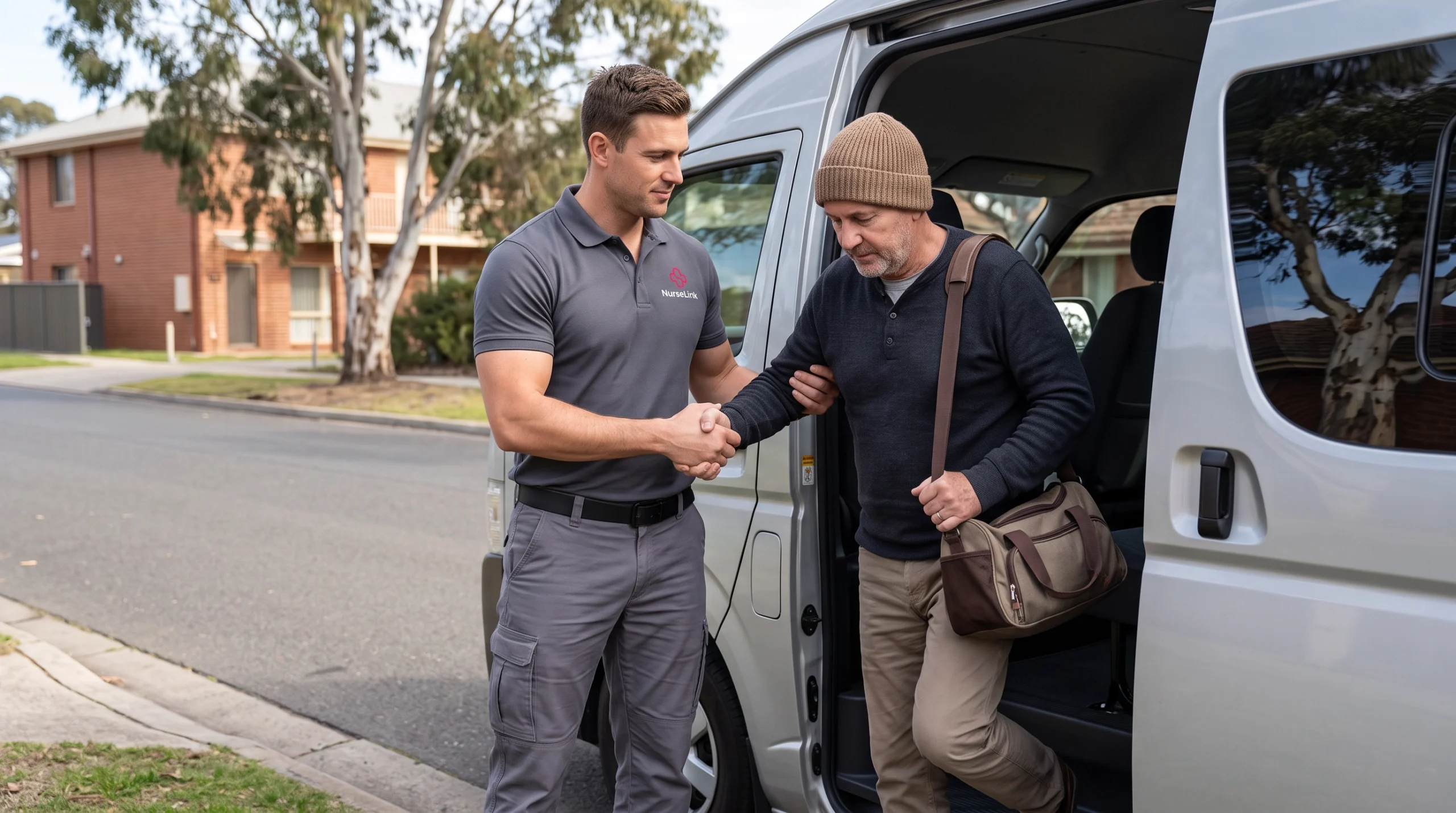
From the first session of the cardiac rehabilitation programme to the last, the transport officer arrived at the agreed time. Not approximately at the agreed time. At the agreed time, with sufficient consistency that the client mentioned it several times across the engagement as the feature of the arrangement she valued most after the friendliness of the transport officer herself.
The vehicle was comfortable for a person in her physical condition, and the route to the rehabilitation centre was managed with attention to the smoothness of the journey, avoiding the sharper corners and the abrupt braking that could make a car journey physically uncomfortable for someone recovering from a cardiac procedure.
She arrived at every session with time to settle before the exercise component began. She left every session and was back at her home within the timeframe that her husband expected, which meant that he was not sitting at home managing his anxiety about where she was and why she had not arrived. This regularity, which was a product of reliable timing and consistent communication rather than anything more elaborate, was one of the features of the arrangement that her husband mentioned when he spoke with the care coordinator at a review call several months into the programme.
Conversations That Made The Journey Something To Look Forward To
Across the months of the engagement, the twice-weekly journeys to and from the rehabilitation centre became, by the client’s own description, something she genuinely looked forward to rather than simply a logistical requirement she was managing. The transport officer and she had discovered, in the first few sessions, that they shared an interest in gardening and that the client’s community garden involvement provided a reliable and genuinely interesting topic that the transport officer engaged with not as a conversational technique but as genuine interest.
They talked about books occasionally, because she was in a book club and had opinions about what she was reading that she was happy to share. They talked about what was happening in the local area and about the transport officer’s own observations of the neighbourhoods they drove through. They talked, sometimes, about how the rehabilitation programme was going, which the client found useful in a way that was different from the clinical conversations she had with her rehabilitation team, because the transport officer was interested in her experience as a person rather than her progress as a patient.
The transport officer had understood, without being told explicitly, that these conversations were part of her role in this engagement rather than an addition to it. She brought to them the easy, warm engagement of a person who is genuinely interested in the people she works with, and the client, who had spent thirty-five years in a profession that required exactly this quality, recognised it and appreciated it.
Keeping Her Husband Informed & Reassured
The arrangement included a simple communication routine that NurseLink Healthcare had established at the outset specifically to address the husband’s concern about not being able to drive his wife himself. He received a brief message when she had been collected and a brief message when she was on her way home. The messages were short because that was all that was needed, and they arrived consistently because the transport arrangement was consistent.
His wife told the care coordinator at a review call several months into the programme that her husband had stopped asking her about the transport arrangement after the first month, which she interpreted as the highest possible indicator that the arrangement was working. A man who had been anxious about something that was now resolving itself reliably simply stopped being anxious about it. That was the outcome, and it was the right one.
Outcomes & Impact
She Completed The Full Cardiac Rehabilitation Programme
The most important clinical outcome of the engagement was the one that the whole arrangement existed to produce. She completed her full cardiac rehabilitation programme without missing a session due to transport. Every exercise session was attended. Every education session was attended. The programme that her cardiologist had identified as a core component of her recovery was delivered in full, consistently and on schedule.
Her cardiologist, reviewing her progress at the conclusion of the programme, noted that her physical fitness indicators had improved meaningfully across the rehabilitation period and that her completion of the full programme had given her the best possible foundation for the ongoing management of her cardiac health. He attributed this to her own commitment to the programme and to the fact that she had been able to attend consistently, which he understood was not simply a matter of personal commitment but of having the practical support that made consistent attendance possible.
Her Confidence In Her Own Recovery Grew
Cardiac rehabilitation is not only about physical recovery. It is about confidence. The person who has had a cardiac event and who has been through the fear and the disruption and the clinical management of that event needs, alongside the physical rehabilitation, the gradual restoration of confidence in her own body and in the life she had before the event. The programme provides a structured and supported environment in which that confidence is rebuilt, and the consistent attendance that NurseLink Healthcare’s transport made possible gave her the full benefit of that environment.
She described, at a review call near the end of the programme, feeling more like herself than she had since before the cardiac event. She attributed this to the programme itself and to the fact that she had been able to attend it properly rather than intermittently, and she said it with the straightforward satisfaction of a person who has done something difficult and done it well.
Her Husband Had One Less Thing To Feel Guilty About
Her husband’s experience of the engagement was not something he discussed at length, but it was present in the brief comments he made at the review call and in the way his wife described the change in the household across the months of the programme. He had felt guilty about not being able to drive her, which was both entirely understandable and entirely reasonable, and the guilt had added to the weight of an already significant period for both of them.
The transport arrangement had resolved that specific source of guilt by providing his wife with reliable, appropriate transport that he could trust, without requiring him to do anything other than know it was in place. That resolution was not dramatic, but it was real, and its effect on the household had been the particular lightening that comes when something that has been a source of anxiety stops being one.
A Transport Relationship That Became Genuinely Valued
At the conclusion of the cardiac rehabilitation programme and the formal end of the NurseLink Healthcare engagement, the client mentioned to the care coordinator that she was going to miss the drives. Not because she needed to go to the rehabilitation centre anymore, but because the twice-weekly conversations with her transport officer had become, across the months of the programme, a genuinely enjoyable feature of her week. She said this with the self-awareness of a person who understood that it reflected well on the transport officer and that it was, in its own way, the clearest possible measure of how well the arrangement had worked.
The transport officer, informed of this through the care coordinator, said she felt the same way.
A Reflection From The Client
Near the end of the engagement, she shared the following with the NurseLink Healthcare care coordinator:
“When my cardiologist referred me to cardiac rehab, I thought the transport was going to be the problem that stopped it from working. My husband can’t drive anymore, my children are busy and I didn’t want to be a burden. NurseLink solved that completely. The transport was always there, always on time and always with someone I genuinely enjoyed talking to. I didn’t miss a single session. My heart is stronger than it was before, my confidence is back and I have had some lovely conversations about gardening. It all sounds very simple when I say it like that, but it made a real difference and I am very grateful.”
Key Takeaways From This Case Study
Consistent transport is what turns a rehabilitation referral into a completed rehabilitation programme. A cardiac rehabilitation programme that a patient attends intermittently because her transport is unreliable produces partial outcomes. One she attends consistently because her transport is reliable produces full ones. The transport is not incidental to the clinical outcome. It is part of the infrastructure that produces it.
The quality of the transport experience affects how patients arrive at their appointments. A patient who arrives at her cardiac rehabilitation session having had a pleasant, comfortable journey is in a different physical and psychological state than one who has had a stressful or uncomfortable one. The manner of the transport matters clinically as well as personally.
Family members carry the weight of transport limitations alongside the patient. A husband who cannot drive his wife to her cardiac rehabilitation sessions and has no reliable alternative carries a specific and unnecessary source of guilt and anxiety alongside everything else a cardiac event brings to a family. A transport arrangement that resolves the practical problem resolves the emotional one alongside it.
Simple, consistent communication is what maintains a family’s confidence in a transport arrangement. The brief messages that kept her husband informed of her pickups and returns required minimal effort and produced significant reassurance. The reassurance was not a bonus. It was part of what the arrangement was providing.
Conclusion
Cardiac rehabilitation is one of the most evidence-based and clinically effective programmes in chronic disease management, and the patients who complete it benefit from it in ways that have been clearly and consistently demonstrated. The patients who benefit most are the ones who attend consistently, and consistent attendance requires consistent transport for the significant proportion of cardiac patients who cannot drive themselves.
For the woman at the centre of this case study, NurseLink Healthcare provided the transport that made consistent attendance possible. Reliable, comfortable, on time and provided by a transport officer whose friendly and engaging manner made the twice-weekly drive to the rehabilitation centre something her client looked forward to rather than simply managed.
She completed her programme. Her heart is stronger. Her confidence is back. And somewhere in Melbourne’s eastern suburbs, there is a community garden that is getting a great deal of well-informed attention.
If you or someone you love is managing a rehabilitation programme and transport is the practical obstacle between a good prescription and a completed one, we encourage you to reach out to the NurseLink Healthcare team. We are here to make sure that getting there is never the reason a recovery does not go as far as it should.
Latest Post
Getting Him Home, Then Getting Him Better
Getting Him There, Getting Him Home, Getting Him Through

When Getting To Care Is Part Of The Challenge
Getting There Made The Difference
Showing Up For Someone Nobody Else Was Showing Up For
Getting There Safely
Every Appointment, Every Time
One More Day With Her Family
The Journey Home

The First Step Out The Door
Every Tuesday & Thursday

Bridging The Gap To Treatment
More Than A Ride Home
Every Trip Counted
The Right Equipment. The Right Team. The Right Outcome.
Maintaining Treatment Continuity During Cancer Care
Safe Non-Emergency Patient Transport
Ensuring Safe & Consistent Medical Access
A Safe Journey Home After Surgery