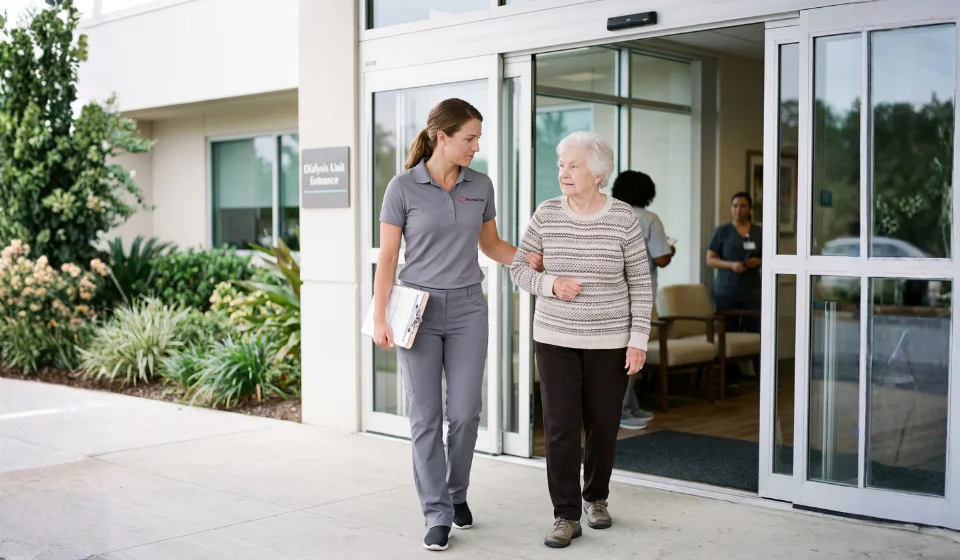
Showing Up For Someone Nobody Else Was Showing Up For
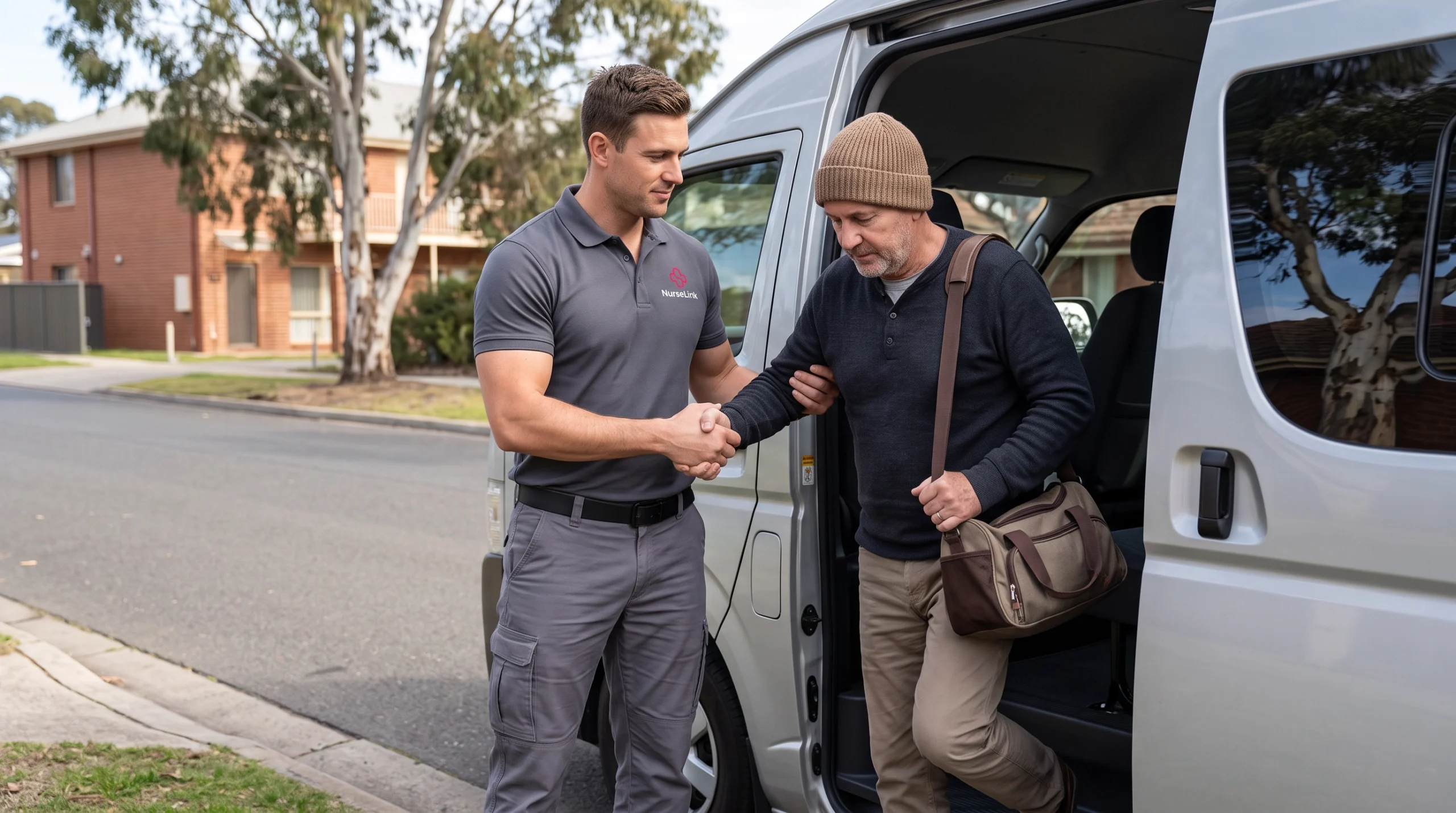
How NurseLink Provided Transport To A Homeless Man Navigating Cancer Treatment Alone
A Case Study In Person-Centred NEPT For A Patient With No Support Network
Introduction
Cancer does not only happen to people with houses and families and someone to drive them to their appointments. It happens to people who are sleeping rough, managing addiction, navigating the particular complexity of a life that has come apart in ways that the healthcare system is not always well equipped to address alongside the clinical management of a serious illness.
For a person experiencing homelessness who receives a cancer diagnosis, the barriers to treatment are not primarily clinical. The oncology team knows what to do. The treatment exists. The appointments are available. The barriers are the ones that sit between the person and the clinic, the transport, the storage of medications, the administrative requirements of a healthcare system that assumes a permanent address, the exhaustion of managing survival alongside managing treatment, and the particular invisibility of a person whose life circumstances make them easy to overlook in a system that is busy and under-resourced and not always designed for the people who need it most.
Non-emergency patient transport for a patient in this situation is not simply a logistical service. It is, in many cases, the thing that determines whether treatment happens at all. A person without a support network, without a car, without family to call and without the financial resources to manage the cost of getting from wherever they slept last night to an oncology clinic across the city, needs a transport arrangement that is reliable, dignified and built around their specific reality rather than around the assumptions of a service designed for people with more stable lives.
At NurseLink Healthcare, we believe that everyone who needs transport to medical treatment deserves transport that sees them as a person. This case study documents how our team provided consistent, dignified non-emergency patient transport to a man experiencing homelessness in regional Victoria, navigating a cancer treatment programme that he had nearly stopped attending, alone and without the support that most patients take for granted.
To protect the privacy of the client, all identifying details have been kept confidential throughout this case study.
The Client & His Situation
The client is a man in his mid-fifties who had been experiencing homelessness in a regional Victorian city for several years at the time of his cancer diagnosis. His path to homelessness had followed the particular trajectory that homelessness often follows, a combination of circumstances that arrived in a sequence that his capacity to manage had not kept pace with, and that had left him, by the time of this case study, without stable accommodation, without consistent support from family or friends and without the practical infrastructure that most people rely on without noticing.
He was known to the local community health service, which had been providing him with basic primary care and connecting him with social support services with varying degrees of success over the preceding years. He had a relationship with one of the health service’s outreach workers that was, by the standards of his current life, one of the more consistent points of human contact available to him.
The cancer diagnosis, a form of lung cancer that was serious but treatable if the treatment was completed consistently and on schedule, had been made during a presentation to the community health service that had been prompted by symptoms he had been managing, or not managing, for several months. The oncology team at the regional hospital had developed a treatment plan that included a course of chemotherapy and regular monitoring appointments at the hospital’s cancer centre, which was located across the city from the area where he typically spent his days.
The outreach worker who had been supporting him through the initial stages of the diagnosis and treatment planning had identified the transport gap early. He did not have reliable access to the bus routes that connected his area to the hospital. He did not have money for taxis. He did not have anyone to ask for a lift. And the experience of trying to manage a complex, multi-appointment treatment programme while simultaneously managing the daily demands of homelessness had already produced two missed appointments in the first weeks of his treatment, which his oncology team had noted with concern.
The outreach worker contacted NurseLink Healthcare.
Understanding What He Actually Needed
The initial conversation NurseLink Healthcare had with the outreach worker, and subsequently with the client himself, was one that required specific sensitivity to the circumstances of the person being supported. He was not a person who was accustomed to services showing up reliably. He was not a person who assumed that the people who said they would help would follow through. And he was not a person who found it easy to ask for or accept help, because the experience of his life had not provided many reliable templates for what helpful looked like.
The outreach worker was specific about what the transport arrangement needed to provide and what it needed to avoid. It needed to be consistent, because inconsistency was the thing that had already produced missed appointments and that would, if it recurred, produce a man who had decided that the treatment was not worth the effort of trying to get to it. It needed to be dignified, which in this context meant transport officers who would not treat him differently because of his circumstances, who would not make his homelessness the defining feature of the interaction and who would not, through manner or through the practical management of the arrangement, communicate that he was a difficult or unusual case rather than a person who needed a ride to the hospital.
It needed to accommodate the specific practical challenges of his situation. He did not have a fixed address for pickup. His location on any given day depended on where he had slept the night before and where he had spent the morning, which changed in ways that a standard transport booking system was not designed to accommodate. The arrangement needed to build in the flexibility to manage this reality rather than requiring him to conform to a system that had not been designed around people like him.
He said very little in the initial conversation, which the outreach worker had prepared NurseLink Healthcare for. He confirmed the appointment dates. He confirmed that he wanted the transport. He said, after a pause, that he needed it to actually show up. The outreach worker told him it would. The care coordinator told him the same thing and understood, as she said it, that the weight of those words for a person in his situation was considerably greater than they would be in most conversations.
The NurseLink Healthcare Solution
A Transport Officer Selected For This Specific Assignment
NurseLink Healthcare identified a transport officer for this engagement whose professional experience and personal manner were specifically suited to the requirements of supporting a patient experiencing homelessness. He had experience working with people from marginalised backgrounds in health transport contexts, an understanding of the specific communication approach that built rather than eroded trust in these circumstances and a manner that was warm without being condescending and consistent without being performative.
He was briefed comprehensively on the client’s situation, the practical challenges of his accommodation circumstances and the specific things that the outreach worker had identified as important for the transport relationship to get right. He was told that the client had missed appointments before and that the missed appointments had not been because he did not want to attend. He was told that showing up reliably was the most important single thing the transport arrangement could do. He understood this and confirmed that he would.
The transport officer made contact with the outreach worker the day before the first appointment to confirm the pickup arrangement and to understand where the client was likely to be on the morning of the appointment. The logistics were different from a standard transport booking, and he managed them with the practical flexibility of someone who understood that the arrangement needed to work for the person it was serving rather than requiring the person to conform to the arrangement.
A Flexible Pickup Arrangement That Worked Around His Reality
NurseLink Healthcare established a pickup arrangement that accommodated the practical reality of the client’s situation rather than requiring him to have a fixed address that he could not provide. The outreach worker served as a coordination point, confirming the client’s expected location on the morning of each appointment and communicating this to the transport officer, who arrived at the confirmed location rather than at a standard address.
This arrangement required operational flexibility that a standard transport booking system did not provide, and NurseLink Healthcare built the flexibility into the engagement from the outset rather than treating it as an exception to be managed case by case. The client knew, in the days leading up to each appointment, that the transport was coming and where it would meet him. He did not need to arrange anything, call anyone or navigate a system that had not been designed for his circumstances. He needed to be at the agreed location, and the transport would be there.
On the occasions when his location on the morning of an appointment differed from what had been anticipated, the outreach worker communicated the change to the transport officer and the pickup was adjusted accordingly. There were no missed appointments due to the transport not being able to locate him. There were no occasions where he arrived at the agreed pickup point to find the transport was not there.
Consistent, Dignified Transport To Every Appointment
The transport officer treated every journey with the same standard of professionalism and respect that NurseLink Healthcare applied to every engagement, regardless of the circumstances of the person being transported. He did not treat the client’s homelessness as something to be managed around or referenced or handled carefully. He treated it as a feature of the client’s current situation that was relevant to the practical logistics of the arrangement and irrelevant to the quality of the interaction.
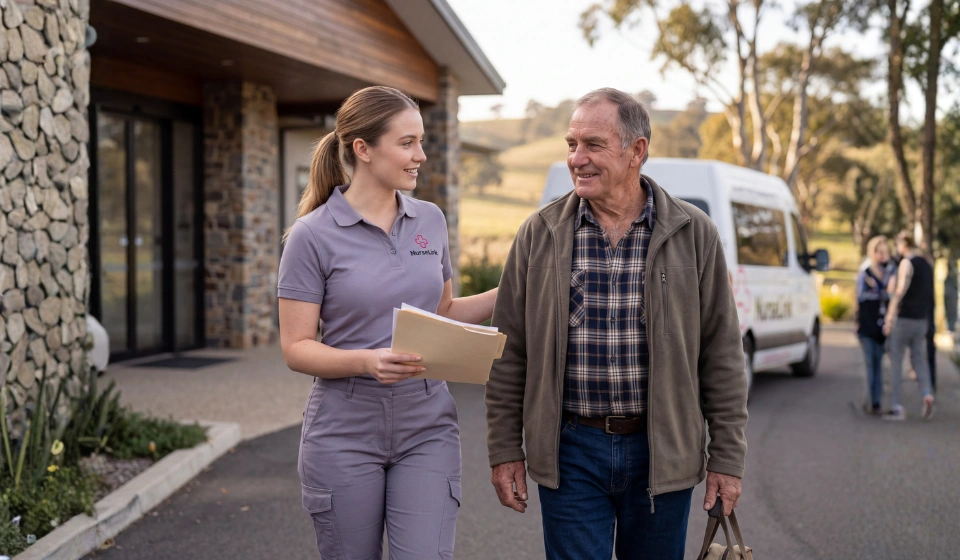
He showed up. He greeted the client by name. He drove him to the hospital. He waited when the appointment ran long. He drove him back to wherever he needed to be dropped. He did this consistently, across every appointment in the treatment programme, with the same manner and the same reliability, because that was what the client needed and what NurseLink Healthcare had committed to providing.
Across the weeks of the engagement, the client began to show the signs of a trust that was being built slowly and on the basis of evidence rather than words. He became marginally more talkative on the journeys. He began, occasionally, to say something about how the appointment had gone. He mentioned, on one journey, something about a place he had lived before things had gone the way they had. The transport officer listened without making more of it than was offered, because that was the right response and he understood it was the right response.
The outreach worker, who checked in with the client regularly throughout the engagement, noted that his attitude toward his treatment appointments had changed across the weeks. In the early period, he had attended with the resigned compliance of a person doing something because someone had told him he should. By the middle of the engagement, he was attending with something that looked more like investment. He was asking his oncology team questions. He was keeping track of his treatment milestones. He was, in the way that a person becomes when they believe that something is actually going to keep working, beginning to plan around the treatment rather than around whether the treatment would happen.
Coordination With The Outreach Worker & Clinical Team
NurseLink Healthcare maintained active communication with the outreach worker throughout the engagement, providing a clear and timely account of each appointment journey and flagging anything that the outreach worker needed to know. This communication was not elaborate, but it was consistent and it was honest, covering whether the appointment had been attended, how the journey had gone and any observation from the transport officer that was relevant to the outreach worker’s broader support of the client.
The outreach worker used this information as part of the picture she was maintaining of how the client was managing across the treatment period, and the communication from NurseLink Healthcare was a reliable and specific input into that picture rather than the vague and intermittent feedback that a less attentive transport arrangement would have provided.
Outcomes & Impact
He Attended Every Scheduled Treatment Appointment
From the point NurseLink Healthcare’s transport arrangement began, he did not miss a single scheduled cancer treatment appointment. The pattern of missed appointments that had characterised the earliest weeks of his treatment, before the transport arrangement was in place, ceased entirely. His oncology team, which had noted the early missed appointments with concern, received instead a patient who was attending consistently and engaging with his treatment with a quality of presence that improved across the weeks.
His treatment proceeded on the schedule that his oncology team had planned. The gaps that missed appointments would have introduced into a chemotherapy programme where timing matters clinically did not occur. The clinical outcome that consistent treatment attendance makes possible was available to him in a way that it had not been before the transport arrangement was established.
His Engagement With His Own Treatment Changed
The shift in how he engaged with his cancer treatment across the weeks of the transport engagement was noted by his oncology team, by his outreach worker and, indirectly, by the transport officer whose observations of the journeys contributed to the picture that was emerging. A man who had arrived at his first attended appointment with the detachment of a person who had not yet decided whether this was worth pursuing had become, across the weeks of consistent transport and consistent treatment, a man who was asking questions and tracking milestones and talking about what came after the treatment in a way that assumed it was going to be completed.
The outreach worker described the change in his engagement with his own health as one of the more significant things she had observed in her work with him. She attributed it to many factors, the treatment itself, the ongoing support of the clinical team, the consistent attention of her own outreach work. She also attributed it to the simple, repeated experience of a vehicle arriving where it had said it would arrive, taking him where he needed to go and treating him like a person who was worth showing up for. That experience, accumulated across the weeks of the engagement, had been part of what had made believing in the treatment possible.
His Dignity Was Protected Throughout
The client did not, across the full engagement period, have a single interaction with NurseLink Healthcare’s transport officer that made him feel that his circumstances were something to be managed rather than something to be accommodated. He was not spoken to differently. He was not handled differently. He was not made to feel that his presence in the vehicle was something the transport officer was tolerating rather than something he had arrived to provide.
For a person whose experience of many of the systems and services he interacted with involved a degree of implicit communication that his circumstances made him a lesser participant in the interaction, the experience of being treated as an ordinary person by an ordinary professional doing an ordinary job was not a small thing. It was, in the specific context of his situation, one of the more consistent experiences of dignity that the treatment period provided.
The Outreach Worker's Capacity Was Protected
The transport arrangement that NurseLink Healthcare provided removed from the outreach worker’s already full plate the daily anxiety of how the client was going to get to his treatment appointments. She had been managing this concern alongside everything else she was managing for him and for her other clients, and the resolution of the transport gap gave her back the attention that the uncertainty had been consuming. She used it for the other dimensions of her support for him, which were numerous and which benefited from the additional capacity that not managing the transport concern provided.
A Reflection From The Outreach Worker
In a conversation with the NurseLink Healthcare care coordinator several weeks into the engagement, the outreach worker shared the following:
“He had already missed two appointments before we called you. I was genuinely worried that he was going to stop going altogether, and if he stopped going the treatment was over. What NurseLink did was simple and it was everything. They showed up. Every time, in the right place, with someone who treated him like a person. He started talking about finishing the treatment. He started talking about what came after. I have been doing this work for a long time and I know what it means when someone starts thinking past the next crisis. It means something has given them a reason to. NurseLink gave him that reason, one appointment at a time.”
Key Takeaways From This Case Study
Cancer does not only happen to people with stable lives, and transport solutions must reflect this. A transport arrangement designed around the assumption of a fixed address, a stable routine and a support network will not work for a patient experiencing homelessness. NurseLink Healthcare’s approach to this engagement was built around the client’s actual circumstances rather than the assumed circumstances of a standard transport patient.
Dignity in transport is a clinical outcome, not a courtesy. A patient who is treated with dignity arrives at their clinical appointment differently than one who has been managed as an inconvenient case. The quality of the transport interaction affects the quality of the clinical engagement it delivers the patient to. NurseLink Healthcare’s commitment to treating this client with the same respect afforded to every other patient was not peripheral to his clinical outcomes. It was connected to them.
Consistency is the most powerful thing transport can provide for a patient who has stopped trusting systems. A person who has learned through experience that systems do not follow through will not invest in a treatment programme that depends on a system following through, until the system demonstrates, through repeated reliable evidence, that it will. NurseLink Healthcare’s consistent presence across the weeks of the engagement was the evidence that made his investment in his own treatment possible.
Flexible transport logistics protect patients whose lives do not fit standard service models. A transport arrangement that requires a fixed address and a standard booking process will exclude the patients who need transport most. Building flexibility into the logistics of the arrangement, as NurseLink Healthcare did in coordination with the outreach worker, is what made reliable transport to every appointment achievable for a person whose circumstances made standard arrangements unworkable.
Conclusion
Cancer treatment requires showing up. For most patients, showing up is hard enough. For a man sleeping rough in regional Victoria, without a support network, without reliable transport and without the stable daily structure that makes managing a treatment programme straightforward, showing up was the achievement that everything else depended on.
NurseLink Healthcare provided the transport that made showing up possible. A flexible, consistent, dignified arrangement that met him where he was, took him where he needed to go and treated him, every single time, like a person who was worth the effort.
He completed his treatment. That is what the transport made possible, and it is everything.
If you are a health professional or outreach worker supporting a patient whose transport barriers are standing between them and the treatment they need, we encourage you to reach out to the NurseLink Healthcare team. We are here for every patient, regardless of their circumstances, and we will show up.
Latest Post
Getting Him Home, Then Getting Him Better
Getting Him There, Getting Him Home, Getting Him Through

When Getting To Care Is Part Of The Challenge

Getting There Made The Difference
Showing Up For Someone Nobody Else Was Showing Up For
Getting There Safely
Every Appointment, Every Time
One More Day With Her Family
The Journey Home
The First Step Out The Door
Every Tuesday & Thursday

Bridging The Gap To Treatment
More Than A Ride Home
Every Trip Counted
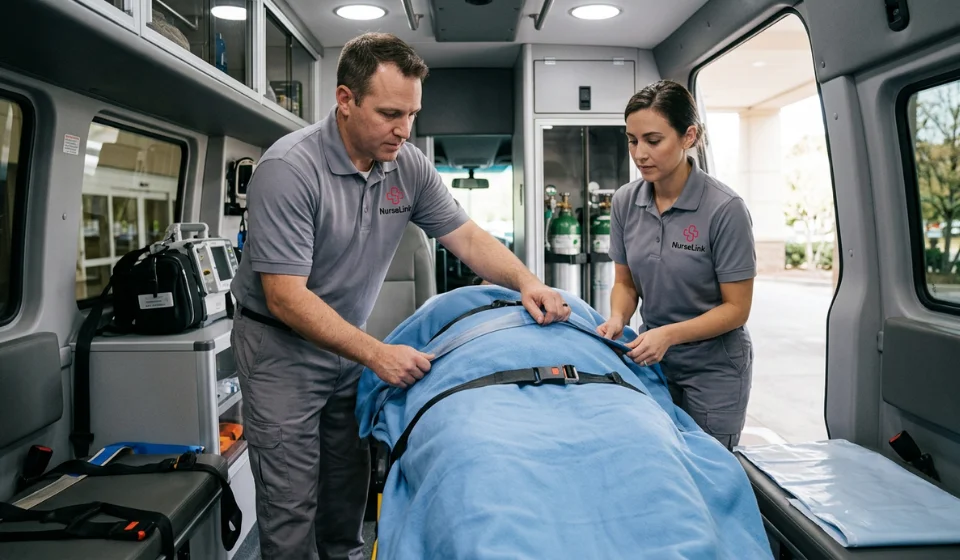
The Right Equipment. The Right Team. The Right Outcome.
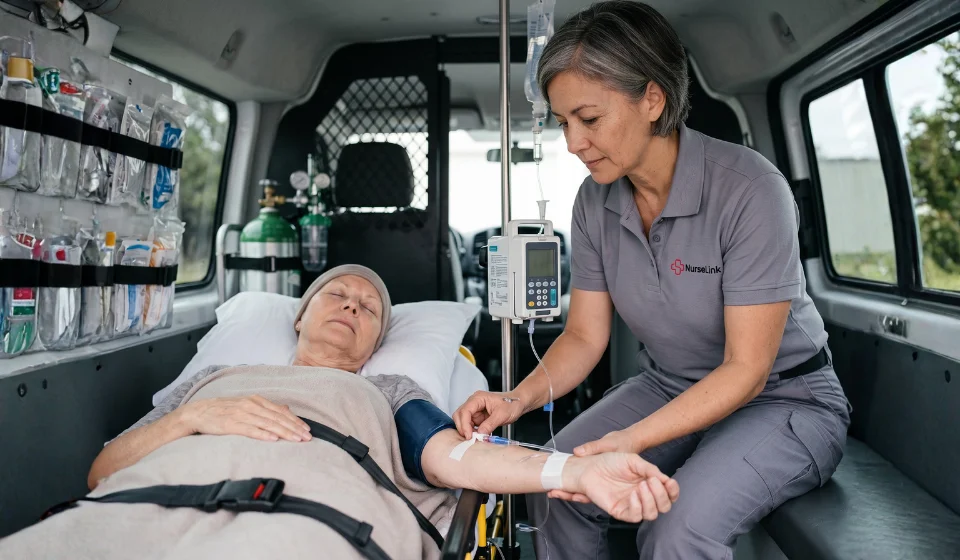
Maintaining Treatment Continuity During Cancer Care
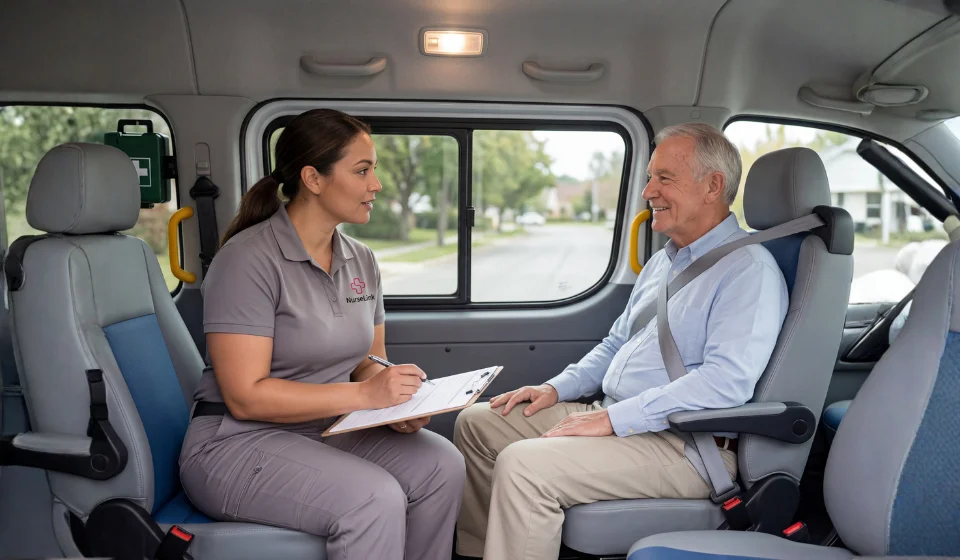
Safe Non-Emergency Patient Transport
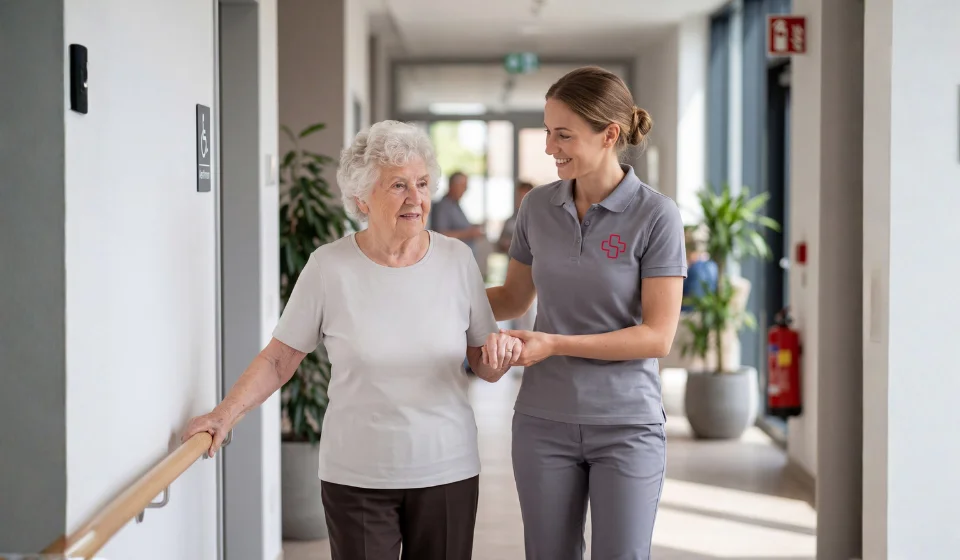
Ensuring Safe & Consistent Medical Access
A Safe Journey Home After Surgery