The Transfer He’d Been Fearing More Than The Diagnosis
How NurseLink 's Bariatric Transport Capability Got A Mildura Man To Treatment Without Losing His Dignity
A Case Study In Complex Mobility Transport That Treated Equipment As The Easy Part
Introduction
For patients living with significant obesity, the physical logistics of moving between healthcare facilities can become a source of dread entirely separate from whatever medical condition is prompting the transfer in the first place. Standard transport equipment, stretchers, hoists, vehicle configurations, is simply not built for every body, and when a service cannot safely and comfortably accommodate a patient’s size, the resulting experience can be genuinely humiliating: delays while appropriate equipment is sourced, uncomfortable improvisation with equipment not rated for the task, or, in the worst cases, staff who are visibly uncertain or uncomfortable with the transfer itself. For many bariatric patients, this experience becomes something they anticipate and dread well before it happens, often having already lived through it during previous encounters with a healthcare system not equipped for their needs.
The clinical solution to this is, on its face, straightforward: correctly rated bariatric equipment and appropriately trained crew. But the more significant challenge, and the one that determines whether a transfer is simply completed or genuinely well handled, is ensuring that having the right equipment does not become the entire story, that the patient experiences competence and normalcy rather than a transfer that treats his size as the central, unspoken subject of the entire journey.
This case study documents how NurseLink Healthcare’s Non-Emergency Patient Transport service managed a complex bariatric transfer for a man in his fifties from a rural hospital in Mildura to a specialist unit several hours away, and how a combination of proper equipment and genuinely thoughtful care turned a transfer he had been quietly dreading into one he described afterwards as unremarkable, in the best possible sense of the word.
To protect the privacy of the client, all names and identifying details have been kept confidential throughout this case study.
The Client & His Situation
The client is a man in his mid-fifties living in Mildura, in Victoria’s far north-west, admitted to his local hospital with a deteriorating knee condition that required assessment and likely surgical intervention at a specialist orthopaedic unit several hours away. His significant weight, a long-standing condition compounded by the reduced mobility his knee had caused over recent years, meant that his transfer required bariatric-rated equipment and specifically trained crew, well beyond what a standard NEPT booking would call for.
He had, by the time NurseLink Healthcare’s referral arrived, already experienced two previous transport encounters that he described to the admitting nurse as genuinely awful, on one occasion waiting over three hours in a hospital corridor while an appropriately rated vehicle was located, and on another being moved using equipment that visibly struggled with his weight, an experience he found not just physically uncomfortable but deeply embarrassing, conducted, as he put it, in full view of a waiting room. He told his treating doctor plainly, ahead of this transfer, that he was more anxious about the journey itself than about whatever the specialists at the other end were going to tell him about his knee.
His admitting hospital’s referral to NurseLink Healthcare noted his previous experiences explicitly, along with a request that whatever service handled this transfer treat both the equipment and the manner of the transfer as equally important to getting right
Understanding What He Actually Needed
When NurseLink Healthcare’s transport coordinator reviewed the referral, the equipment requirements were clear: a bariatric-rated stretcher and vehicle configuration, and crew members specifically trained and experienced in safe bariatric manual handling, none of which was unusual for the service to provide, but all of which needed to be correctly matched and confirmed well ahead of the scheduled transfer date rather than arranged reactively on the day.
But the coordinator, reading between the lines of the referral notes and the admitting hospital’s explicit comments about his previous experiences, recognised that the clinical logistics were, in some ways, the more straightforward half of what this transfer required. He needed a crew who would treat the entire process as thoroughly normal, competent and unremarkable, neither drawing attention to his size through awkwardness or overcompensating caution, nor treating the transfer as a special or difficult case requiring visible extra effort that would itself become uncomfortable for him to witness.
Practically, this meant crew members experienced enough with bariatric transport that the process felt genuinely routine to them, confident handling that communicated competence rather than uncertainty, and a manner throughout the journey that engaged with him as a patient being transported for a knee problem, rather than as a bariatric case being managed around a knee problem.
The NurseLink Healthcare Solution
Equipment Confirmed & Tested Well Before The Day
NurseLink Healthcare’s transport coordinator confirmed the correctly rated bariatric stretcher and vehicle well ahead of the scheduled date, cross-checking capacity ratings directly against his admission details rather than relying on general assumptions, and ensured the assigned crew had recent, hands-on experience with the specific equipment being used, removing any risk of the kind of on-the-day scrambling that had caused his previous transfer such delay and discomfort.
A Crew Selected Specifically For Bariatric Transport Experience
The crew assigned to the transfer were selected specifically for their established experience with bariatric patients, chosen deliberately over otherwise available crew without that specific background, on the basis that genuine ease and competence during the physical handling itself would do more to protect his dignity than any amount of verbal reassurance could achieve on its own.
An Approach That Started With Him, Not His Equipment Needs
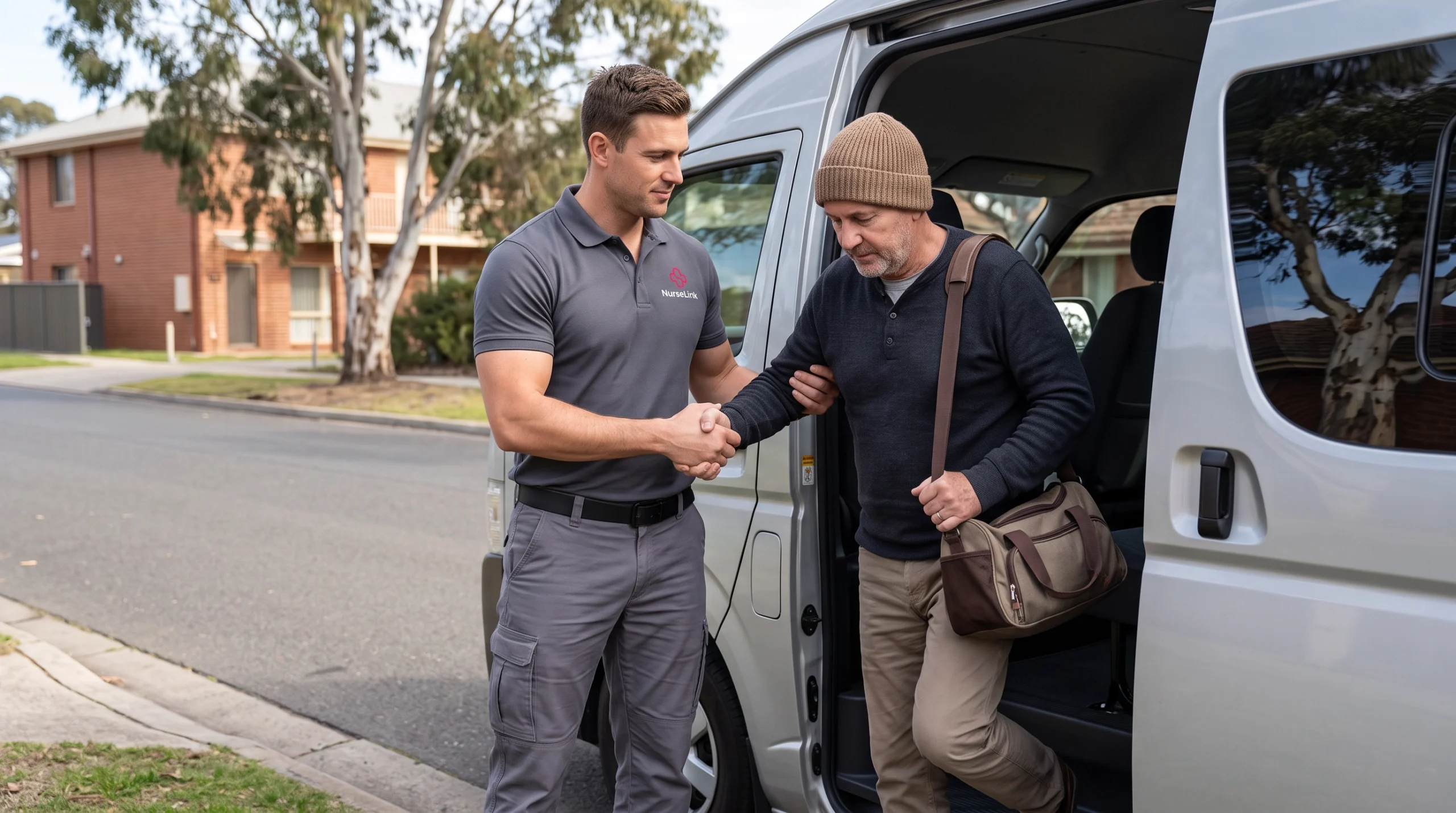
On arrival, the crew introduced themselves to him directly, discussed the plan for the transfer in ordinary, unhurried terms, and asked about his comfort preferences for the journey in exactly the way they would with any patient, deliberately avoiding language or behaviour that singled out his size as the notable feature of the transfer. The senior crew member later reflected that this was a conscious choice: treating the bariatric equipment as simply the right tool for this particular job, rather than a special accommodation being made, set the tone for the entire interaction that followed.
Handling That Communicated Competence, Not Caution
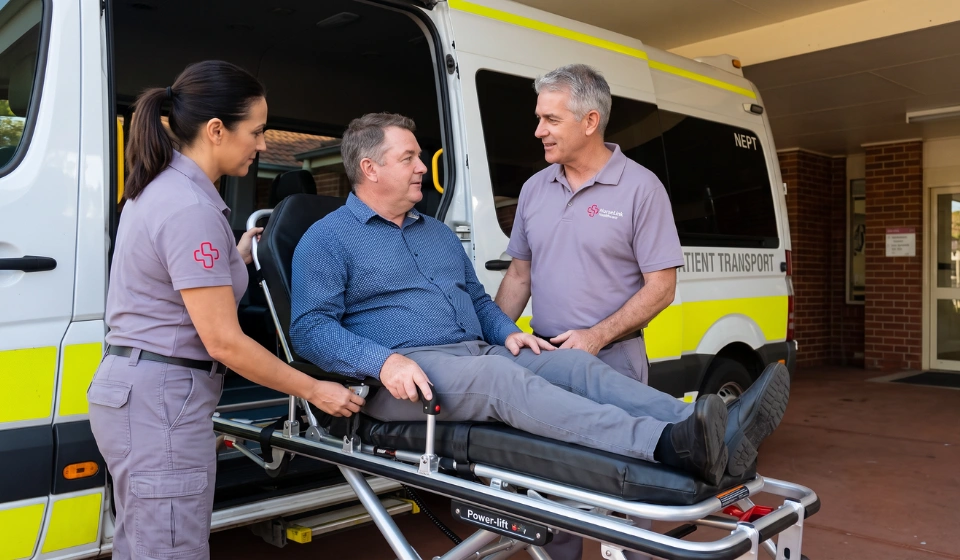
Throughout the transfer itself, from bed to stretcher, stretcher to vehicle, and eventual arrival at the receiving unit, the crew’s manual handling was confident, well-coordinated and unhurried, the kind of practised competence that comes from genuine experience rather than careful improvisation. He was moved smoothly and without incident at each stage, an experience he noted afterwards felt entirely different from what he had come to expect.
Conversation That Kept The Focus On Him, Not His Size
Across the several hours of the journey, the crew maintained easy, ordinary conversation, largely about his knee, his life in Mildura and what he was hoping to hear from the specialists, deliberately keeping the tone consistent with any other transfer rather than allowing the journey to become defined, even implicitly, by his weight.
Outcomes & Impact
The Transfer Was Completed Smoothly & On Schedule
The transfer proceeded without delay or complication, in marked contrast to his previous experiences, with correctly matched equipment and an experienced crew ensuring the entire journey ran to schedule from departure to arrival.
He Arrived Without The Anxiety He Had Expected To Carry
Staff at the receiving unit noted that he arrived calm and engaged, a contrast, his admitting notes suggested, to the anxious anticipation he had described before departure, and one he attributed directly to how differently this transfer had been handled compared to his previous experiences.
His Dignity Was Genuinely Protected Throughout
In a follow-up conversation with the NurseLink Healthcare coordinator, he specifically noted that at no point during the journey did he feel like his size was the subject of the transfer, an experience he contrasted directly and pointedly with his two previous transport encounters.
His Specialist Assessment Proceeded Without Delay
Because the transfer was completed on schedule and without incident, his orthopaedic assessment proceeded as planned, allowing his treatment pathway to progress without the kind of delay that logistical transport problems had previously caused.
He Reported Genuine Confidence In Future Transfers
Perhaps most significantly, he told the coordinator that he no longer dreaded the prospect of further transport for ongoing treatment, a shift that mattered considerably given that his knee condition was likely to require further specialist visits over the coming months.
A Reflection From The Client
Some days after his transfer, he shared the following with the NurseLink Healthcare coordinator during a follow-up call:
He said that after his previous experiences with transport, he had genuinely considered asking his GP whether the knee surgery was worth pursuing at all, purely because the thought of what getting to and from appointments might involve had become its own source of dread, sitting alongside a medical problem that was already hard enough to manage. What struck him about this transfer was how little of a big deal it was made to feel, that the crew clearly knew what they were doing, moved him without any of the awkwardness or hesitation he had come to expect, and spent the drive talking to him like any other patient rather than treating his size as the main event. He said arriving calm rather than rattled probably helped the whole specialist appointment go better too, since he wasn’t spending the consultation still recovering from the trip there. He said, plainly, that it was the first time transport had felt like it was built for someone like him, rather than something he had to be squeezed into and tolerated through.
Key Takeaways From This Case Study
Correctly rated equipment is the baseline requirement for bariatric transport, not the differentiator. Every reputable NEPT provider can, in principle, source appropriately rated stretchers and vehicles. What separates a genuinely good transfer is everything built around that equipment.
Crew confidence and experience directly shape a patient’s sense of dignity during transport. Practised, unhurried handling communicates competence in a way that reduces a patient’s self-consciousness far more effectively than verbal reassurance alone.
Treating specialised equipment as simply the right tool for the job, not a special accommodation, changes the entire tone of a transfer. Avoiding language or behaviour that singles out a patient’s size protects their dignity as much as the physical handling itself.
Previous negative experiences shape a patient’s anxiety long before a new transfer begins. Understanding what this client had already been through allowed the crew to deliberately counter those expectations rather than unknowingly repeating them.
A well-handled transfer affects more than the journey itself. Arriving calm rather than anxious supported this client’s engagement with his subsequent specialist appointment, extending the value of a well-managed transport well beyond the drive itself.
Conclusion
A transfer that could easily have repeated the dread and discomfort of his previous experiences became, through correctly matched equipment and a crew who treated competence and dignity as equally non-negotiable, something the client described afterwards as entirely unremarkable, precisely the outcome a well-run bariatric transfer should achieve. For the man at the centre of this case study, NurseLink Healthcare provided not only the specialised equipment his transfer required, but a standard of care that let his size be a logistical detail rather than the defining feature of his journey.
His knee treatment proceeded without delay. His anxiety about future appointments has genuinely eased. And a transfer he had once dreaded more than his diagnosis became, in his own words, the first time transport had ever felt like it was built for someone like him.
If you or someone you love requires complex or bariatric patient transport, we encourage you to reach out to the NurseLink Healthcare team. We bring the right equipment and, just as importantly, the right approach to every transfer we undertake.
Latest Post
Getting Him Home, Then Getting Him Better
Getting Him There, Getting Him Home, Getting Him Through

When Getting To Care Is Part Of The Challenge

Getting There Made The Difference
Showing Up For Someone Nobody Else Was Showing Up For
Getting There Safely
Every Appointment, Every Time
One More Day With Her Family
The Journey Home
The First Step Out The Door
Every Tuesday & Thursday

Bridging The Gap To Treatment
More Than A Ride Home
Every Trip Counted
The Right Equipment. The Right Team. The Right Outcome.
Maintaining Treatment Continuity During Cancer Care
Safe Non-Emergency Patient Transport
Ensuring Safe & Consistent Medical Access
A Safe Journey Home After Surgery