The Transfer That Wasn’t Routine To Him
How NurseLink's Non-Emergency Patient Transport Turned A Standard Interfacility Transfer Into A Calm, Dignified Journey
A Case Study In Clinical Transport That Understood The Patient Behind The Paperwork
Introduction
In the language of hospital logistics, an interfacility transfer is often described, quite accurately from an administrative standpoint, as routine. A patient is moved from one facility to another for a higher level of care, a specific procedure, or ongoing management better suited to a different unit, and the transfer itself is logged, scheduled and completed as one of hundreds of similar movements happening across a health system each week. For the clinicians and administrators coordinating it, routine is the right word.
For the patient lying on the stretcher, it very rarely feels that way. A transfer between hospitals, however clinically straightforward, often arrives at a moment of genuine vulnerability: unfamiliar surroundings, uncertainty about what is happening next, and for many patients, particularly older patients or those managing anxiety alongside their physical condition, a real fear that gets easily overlooked precisely because the transport itself is considered low-risk. The clinical task may be simple. The experience of it, for the person being moved, rarely is.
This case study documents how NurseLink Healthcare’s Non-Emergency Patient Transport service managed a routine interfacility transfer for an elderly man in regional Victoria, moved from his local hospital to a specialist cardiac unit several hours away, and how attentive, patient-centred care turned a logistically simple transfer into one the patient later described as the calmest part of a frightening week.
To protect the privacy of the client, all names and identifying details have been kept confidential throughout this case study.
The Client & His Situation
The client is a man in his late seventies living in a small town in Victoria’s Western District, admitted to his local regional hospital after presenting with chest pain and irregular heart rhythm. Initial assessment and stabilisation were managed locally, but his treating team determined that he required transfer to a specialist cardiac unit in Geelong, roughly two and a half hours away, for further investigation and a procedure not available at his local facility.
Clinically, he was stable enough for non-emergency transport, on cardiac monitoring, with a moderate level of anxiety noted in his admission file, unsurprising given the circumstances, but nothing that changed the classification of the transfer itself. Administratively, it was a standard interfacility booking: a stable cardiac patient, scheduled transport, several hours’ drive to a specialist facility.
He had, by his own account to hospital staff, never been further from home than the regional centre forty minutes away, had lost his wife two years earlier, and was making the trip without any family member able to accompany him, his only daughter living interstate and unable to get there before the transfer was scheduled. He told the ward nurse, the morning of the transfer, that he was more worried about the drive than about whatever the specialists in Geelong were going to find.
Understanding What He Actually Needed
When NurseLink Healthcare’s transport team received the referral, the clinical requirements were clear and, by NEPT standards, unremarkable: continuous cardiac monitoring during transport, a crew qualified to manage a stable but monitored cardiac patient, and a stretcher transfer suited to a man with limited mobility following several days of bed rest. Nothing in the referral flagged anything beyond standard protocol.
But the transport coordinator reviewing the booking noted the admission file’s reference to his anxiety and lack of accompanying family, and recognised, from experience, that a two-and-a-half-hour transfer for an elderly patient travelling alone, away from everything familiar, toward a specialist unit he had never seen, carried a dimension of need that the clinical paperwork alone did not capture. He needed, beyond stable monitoring, a crew who would treat the journey itself as something worth managing carefully, not simply a transport task to be completed efficiently between two points on a map.
Practically, this meant a crew comfortable spending the drive in genuine conversation rather than clinical silence, alert to signs of escalating anxiety beyond what vital signs alone would show, and able to communicate clearly with both the sending and receiving hospitals so that he arrived not as an unfamiliar case file but as a patient whose journey, and whose state of mind on arrival, the receiving unit already had context for.
The NurseLink Healthcare Solution
A Crew Briefed On More Than Just The Clinical Handover
Before departure, the NurseLink Healthcare crew reviewed not only his clinical file but the ward nurse’s handover notes regarding his anxiety and circumstances, and made a deliberate decision, before ever meeting him, to build extra time into the pre-departure routine for a proper introduction rather than a brisk clinical handover straight onto the stretcher.
A Departure That Started With Conversation, Not Procedure
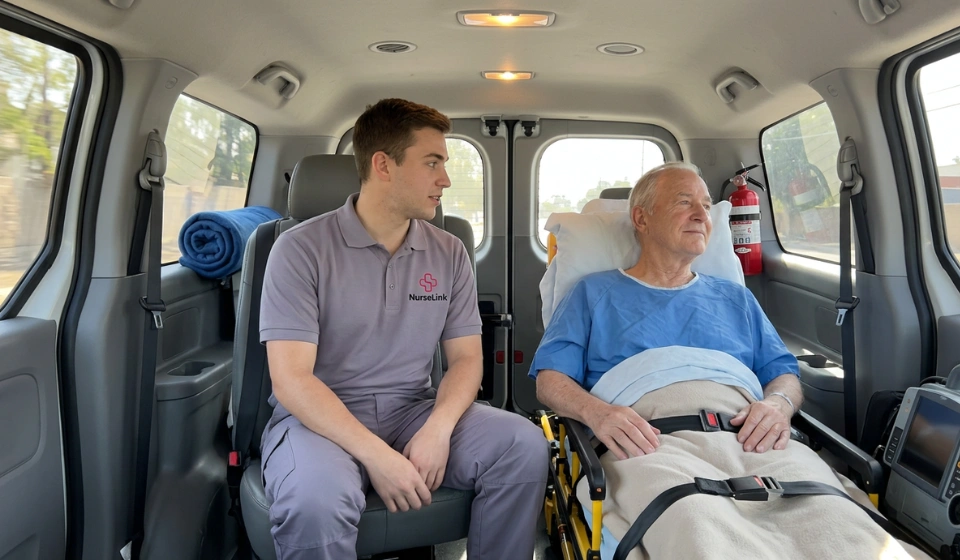
On arrival at his bedside, the crew took several minutes before beginning any transfer procedures to introduce themselves properly, explain in plain terms what the next few hours would involve, and ask directly what would make the trip easier for him, rather than assuming his only concern was the destination. He mentioned, almost as an aside, that he got carsick on long trips and hated not being able to see out a window. Both were noted and accommodated in how he was positioned and monitored throughout the journey.
Continuous Clinical Monitoring Without Clinical Coldness
Throughout the transfer, his cardiac monitoring was maintained to full protocol, with regular observations and clear documentation for the receiving unit, while the crew maintained an easy, unhurried conversation across the drive, covering nothing more complicated than the towns they passed through and the football season, deliberately keeping the atmosphere calm rather than clinically formal. The senior crew member later noted that this was a deliberate choice, not an incidental one: a genuinely relaxed atmosphere does more to keep an anxious patient’s observations stable than repeated verbal reassurance alone.
Real-Time Communication That Prepared Both Ends Of The Journey
Midway through the transfer, the crew radioed ahead to the receiving cardiac unit, not only with the required clinical update but with a brief note about his circumstances, travelling alone, some anxiety, no family present on arrival, so that the receiving nursing staff could greet him with that context already in hand rather than treating his arrival as an anonymous handover.
A Handover Designed To Ease, Not Just Complete, The Transition
On arrival in Geelong, the crew stayed briefly beyond the minimum clinical handover to properly introduce him to the receiving nurse by name, a small gesture that meant his first moment in an entirely unfamiliar hospital involved a familiar face making the introduction, rather than being left alone with strangers the instant the stretcher stopped moving.
Outcomes & Impact
The Clinical Transfer Was Completed Without Incident
His cardiac monitoring remained stable throughout the full transfer, with no complications during transport, and the receiving unit’s admission notes recorded a smooth, well-documented handover that allowed his cardiac work-up to begin promptly on arrival.
His Anxiety Did Not Escalate During The Journey
Ward staff at the receiving facility noted, in contrast to what is sometimes observed in anxious patients following long interfacility transfers, that he arrived notably calm, engaged easily with the admitting team, and mentioned unprompted that the trip down had been far less stressful than he had expected.
He Felt Genuinely Cared For, Not Just Transported
In a follow-up call from the NurseLink Healthcare coordinator several days later, standard practice for transfers flagged with additional patient needs, he described the crew’s attentiveness as the thing that had made the day bearable, noting that he had expected to spend the drive alone with his worry and instead spent it in what he called decent company.
His Family Gained Reassurance From A Distance
His daughter, unable to accompany him in person, was contacted directly by the transport coordinator with a brief update once he had arrived safely, a small step that gave her genuine peace of mind during a period when she had otherwise felt helpless to support him from interstate.
The Procedure He Needed Proceeded Without Delay
Because the transfer was completed smoothly, with clear and timely communication to the receiving unit, his cardiac investigation and subsequent treatment proceeded on schedule, without any delay attributable to the transport itself.
A Reflection From The Client
Some days after his transfer, he shared the following with the NurseLink Healthcare coordinator during a follow-up call:
He said he had spent the morning of the transfer more worried about the drive than about what the cardiologists in Geelong were going to find, mostly because he was going alone and had never travelled that far from home in his life. What he had not expected was for the drive itself to end up being the easiest part of the whole ordeal. He said the crew spoke to him like a person the entire way down, not like a delivery, and that being introduced properly to the nurse on the other end, rather than simply being wheeled in and left, made an unfamiliar hospital feel a little less frightening than it otherwise would have. He said he still remembers being told, half joking, that they’d keep him facing the window the whole way so he wouldn’t get sick, and that it was a small thing, but it told him someone had actually been listening.
Key Takeaways From This Case Study
A clinically routine transfer is rarely an emotionally routine one for the patient experiencing it. Low medical risk does not mean low patient impact, particularly for older or isolated patients facing an unfamiliar journey alone.
Reviewing the full patient context, not just the clinical referral, changes how a transfer is delivered. Noting his anxiety and lack of family support ahead of time allowed the crew to prepare a genuinely different approach before ever meeting him.
A calm, conversational atmosphere is a clinical tool, not just a courtesy. Maintaining an easy, unhurried tone throughout the journey supported stable observations as much as any monitoring equipment did.
Communication between sending, transport and receiving teams shapes the patient’s entire experience of a transfer. A brief handover call ahead of arrival meant he was received as a known patient, not an anonymous case.
Small, specific gestures often matter more than general reassurance. Remembering a passing comment about car sickness and a preference for a window seat did more to build his trust than any amount of generic comfort ever could have.
Conclusion
A transfer that appeared, on paper, entirely routine, a stable cardiac patient moved between two regional hospitals for further care, became, for the man at the centre of it, something closer to the calmest part of a genuinely frightening week. For a patient travelling alone toward an unfamiliar hospital and an uncertain outcome, NurseLink Healthcare’s Non-Emergency Patient Transport team provided not only safe, closely monitored clinical care but the attentiveness that turned an anxious journey into one he could, afterwards, describe as decent company on a hard day.
His procedure proceeded without delay. His family, watching from a distance, were reassured along the way. And the drive he had dreaded most became, in his own words, the part of the whole ordeal that worried him least.
If you or someone you love is facing an interfacility transfer, we encourage you to reach out to the NurseLink Healthcare team. We treat every transport as more than a routine trip between two points, because for the person on the stretcher, it rarely is.
Latest Post
Getting Him Home, Then Getting Him Better

Getting Him There, Getting Him Home, Getting Him Through

When Getting To Care Is Part Of The Challenge

Getting There Made The Difference

Showing Up For Someone Nobody Else Was Showing Up For

Getting There Safely
Every Appointment, Every Time
One More Day With Her Family
The Journey Home

The First Step Out The Door
Every Tuesday & Thursday

Bridging The Gap To Treatment
More Than A Ride Home
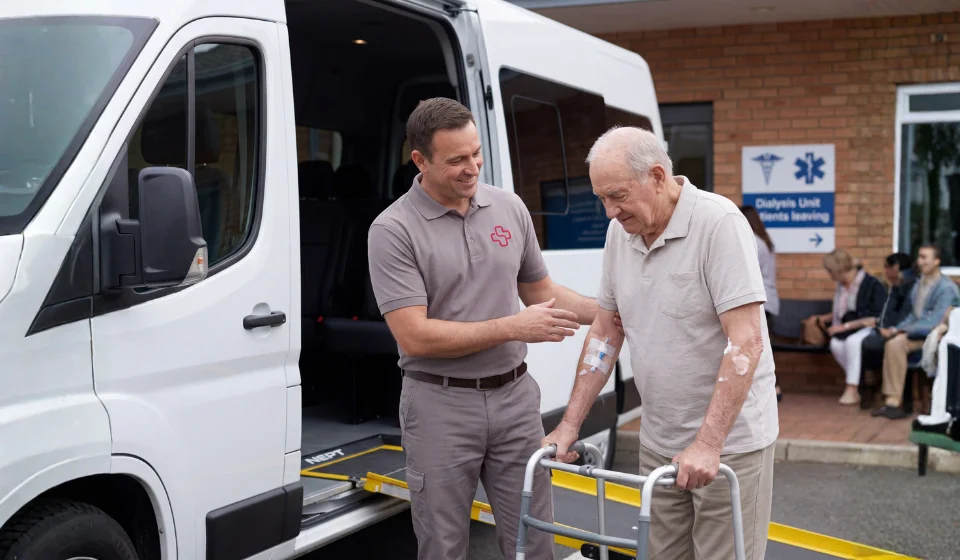
Every Trip Counted
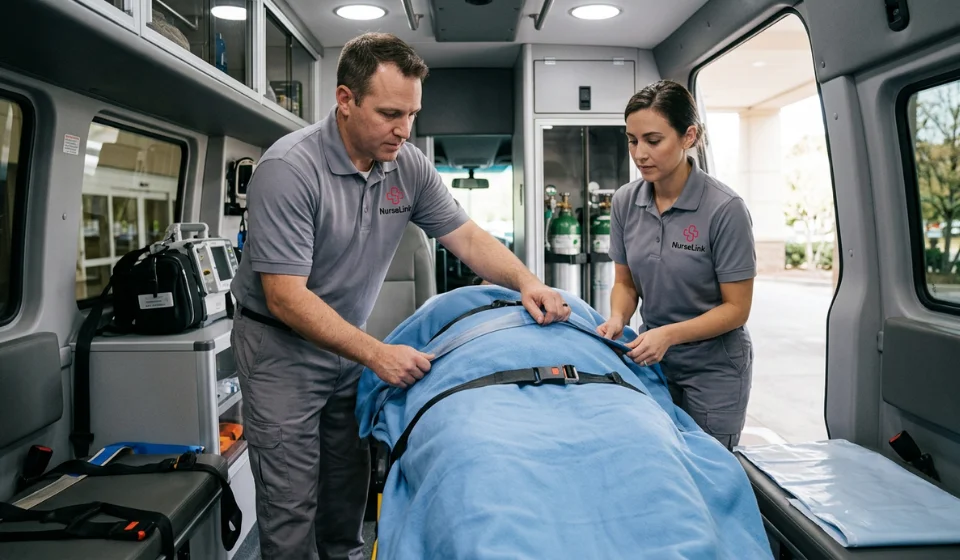
The Right Equipment. The Right Team. The Right Outcome.
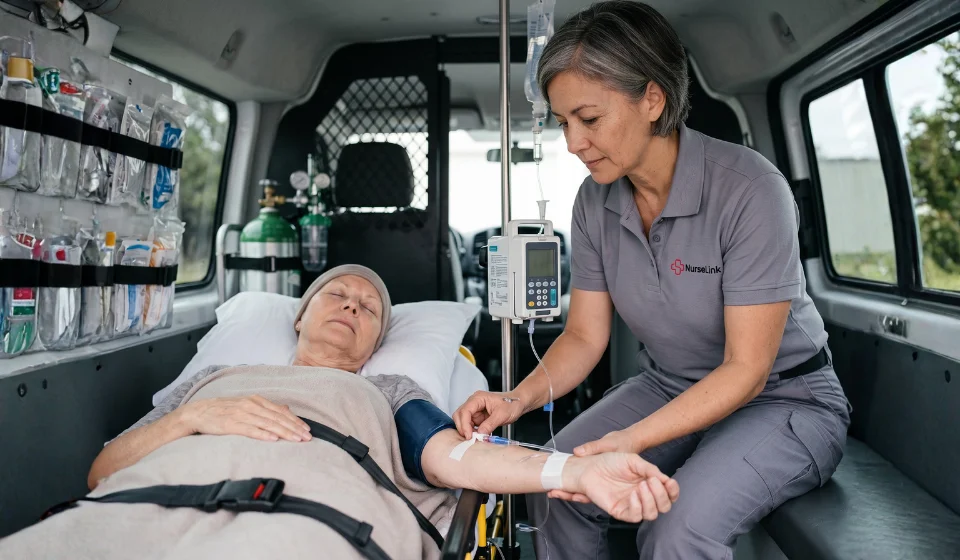
Maintaining Treatment Continuity During Cancer Care
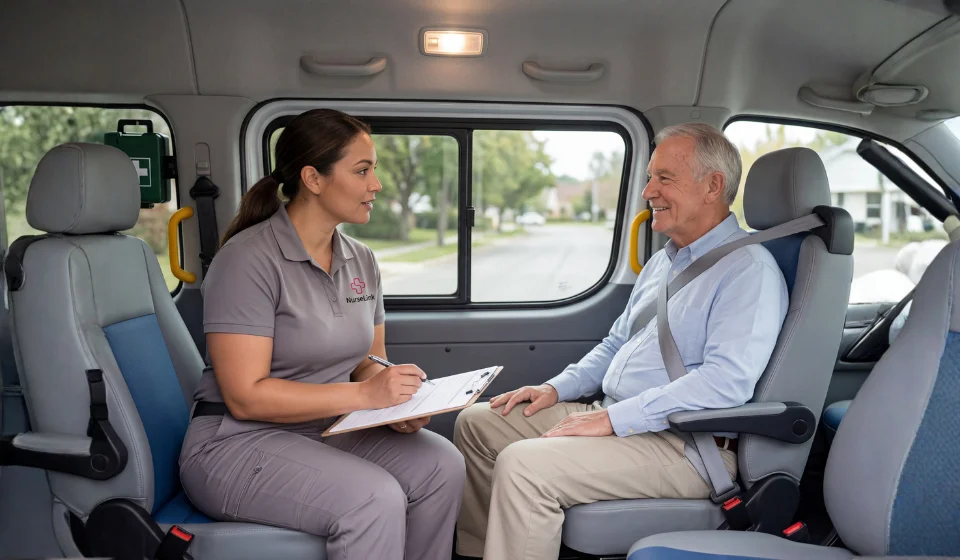
Safe Non-Emergency Patient Transport

Ensuring Safe & Consistent Medical Access
A Safe Journey Home After Surgery