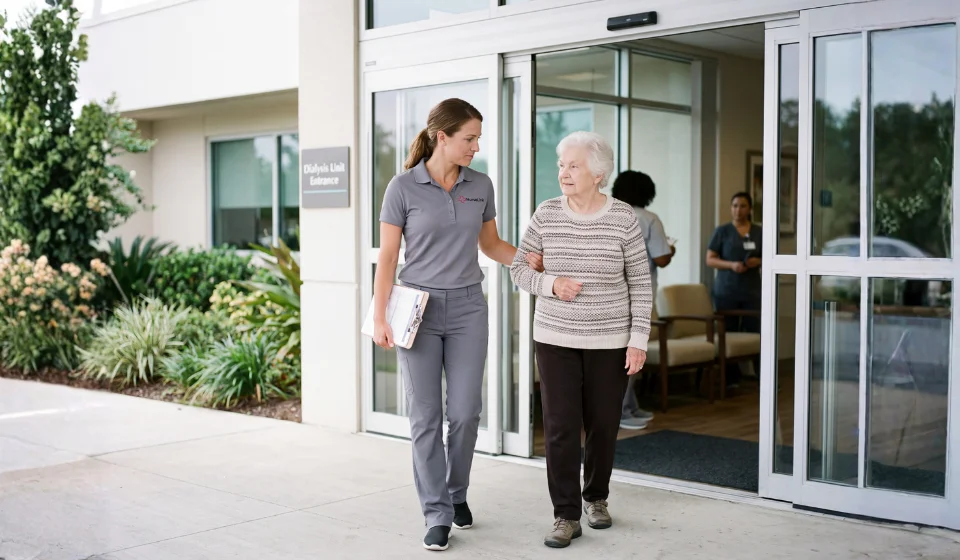
The Six-Year-Old Who Wouldn’t Let Go Of Her Mum’s Hand
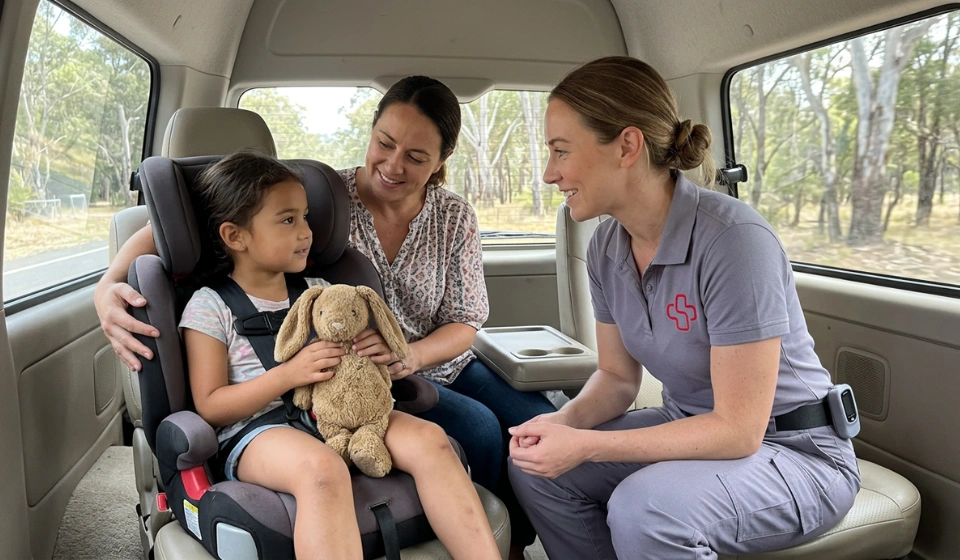
How NurseLink's Paediatric Transport Approach Turned A Frightening Transfer Into One A Family Could Get Through Together
A Case Study In Non-Emergency Transport That Understood A Child's Fear Is Never The Same As An Adult's
Introduction
Interfacility transport for adult patients, even when it involves genuine anxiety, tends to follow a certain internal logic: the person being moved generally understands, in broad terms, what is happening and why. Paediatric transfer operates according to entirely different rules. A young child facing an unfamiliar vehicle, unfamiliar adults and an unfamiliar destination has no real framework for processing what is happening, and the fear that results is rarely about the medical reason for the transfer at all. It is about strangers, separation, sirens or vehicles they don’t understand, and the simple, overwhelming sense that something important has gone wrong in a world usually managed entirely by their parents.
Good paediatric transport recognises that the clinical task, moving a child safely and appropriately monitored between two points, is only ever half of what the job actually requires. The other half is managing a young child’s fear directly, through genuine skill rather than generic reassurance, in a way that respects both the child’s own experience and the parent’s need to remain the primary source of comfort throughout, even while a transport crew is doing the technical work of keeping their child safe along the way.
This case study documents how NurseLink Healthcare’s Non-Emergency Patient Transport service managed the interfacility transfer of a six-year-old girl from a regional hospital in Traralgon to a specialist paediatric unit in Melbourne, and how a deliberately child-centred approach turned a transfer her parents had been dreading into one their daughter, remarkably, described afterwards as an adventure.
To protect the privacy of the client and her family, all names and identifying details have been kept confidential throughout this case study.
The Client & Her Situation
The client is a six-year-old girl from a family living just outside Traralgon in Victoria’s Latrobe Valley, admitted to her local regional hospital after a sudden onset of symptoms that her treating paediatrician suspected indicated a complex kidney condition requiring specialist investigation unavailable locally. She was stable, alert, and largely herself despite the admission, but required transfer to a specialist paediatric unit in Melbourne, roughly two hours away, for further assessment and likely treatment.
Her parents, understandably frightened by the uncertainty of her diagnosis, were equally anxious about the transfer itself, having never experienced anything like it with either of their two children. Their daughter, for her part, had become increasingly distressed as preparations for the transfer began, clinging to her mother’s hand and refusing, at one point, to let hospital staff near her at all, a reaction her parents recognised as fear of the unknown compounding whatever discomfort her underlying symptoms were already causing.
Her admitting hospital’s referral to NurseLink Healthcare noted specifically that the child was frightened and that both parents were anxious about accompanying her safely, given that only one parent would be permitted to travel with her in the transport vehicle, leaving the other to make separate arrangements to meet them in Melbourne, adding a further layer of family stress to an already difficult day.
Understanding What The Family Actually Needed
When NurseLink Healthcare’s transport coordinator reviewed the referral, the clinical requirements, stable paediatric transport with appropriate monitoring for her presenting symptoms, were straightforward. But the coordinator recognised immediately that the greater challenge lay in managing a frightened six-year-old through a two-hour journey in a way that did not compound her distress, while supporting parents who were themselves anxious and needed to trust that their daughter’s fear, not just her physical condition, was being taken seriously.
The child needed a crew genuinely skilled in engaging with young children, capable of building enough trust, quickly, that she would tolerate necessary monitoring without the transfer becoming a prolonged battle of wills that would leave everyone more distressed than the journey itself required. She needed the transfer reframed, wherever possible, as something manageable rather than something being done to her.
Her mother, accompanying her in the vehicle, needed to remain genuinely central to her daughter’s comfort throughout, rather than being sidelined by clinical procedure, while also receiving enough reassurance herself to manage her own anxiety without her daughter sensing it and becoming more frightened in turn. Her father, following separately, needed clear, regular updates so that the physical distance between him and his family during the journey did not compound the day’s stress any further than it already had.
The NurseLink Healthcare Solution
A Crew Chosen Specifically For Paediatric Experience
NurseLink Healthcare assigned a crew with specific, substantial experience in paediatric transport, chosen deliberately for a manner suited to engaging young children directly and warmly, rather than treating a child patient as simply a smaller version of an adult one.
Meeting Her On Her Own Terms Before Any Procedure Began
On arrival, rather than beginning any clinical process immediately, the crew knelt to her eye level, introduced themselves with easy warmth, and spent several minutes simply talking with her about the stuffed rabbit she was holding, deliberately building rapport before asking anything of her at all. This small investment of time, the senior crew member later reflected, was what made everything that followed considerably easier than it would otherwise have been.
Turning Necessary Monitoring Into Something She Could Understand
Rather than simply applying monitoring equipment, the crew explained each piece in simple, concrete terms she could grasp, describing a pulse oximeter as a “special glove that tells us how well you’re breathing” and letting her help, in a small supervised way, press the button herself, transforming a potentially frightening procedure into something she had some genuine control over.
Keeping Her Mother Central Throughout
Throughout the journey, the crew consistently directed comfort and reassurance through her mother rather than around her, checking in with her mother about what usually helped her daughter feel calm and incorporating those specific strategies, a particular song, a particular way of holding her hand, into how the journey was managed, rather than imposing a generic approach that overrode the family’s own established comfort methods.
A Journey Framed As An Adventure, Not An Ordeal
Across the two-hour drive, the crew engaged her in simple games and conversation, pointing out things to look for out the window, gently normalising the experience in a way appropriate to her age without ever minimising or dismissing her earlier fear, a balance the coordinator noted requires genuine skill rather than simply good intentions.
Clear, Regular Updates For The Parent Travelling Separately
Throughout the transfer, the coordinator maintained brief, regular contact with her father, providing simple updates on their progress and their daughter’s calmer state as the journey continued, easing the particular stress of following separately without being able to see for himself that his daughter was coping well.
A Handover That Reassured Rather Than Alarmed
On arrival at the receiving paediatric unit, the crew provided a clear clinical handover alongside a brief, warm note to the admitting nurse about what had helped keep her calm during the journey, information that allowed the receiving team to continue the same approach immediately rather than starting entirely from scratch with an unfamiliar, frightened child.
Outcomes & Impact
She Completed The Transfer Without Escalating Distress
In contrast to her initial resistance at the sending hospital, she completed the full two-hour journey without significant distress, engaging with the crew throughout and arriving at the receiving unit notably calmer than her parents had believed possible earlier that same day.
Her Parents' Own Anxiety Meaningfully Eased
Her mother later told the coordinator that watching her daughter settle so quickly had done as much for her own composure as anything else that day, allowing her to focus on supporting her daughter rather than managing her own visible panic throughout the journey.
Her Specialist Assessment Began Without Delay Or Complication
Because the transfer was completed smoothly, her specialist investigation at the receiving unit proceeded on schedule, with the admitting team able to build on the calm rapport already established rather than beginning her care from a place of heightened distress.
Her Father Arrived Reassured Rather Than Anxious
Regular updates throughout the journey meant her father arrived at the receiving hospital already reassured about his daughter’s condition and demeanour, rather than walking into the unknown after two hours of anxious uncertainty following separately.
The Family Described The Day As Manageable, Not Traumatic
In a follow-up conversation, her parents specifically noted that while the day itself remained frightening given the uncertainty of her diagnosis, the transfer itself had not added to that fear the way they had expected it to, a distinction they said mattered enormously to how the whole experience had felt for their daughter.
A Reflection From Her Mother
Some weeks later, once her daughter’s condition had stabilised, her mother shared the following with the NurseLink Healthcare coordinator:
She said that on the morning of the transfer, she had been almost as frightened as her daughter, not just about the diagnosis but about the idea of a strange vehicle and strange adults taking over such an important, vulnerable moment for her little girl. What surprised her was how quickly the crew earned her daughter’s trust, treating her fear as something real and worth addressing properly rather than something to simply push through. She said her daughter still talks about the pulse oximeter as her special breathing glove, and has told her more than once that the ambulance trip was actually kind of fun, a description she genuinely never expected to hear given how the morning had started. She said knowing her daughter felt safe, not just physically monitored but genuinely cared for as a frightened little girl, was the thing that let her hold herself together enough to be the calm presence her daughter needed that day.
Key Takeaways From This Case Study
A child’s fear during transport is rarely about the clinical reason for the transfer. Strangers, separation and unfamiliar surroundings drive a young patient’s distress far more than the medical facts an adult patient would typically be focused on.
Investing time in rapport before beginning any clinical procedure changes the entire course of a paediatric transfer. A few minutes spent building trust at the child’s own level made every subsequent step considerably easier for everyone involved.
Explaining procedures in age-appropriate, concrete terms gives a child a genuine sense of control. Reframing a pulse oximeter as a special glove, rather than simply applying it silently, transformed a potentially frightening moment into something manageable.
Keeping the accompanying parent central to their child’s comfort, rather than working around them, supports both the child and the parent simultaneously. Incorporating the family’s own established comfort strategies respected their expertise in their own child.
A separated parent’s anxiety deserves the same attention as the travelling family’s. Regular, simple updates eased a specific and often overlooked source of stress for the parent following behind.
Conclusion
A transfer that began with a frightened six-year-old refusing to let go of her mother’s hand became, through genuine paediatric skill and patience, a journey the child herself later described as fun, a description that would have seemed impossible to her parents that morning. For the family at the centre of this case study, NurseLink Healthcare provided not only safe, appropriately monitored transport, but the specific, considered approach that let a genuinely frightening day feel, for their daughter at least, like something she could get through without lasting distress.
Her specialist assessment began without delay. Her parents came through a difficult day steadier than they expected to. And somewhere in Melbourne, a six-year-old still occasionally asks if she can go for another ride in the ambulance with the special breathing glove.
If your facility manages paediatric transfers, we encourage you to reach out to the NurseLink Healthcare team. We understand that for a young patient, how a journey feels matters just as much as where it ends.
Latest Post
The Six-Year-Old Who Wouldn’t Let Go Of Her Mum’s Hand
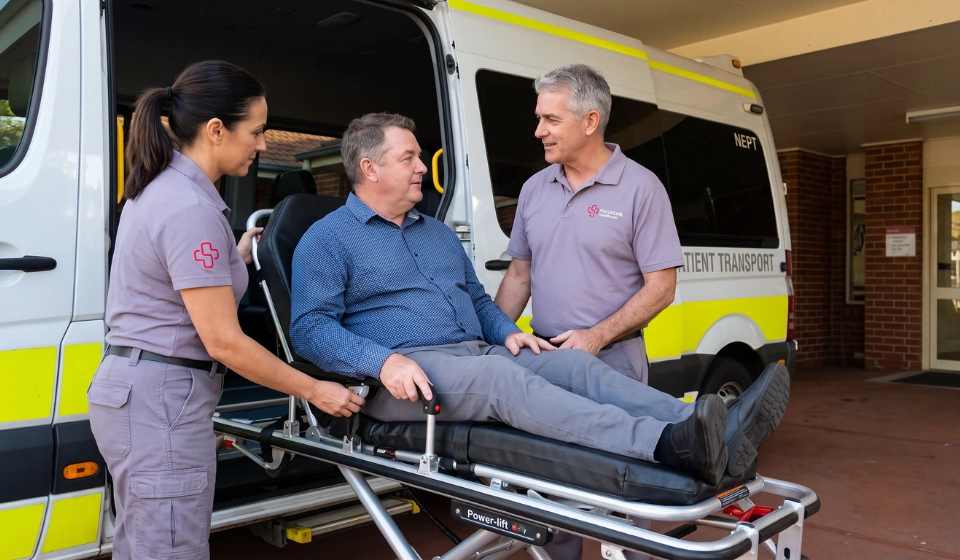
The Transfer He’d Been Fearing More Than The Diagnosis
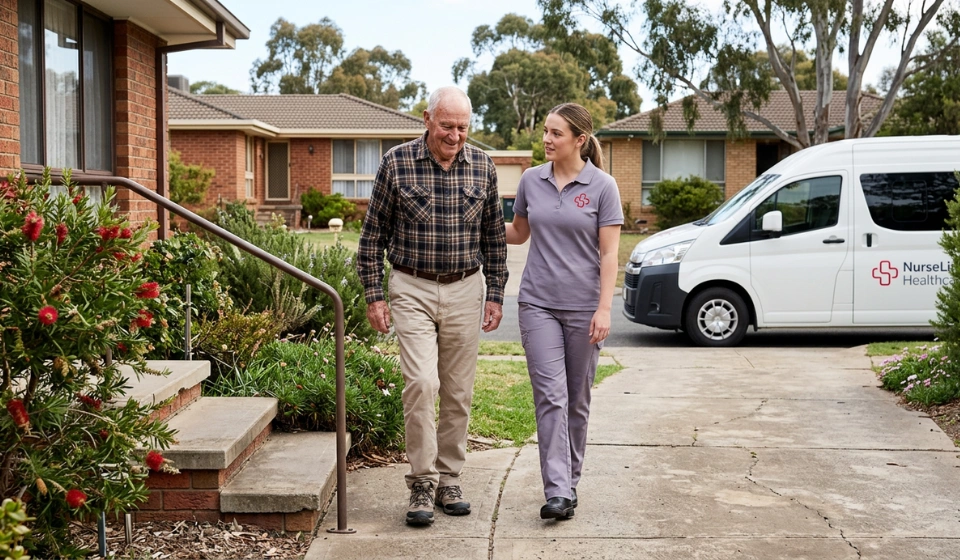
Getting Him Back On His Feet, Without Getting Back In The Car Himself
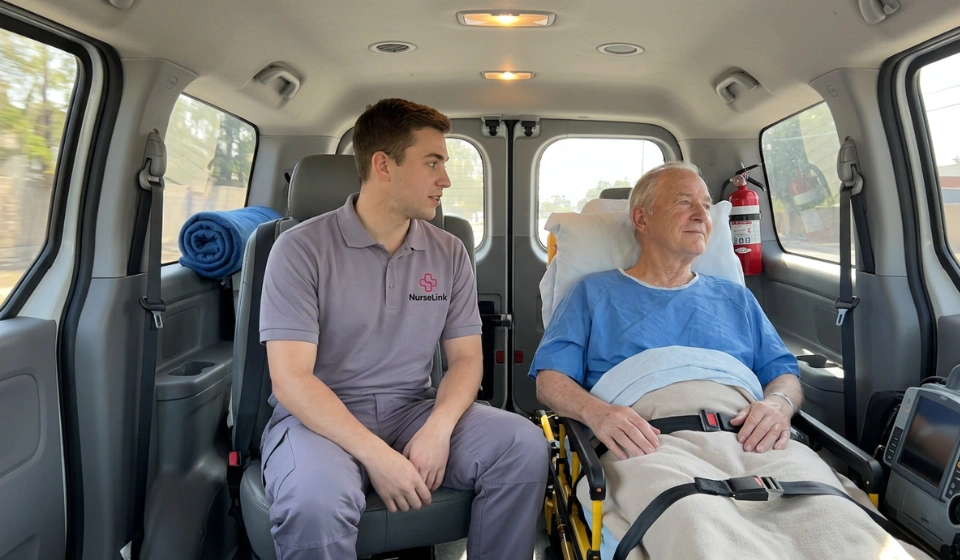
The Transfer That Wasn’t Routine To Him
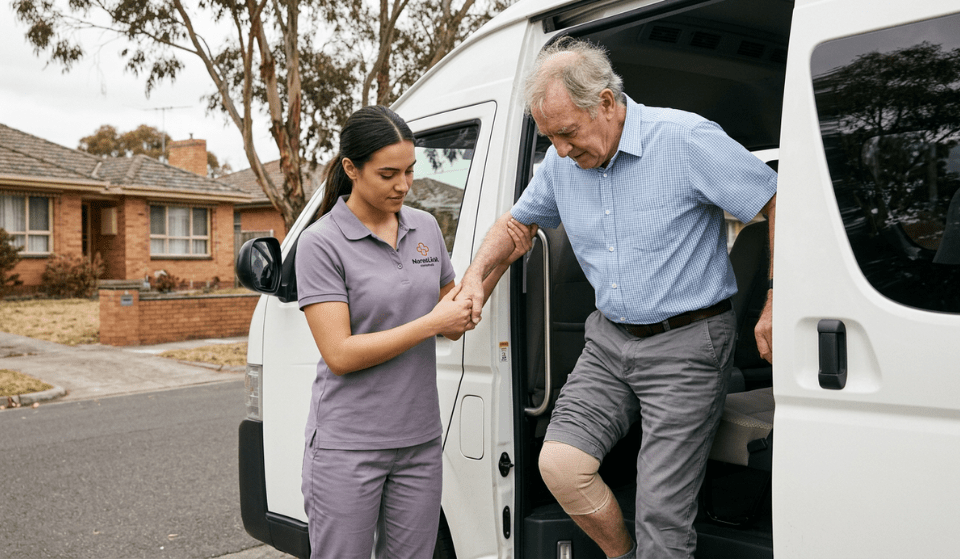
Getting Him Home, Then Getting Him Better

Getting Him There, Getting Him Home, Getting Him Through

When Getting To Care Is Part Of The Challenge
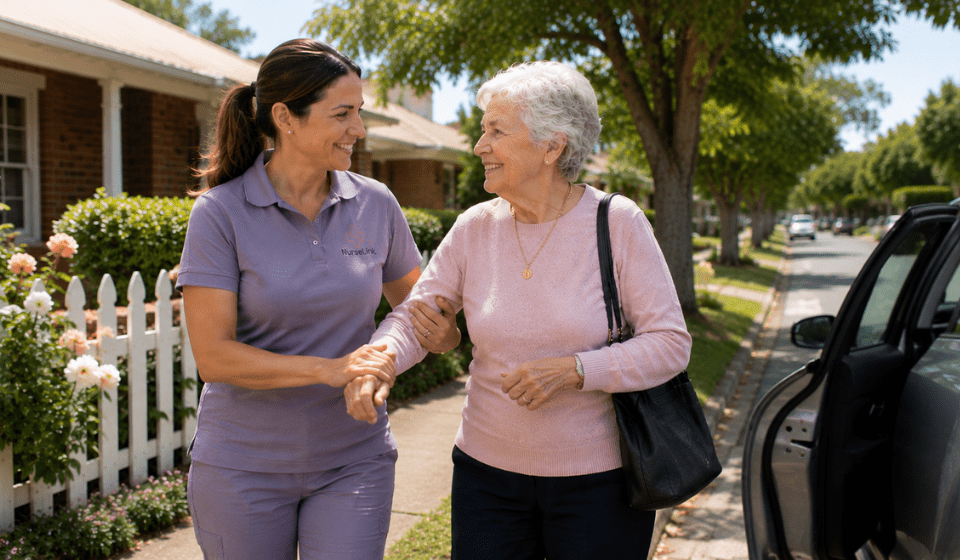
Getting There Made The Difference
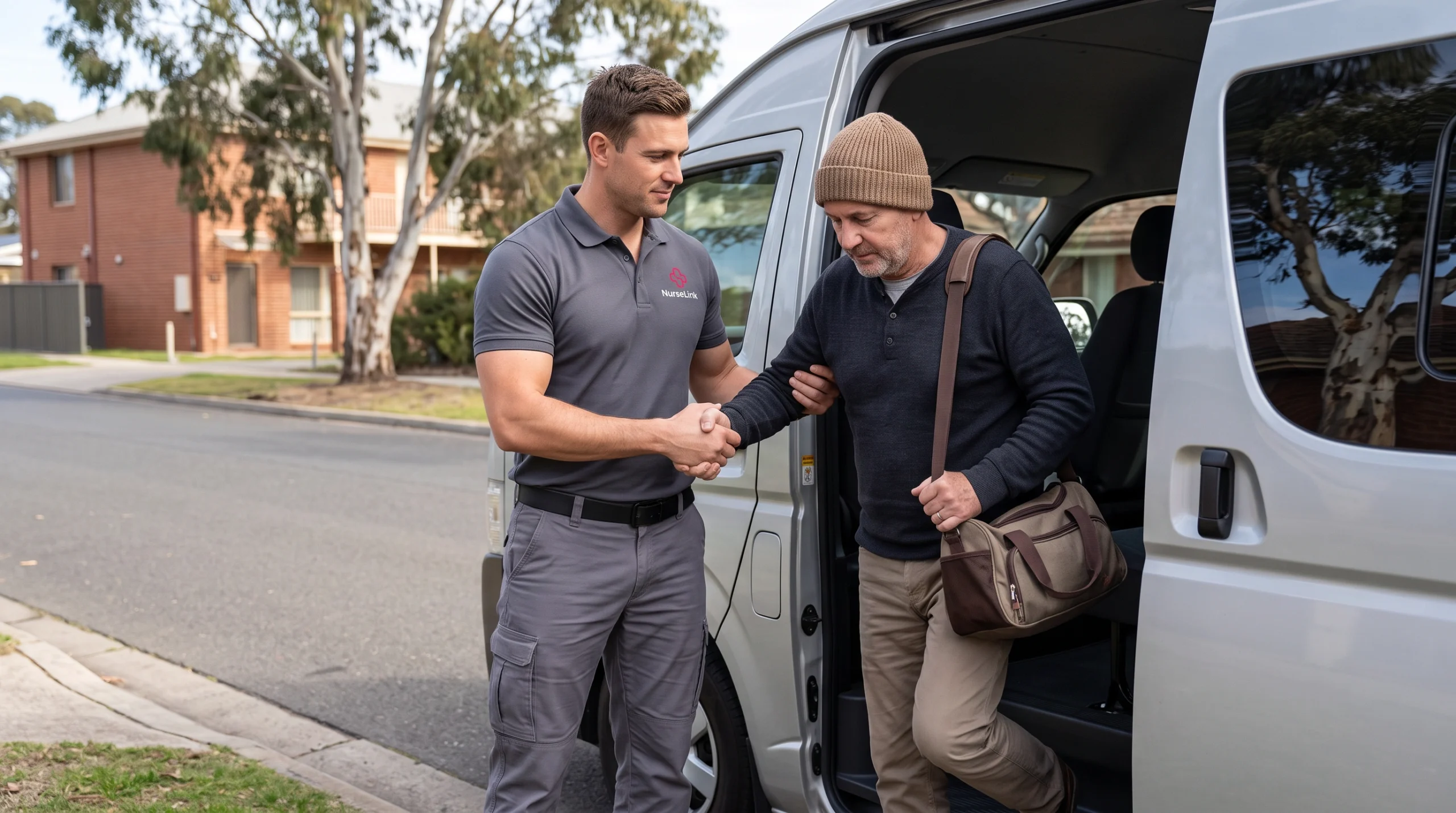
Showing Up For Someone Nobody Else Was Showing Up For
Getting There Safely
Every Appointment, Every Time
One More Day With Her Family
The Journey Home

The First Step Out The Door
Every Tuesday & Thursday

Bridging The Gap To Treatment
More Than A Ride Home
Every Trip Counted
The Right Equipment. The Right Team. The Right Outcome.
Maintaining Treatment Continuity During Cancer Care
Safe Non-Emergency Patient Transport
Ensuring Safe & Consistent Medical Access

A Safe Journey Home After Surgery