Patient transport services help people travel safely to medical appointments, hospitals, rehabilitation services and other healthcare destinations when ordinary transport is unsuitable. Non-emergency patient transport (NEPT) is designed for patients who require assistance but do not need emergency ambulance care. Knowing how to choose a patient transport provider means considering safety, staff capability, accessibility, vehicle suitability and reliability rather than choosing solely on price or availability. This guide highlights important red flags that patients, families, carers and healthcare organisations should consider before booking.
Lack Of Proper Licensing, Accreditation Or Safety Standards
A patient transport provider should be able to clearly explain its relevant compliance, safety procedures and operating standards. In Australia, requirements can vary depending on the service, location and type of transport, so providers should be transparent about the standards that apply to their operations.
A reputable provider should have documented procedures covering areas such as vehicle safety, infection prevention, patient handling, incident reporting and staff responsibilities. Depending on the service, appropriate worker screening and other compliance checks may also be relevant.
Be cautious if a company is unwilling or unable to explain its credentials, safety processes or service limitations. Families and healthcare organisations should verify important claims before booking, particularly when transporting people with complex mobility or support needs.
Inadequately Trained Staff & Poor Patient Handling Practices
Trained patient transport staff are essential because patients may need assistance with transfers, mobility aids, wheelchairs or other equipment. Staff should understand safe handling techniques and communicate respectfully throughout the journey.
Good transport involves more than moving someone from one location to another. Staff need to understand the person’s mobility limitations and follow appropriate procedures when assisting them. Where a person’s needs exceed the scope of non-emergency transport, the provider should communicate this clearly rather than accepting a booking that cannot be safely managed.
Important things to check include:
- Whether staff receive appropriate training for patient handling and transfers.
- Whether staff understand wheelchair, mobility-aid and accessibility requirements.
- Whether workers communicate clearly and treat patients respectfully.
- Whether staff know when additional clinical support may be necessary.
- Whether the provider conducts appropriate screening and ongoing professional development.
Rushed transfers, poor communication, inappropriate handling or staff who appear unfamiliar with accessibility equipment can all be warning signs. When considering what to look for in a patient transport service, staff competence should be a central consideration.
Unsafe, Poorly Maintained Or Unsuitable Transport Vehicles
A suitable, clean and properly maintained vehicle is essential for safe and comfortable patient transport. Providers should maintain their vehicles appropriately and ensure that equipment is suitable for the people they transport.
Before booking, consider whether the vehicle can safely accommodate the patient’s mobility requirements, including wheelchairs or other mobility aids. Securement systems and other relevant safety equipment should be appropriate and maintained.
Look for:
- Evidence of regular vehicle servicing and maintenance.
- Appropriate accessibility features for wheelchair and mobility-aid users.
- Suitable restraints and secure equipment.
- Adequate space for the patient and required mobility equipment.
- Clean interiors and appropriate infection prevention practices.
- Vehicles suitable for the expected journey and patient’s needs.
Damaged equipment, poor cleanliness, inadequate space or a lack of accessibility features should prompt further questions before booking.
Poor Communication, Reliability & Lack Of Transparency
Clear communication and dependable scheduling are essential because patient transport is often connected to medical appointments with specific arrival times. A provider should confirm important details and communicate promptly if circumstances change.
Patients and carers should receive clear information about pickup arrangements, destinations, expected timings, service limitations and pricing. Transparent communication can also help healthcare facilities coordinate patient arrivals and departures effectively.
Warning signs include:
- Unclear pickup or destination arrangements.
- Repeated delays or missed bookings.
- Difficulty contacting the provider.
- Unclear pricing or unexpected charges.
- Failure to explain service limitations.
- Poor communication about delays or schedule changes.
- Limited communication with families, carers or healthcare facilities.
Reliable providers should make it reasonably clear who to contact when questions or changes arise. Clear communication before, during and after transport can reduce avoidable stress for patients and their support networks.
Limited Accessibility, Personalised Support & Emergency Planning
A quality patient transport service should assess individual requirements before travel rather than assuming every patient has the same needs. Accessibility planning is particularly important for older adults, people with disability and individuals with limited mobility.
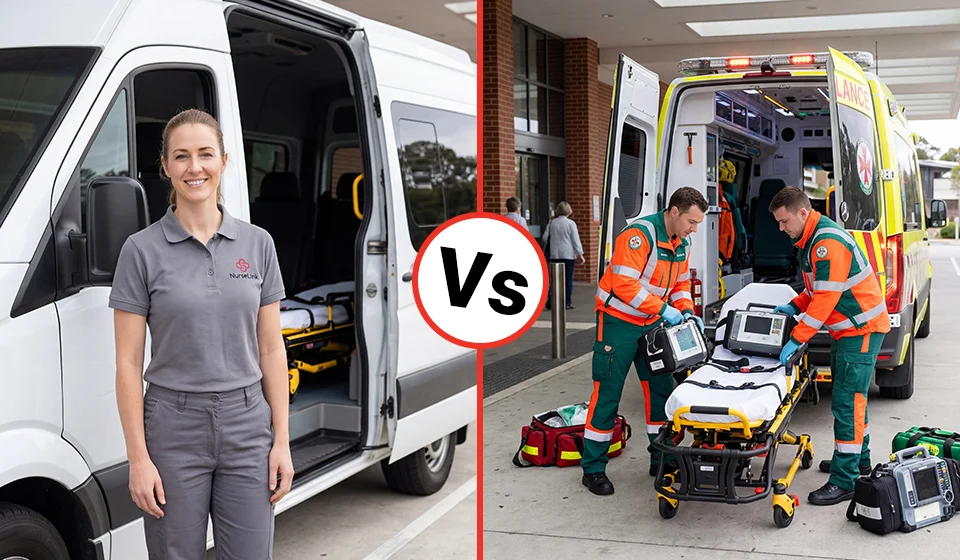
Before booking, discuss the person’s mobility, equipment, level of assistance and destination requirements. It is also important to understand the difference between NEPT and emergency ambulance services. Non-emergency transport is not intended to replace emergency medical care when a person’s condition requires urgent clinical intervention.
Useful questions to ask a patient transport provider include:
- Can the vehicle accommodate the patient’s wheelchair or mobility aid?
- What assistance can staff provide with boarding and transfers?
- How are mobility equipment and other items secured during travel?
- What happens if the scheduled vehicle is delayed?
- What procedures apply if the patient’s condition changes during transport?
- How does the provider communicate with carers, families or healthcare facilities?
- What situations are outside the scope of the transport service?
A provider should have appropriate escalation procedures for unexpected situations and clearly explain when emergency services should be contacted. Good planning can help prevent avoidable difficulties and ensure the transport arrangement matches the patient’s actual needs.
Key Takeaway
Choosing a patient transport company should involve more than comparing costs or availability. Check the provider’s relevant compliance and safety practices, staff training, patient handling procedures, vehicle condition, accessibility features, communication standards and scheduling reliability. Ask questions about pricing, service limitations and unexpected situations before making a booking. For patients, families, carers and healthcare organisations, safety, dignity, comfort and dependable support should remain central when selecting a transport provider.
Frequently Asked Questions
How to Choose a Patient Transport Provider?
To choose a patient transport provider, check its relevant compliance, staff training, vehicle suitability, accessibility options, communication processes and pricing. Ask whether the service can meet the patient’s specific mobility and support requirements. It is also useful to understand how the provider manages delays or unexpected changes and whether its service is appropriate for non-emergency transport.
What to Look for in a Patient Transport Service?
Look for a provider with appropriately trained staff, suitable and well-maintained vehicles, clear safety procedures, reliable scheduling and transparent pricing. Accessibility is also important for patients who use wheelchairs or mobility aids. The provider should be able to explain what assistance it offers and clearly identify situations that require emergency medical services instead.
What Questions to Ask a Patient Transport Provider?
Ask about staff training, vehicle accessibility, patient handling, pricing, pickup arrangements, scheduling and communication procedures. Confirm whether the vehicle can accommodate the patient’s mobility equipment and what assistance is available during transfers. You should also ask what happens if the patient becomes unwell or the transport is delayed.
What Are the Things to Check Before Booking Patient Transport?
Things to check before booking patient transport include the provider’s relevant compliance, staff capability, vehicle condition, accessibility, pricing and reliability. Confirm the pickup and destination details and explain the patient’s specific needs in advance. Understanding the service’s limitations and procedures for unexpected situations can also help ensure appropriate and safe transport.
What Is Non-Emergency Patient Transport?
Non-emergency patient transport, commonly called NEPT, helps people who need assistance travelling to healthcare-related destinations but do not require emergency ambulance treatment. Depending on the service, it may support people with mobility limitations, disabilities or other transport needs. NEPT is not a substitute for emergency medical services when urgent clinical care is required.