
The Journey Home

How NurseLink Safely Transferred A Premature Baby Back
A Case Study In Clinical Escort Transport Where Every Detail Mattered.
Introduction
A premature baby in a neonatal intensive care unit is, in almost every meaningful sense, at the beginning of everything. The weeks spent in a humidicrib, tethered to monitors and supported by technology that does the work his body has not yet learned to do alone, are weeks that his parents measure in grams gained and oxygen levels stabilised and the slow, tentative progress of a person who arrived before the world was ready for him.
When that baby reaches the point where the Melbourne NICU that has been his entire world since birth determines that he is stable enough to be transferred closer to home, the news is received by his family as something between relief and terror. Relief because home is closer. Terror because the journey between the NICU and the regional hospital that will continue his care is a journey that must be managed with a level of clinical precision that leaves no room for error, in a vehicle that is not a hospital, by a team that must be everything a NICU provides in a form that fits inside a transport incubator.
Neonatal transport is among the most clinically demanding forms of non-emergency patient transfer that exists. The patient is small, fragile and dependent on continuous clinical monitoring and support. The environment of the transfer vehicle is a managed approximation of the controlled clinical environment he is leaving. And the team responsible for his safe arrival must hold, for the duration of the journey, the entire clinical picture of a premature infant in transition, ready to respond to anything that changes and committed to delivering him to the receiving hospital in exactly the condition in which he left.
At NurseLink Healthcare, we understand that some transfers do not leave room for anything less than perfect. This case study documents how our clinical escort transport team supported the safe transfer of a baby boy born at thirty weeks from a Melbourne neonatal intensive care unit to a regional hospital closer to his family, and what it took to ensure that the journey went exactly as it needed to.
To protect the privacy of the family and the clinical teams involved, all identifying details have been kept confidential throughout this case study.
The Baby & His Situation
The baby at the centre of this case study was born at thirty weeks gestation following a pregnancy that had been proceeding without significant concern until a complication in the third trimester necessitated an emergency delivery. He was born in a regional hospital in Victoria that, recognising immediately that his prematurity and his clinical status required a level of neonatal care beyond what it could provide, arranged his transfer to a Melbourne NICU within hours of his birth.
His mother, who had delivered by emergency caesarean section and was herself recovering from surgery, was unable to travel with him. His father had stayed with him through the transfer to Melbourne, sitting in the front of the transport vehicle while his hours-old son lay in the transport incubator in the back, and had remained in Melbourne for the weeks that followed, sleeping in the family accommodation near the hospital and spending every possible hour at his son’s bedside.
The weeks in the Melbourne NICU had been the particular combination of gruelling and miraculous that parents of premature babies know. There had been difficult days and better ones. There had been a brief setback in the third week that had frightened everyone and then resolved. And there had been, gradually and then more confidently, progress. Weight gained. Oxygen requirements reduced. The slow accumulation of physiological stability that a premature baby achieves on his own timeline and no one else’s.
By six weeks after his birth, the neonatology team at the Melbourne NICU had assessed him as sufficiently stable to be considered for transfer back to the regional hospital near his family. He was still premature by corrected age, still requiring monitoring and some respiratory support and still a long way from discharge home. But the intensive level of intervention that the Melbourne NICU had provided was no longer what he needed, and the clinical case for transferring him closer to his mother and the rest of his family, who had been managing six weeks of separation with the exhausted determination of people who had no other choice, was clear.
The transfer was planned for the following week. NurseLink Healthcare was engaged to provide the clinical escort transport.
What The Transfer Actually Required
The clinical coordinator at the Melbourne NICU who liaised with NurseLink Healthcare about the transfer was thorough and direct in a manner that reflected both her professional experience and the specific weight of what was being planned. She had coordinated many neonatal transfers and she understood precisely what could go wrong and what needed to be in place to prevent it.
She needed a transport team with specific neonatal experience, not general paediatric experience and certainly not general nursing experience applied to a neonatal context. She needed clinicians who had worked with premature infants in transport settings, who understood the physiological vulnerabilities of a thirty week corrected age baby in the specific context of a vehicle transfer and who were familiar with the equipment that would be required, the transport incubator, the portable monitoring systems, the oxygen delivery equipment and the medications that needed to be immediately accessible for any clinical eventuality.
She outlined the specific clinical concerns relevant to this particular baby. His respiratory status, while improved, remained something to be watched carefully, as the change in environment and the stimulation of the transfer itself could affect an infant whose respiratory regulation was still maturing. His temperature regulation required active management within the transport incubator throughout the journey. His feeding schedule and his comfort during the transfer needed to be managed in a way that minimised the physiological stress of the journey. And his monitoring needed to be continuous and interpreted in real time by clinicians who knew what they were seeing.
She also said something that did not need to be said but that she said anyway, because it was the truth of what every neonatal transfer carried. This baby’s parents had been through six weeks of the hardest thing they had ever experienced. His father had barely left the hospital. His mother had recovered from surgery and was waiting at home in their regional town for the day her son would be close enough to hold without taking a day off work. The transfer was not just a clinical procedure. It was the day this family started moving toward each other. It needed to go well not just clinically but in every sense.
NurseLink Healthcare confirmed the placement and began preparing the transport team.
The NurseLink Healthcare Solution
A Clinical Escort Team Built For This Specific Transfer
NurseLink Healthcare assembled a two person clinical escort team for the transfer, comprising a registered nurse with specific neonatal transport experience and a second clinician with neonatal and paediatric care experience, both of whom were familiar with the transport equipment required and had been involved in neonatal inter-hospital transfers in comparable clinical contexts.
Before the transfer date, the team engaged in a detailed pre-transfer briefing with the NICU clinical coordinator. They reviewed his current clinical status, his specific monitoring requirements, the respiratory support he was receiving and the parameters within which any change in his condition would require active clinical intervention during the transfer. They familiarised themselves with the specific transport incubator and monitoring configuration being used and confirmed the escalation pathway for any clinical event that arose during the journey, including the identification of the nearest appropriate clinical facility along the route and the direct contact details for the receiving regional hospital’s neonatal team.
Nothing about the preparation was left to assumption. The transport team understood that the gap between his current environment and the vehicle they would be placing him in was a clinical gap that their preparation and their vigilance had to close completely.
The Morning Of The Transfer
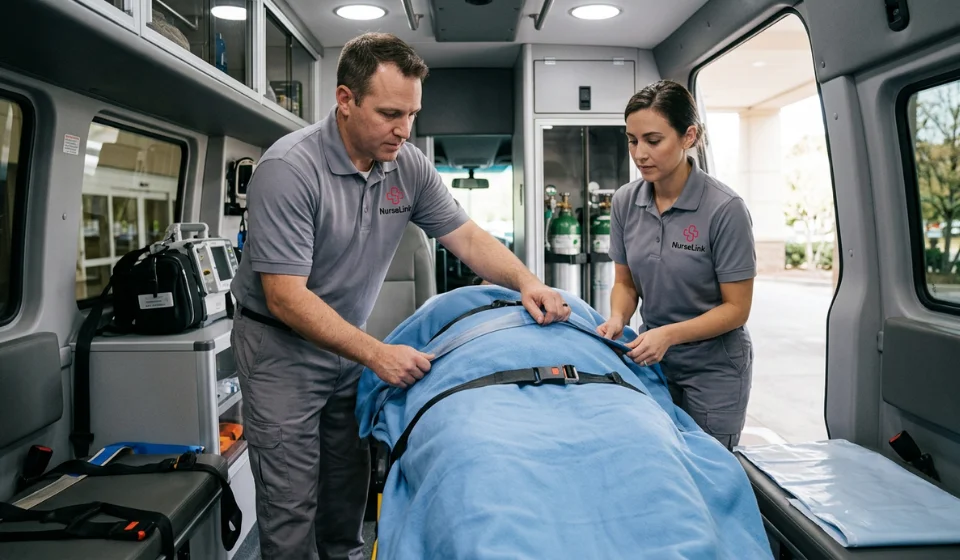
The morning of the transfer was managed with the unhurried precision that a procedure of this clinical weight requires. The transport incubator was prepared and temperature-stabilised before he was placed in it. The monitoring equipment was confirmed to be functioning correctly and communicating the parameters that the team needed to watch throughout the journey. The medications that would need to be immediately accessible if his clinical status changed were checked, confirmed and positioned correctly within the transport environment.
His father was present for the transfer preparation. He had been present for every significant clinical moment of his son’s NICU admission and he was present for this one. The transport team spoke with him directly, explaining what the journey would look like, what they would be monitoring throughout, how long the transfer was expected to take and what the process would be at the receiving hospital. They answered his questions with the specificity that a father who had spent six weeks learning the clinical language of neonatal intensive care deserved and could understand.
He was asked if he wanted to ride in the transport vehicle with his son. He did. He sat in the front, as he had on the first transfer, and the team managed the clinical environment in the back with the quiet, focused attentiveness that the journey required.
A Transfer Managed With Continuous Clinical Attention
Throughout the journey from Melbourne to the regional hospital, the clinical escort team maintained continuous monitoring of his vital signs, respiratory status and temperature, interpreting the data in real time and adjusting the transport environment as his clinical parameters indicated. The journey was not long by adult transfer standards, but by the standards of a premature infant whose physiological resilience was still developing, every kilometre was managed actively rather than passively observed.
His respiratory status remained stable throughout the journey, within the parameters the NICU team had defined as acceptable for the transfer. His temperature was maintained within the therapeutic range. He slept for most of the journey, which was both clinically reassuring and, for the transport team, one of those small mercies that a long shift in a clinical environment can produce.
There were no clinical events during the transfer that required escalation. The team had prepared for everything and needed to use none of it, which is exactly the outcome that thorough preparation is designed to produce.
Handover To The Regional Hospital Team
The handover to the regional hospital’s neonatal team was conducted with the clinical thoroughness that the receiving team required and deserved. The transport nurse provided a complete verbal handover of his clinical status during the transfer, including the monitoring data, any observations of note and the current status of his respiratory support and temperature management. The written documentation of the transfer was completed accurately and provided to the receiving team in a form that gave them the full clinical picture from the moment of departure to the moment of arrival.
The receiving team, who had been expecting the transfer and had his cot prepared and his monitoring equipment ready, received him without disruption. He was transferred from the transport incubator to his new cot, his monitoring was reconnected and his clinical management continued without a gap.
His mother was waiting at the hospital. She had driven from their home to be there when he arrived. She had not seen her son for six weeks. The transport team completed their handover and stepped back, because what happened next did not belong to them.
Outcomes & Impact
He Arrived Safely & In The Clinical Condition He Had Left
The most fundamental measure of the transfer’s success was its clinical outcome. He arrived at the regional hospital in the same clinical condition in which he had left the Melbourne NICU, without deterioration attributable to the transfer and without any clinical event during the journey that had required intervention beyond standard monitoring and management. The transfer had gone exactly as planned.
For a premature infant whose physiological resilience was still developing, this outcome was not automatic. It was the product of thorough preparation, experienced clinical personnel, appropriate equipment and the kind of continuous attentive monitoring that neonatal transport demands. NurseLink Healthcare’s transport team had delivered what a transfer of this clinical significance required.
The Family Was Reunited
His mother held her son for the first time since the hours immediately following his birth. She had been recovering from surgery, unable to travel, managing six weeks of separation from a baby whose first weeks of life had happened in a city two hours away. His father, who had been holding everything together for both of them with the particular determination of someone who has no other option, was there when she held him.
NurseLink Healthcare’s transport team had made that moment possible by doing their job with complete competence and complete care. That the moment itself belonged entirely to the family was exactly as it should be.
The Receiving Clinical Team Had Everything They Needed
The quality of the handover documentation and the verbal briefing provided to the regional hospital’s neonatal team gave them an immediate and complete clinical picture of the baby’s transfer, including his status at departure, his monitoring data throughout the journey and his condition at arrival. The receiving team did not need to fill in gaps or make assumptions about what had occurred during the transfer. They had the full picture, accurately documented, and they could continue his care from the point of arrival without interruption.
The Melbourne NICU Team's Trust Was Justified
The clinical coordinator at the Melbourne NICU who had specified the requirements for the transfer and trusted NurseLink Healthcare to meet them received confirmation of a safe arrival from the regional hospital team within an hour of the transfer’s completion. She had sent babies on transfers before that had not gone as planned, and she knew the difference between a transport team that was adequate and one that was genuinely prepared for what neonatal transport required. She noted, in her feedback to NurseLink Healthcare, that the pre-transfer preparation and the quality of the handover documentation had been exactly what she had needed to feel confident in the arrangement.
A Reflection From The Transport Nurse
The lead transport nurse shared the following reflection with the NurseLink Healthcare care coordinator after the engagement:
“Neonatal transport is never just a transfer. You are holding someone’s entire world in a humidicrib for however long the journey takes, and the clinical precision that requires is not something you can approximate. You either know what you are doing or you do not, and in this work, not knowing is not an option. What I remember most about that particular transfer is the father sitting in the front of the vehicle, not saying anything, just watching the road ahead. He had been doing that for six weeks, watching the road ahead, holding on. We got his son there safely. That is the job, and it is everything.”
Key Takeaways From This Case Study
Neonatal transport is a distinct clinical discipline requiring specific preparation and experience. The physiological vulnerabilities of a premature infant in a transport environment are not adequately managed by general clinical nursing competence applied to a neonatal context. NurseLink Healthcare’s selection of a transport team with specific neonatal experience was the foundation on which the safe transfer was built.
Thorough pre-transfer preparation is what makes the transfer itself manageable. A clinical escort team that arrives at a neonatal transfer without having reviewed the patient’s current status, confirmed equipment function and established clear escalation pathways is not prepared for what neonatal transport requires. The preparation NurseLink Healthcare’s team completed before departure was what made the journey itself straightforward.
Continuous active monitoring is the clinical standard for neonatal transport. A premature infant in a transport vehicle is not a stable patient being moved from one point to another. He is a patient whose clinical status requires active interpretation throughout the journey and whose transport environment requires ongoing management. Passive observation is not an adequate clinical standard for neonatal transfer.
A good handover at both ends of the journey protects the patient and the clinical team. The quality of the pre-departure briefing from the NICU team and the post-arrival handover to the regional hospital team were both essential components of a transfer that maintained clinical continuity throughout. NurseLink Healthcare’s transport team treated both with the same rigour they applied to the journey itself.
Conclusion
A premature baby transferred from a Melbourne NICU to a regional hospital closer to his family is, in clinical terms, a non-emergency patient transfer. He is not in crisis. He is stable enough to move. But stable enough to move and ready to be moved without clinical consequence are not the same thing, and the team responsible for that transfer carries a clinical responsibility that demands the same standard of preparation and attention that the NICU he is leaving maintains every moment of every day.
NurseLink Healthcare provided a clinical escort transport team that understood this responsibility and met it completely. He arrived safely. His family was reunited. The regional hospital team received him with everything they needed to continue his care without a gap.
That is what clinical escort transport, done properly, delivers. Not just a journey from one hospital to another, but the confident, carefully managed crossing of a clinical threshold that a premature baby and his family had been working toward for six weeks.
If your clinical team is planning a neonatal or paediatric transfer and needs a transport partner with the experience and the preparation that the journey requires, we encourage you to reach out to NurseLink Healthcare. We understand what is at stake and we are here to make sure the journey goes exactly as it should.
Latest Post

Getting Him Home, Then Getting Him Better

Getting Him There, Getting Him Home, Getting Him Through

When Getting To Care Is Part Of The Challenge

Getting There Made The Difference

Showing Up For Someone Nobody Else Was Showing Up For

Getting There Safely

Every Appointment, Every Time

One More Day With Her Family
The Journey Home

The First Step Out The Door

Every Tuesday & Thursday

Bridging The Gap To Treatment

More Than A Ride Home

Every Trip Counted
The Right Equipment. The Right Team. The Right Outcome.
Maintaining Treatment Continuity During Cancer Care

Safe Non-Emergency Patient Transport

Ensuring Safe & Consistent Medical Access

A Safe Journey Home After Surgery