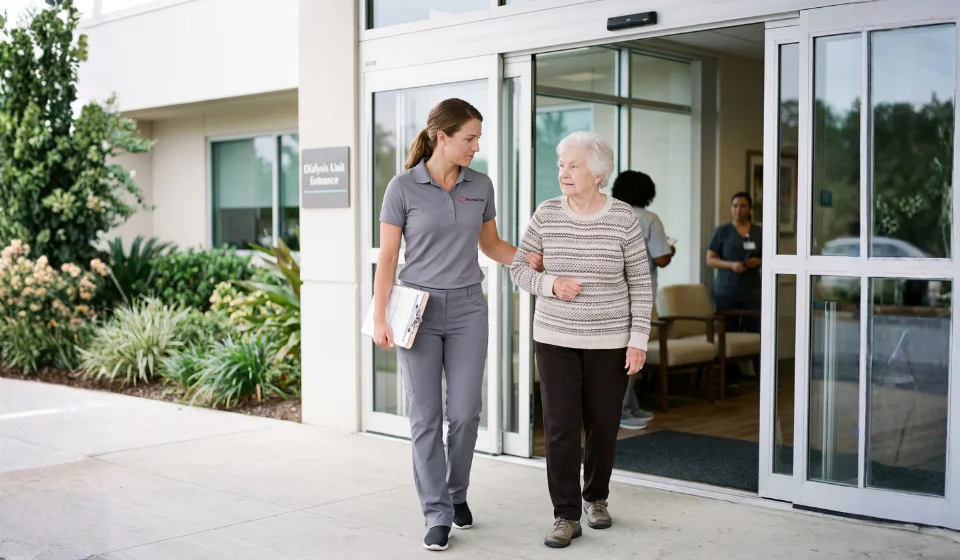
Every Tuesday & Thursday
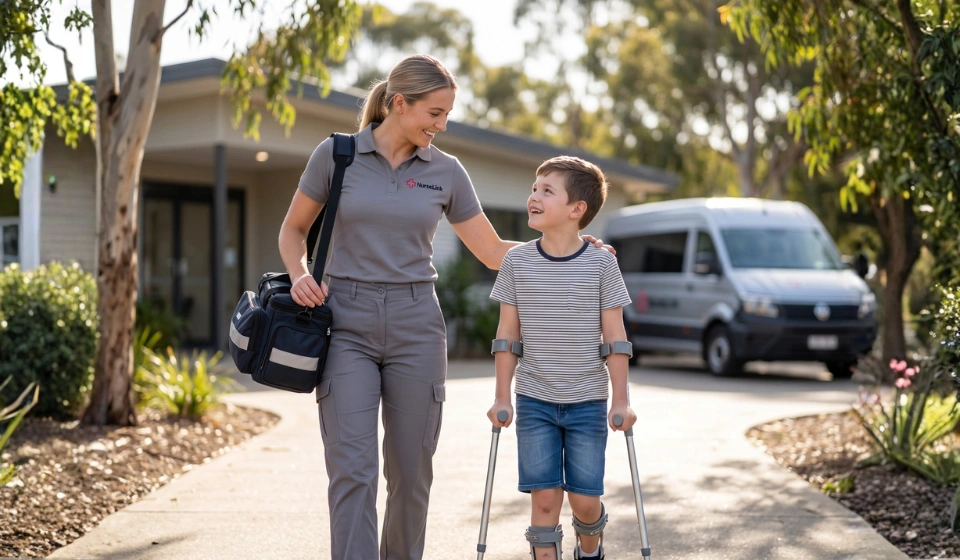
How NurseLink Provided Reliable Transport For A Young Boy With Cerebral Palsy
A Case Study In Sensitive, Child-Centred Patient Transport For A Non-Verbal Child With Complex Needs In Bendigo
Introduction
For a child with complex disabilities, therapy is not a single appointment or an occasional intervention. It is a sustained, structured programme built on consistency, repetition and the gradual accumulation of small gains that, over months and years, add up to something significant. The physiotherapy session that happens every week, the speech therapy appointment that follows a carefully sequenced plan, the occupational therapy that is slowly expanding what a child can do in the world, these are not interchangeable with each other, and they are not optional. They are the work, and the work only works when it happens reliably.
Which means that getting a child with complex disabilities to their therapy appointments, consistently, safely and without the kind of distress that can undo the benefit of the session before it has even begun, is not a peripheral concern for the families managing this reality. It is central to whether the therapy achieves what it is meant to achieve.
For families in regional Victoria, where specialist therapy services are often located at a distance from where they live and where the logistics of transport add a layer of complexity to an already demanding daily reality, finding the right patient transport solution for a child with significant needs can be genuinely difficult. Not every provider has the vehicles, the equipment or the training to transport a non-verbal child with complex physical and communication needs in a way that is safe, calm and genuinely suited to who that child is.
At NurseLink Healthcare, we understand that transporting a child with complex disabilities is an entirely different undertaking from standard patient transport, and that doing it well requires specific capability and specific people. This case study documents how our team supported a young boy with cerebral palsy and complex communication needs in Bendigo, Victoria, and his family, through a sustained period of consistent transport to his therapy programme, after previous arrangements had proven inadequate for his particular needs.
To protect the privacy of the child and his family, all names and identifying details have been kept confidential throughout this case study.
The Child & His Family's Situation
The child at the centre of this case study is a boy aged between five and seven, living with his parents and younger sister in Bendigo. He has cerebral palsy affecting all four limbs, uses a specialised wheelchair and is non-verbal, communicating through a combination of facial expression, vocalisation and an augmentative and alternative communication device that his speech therapist and family had been developing with him over the preceding two years.
He is, by his parents’ description, a child of considerable personality. He has strong preferences, a reliable sense of humour that expresses itself through his expressions and his timing and a clear capacity to communicate contentment, discomfort, interest and displeasure to the people who know him well, without needing words to do it. He is also, as many children with cerebral palsy are, sensitive to sensory input in ways that matter for how he experiences unfamiliar environments, new people and unpredictable situations. A transition that is managed poorly, a vehicle that is too loud, a person whose manner is uncertain or rushed, can shift him from settled to distressed in a way that his parents and his therapy team have learned to take seriously.
His therapy programme is intensive and carefully structured. He attends physiotherapy and occupational therapy twice weekly at a paediatric therapy centre located across Bendigo from the family’s home. The sessions are scheduled on the same days each week, at the same times, because consistency of scheduling is part of what makes the programme work for a child whose sense of safety is closely linked to predictability.
His mother, who works part time and has a younger child to manage, had been the primary person responsible for getting him to his therapy appointments. For a period, this had been manageable. But the physical demands of transferring him safely between his wheelchair and the family vehicle, managing the journey with a young child also in the car and arriving at therapy in a state that was calm enough to allow the session to be productive had become increasingly difficult as his size and the complexity of his needs had grown.
The family had tried one other transport provider before contacting NurseLink Healthcare. The experience had not been suitable. The vehicle had not been well matched to his wheelchair, the transfer process had been managed in a way that had distressed him, and by the time he arrived at two consecutive therapy sessions in an unsettled state, his occupational therapist had raised the transport arrangement directly with his parents as something that needed to change.
Understanding What He & His Family Actually Needed
The assessment conversation NurseLink Healthcare had with his parents was one that his mother led with considerable thoroughness. She had learned, through experience with providers who had not understood her son, to be specific about what he needed before any arrangement began, rather than discovering the gaps after they had caused him distress.
She described him in detail. His communication system and the specific cues his family and therapists used to understand him. The things that settled him during a car journey, a particular playlist of music he responded well to, a consistent and quiet vehicle environment, the reassurance of a familiar voice. The things that unsettled him, unexpected stops, a driver who spoke loudly or unpredictably, any disruption to the routine of how the journey typically went. The transfer process and the specific way it needed to be managed to keep him comfortable and safe, with attention to his positioning needs and the particular handling requirements of a child with his level of physical involvement.
She was also clear about what the transport arrangement needed to be for her. She needed to know, with complete confidence, that the person taking her son to therapy understood him well enough to manage whatever arose during the journey without it becoming a distressing event. She needed consistency, the same transport officer, the same vehicle, the same routine, because consistency was not simply her preference but a genuine clinical requirement for a child whose nervous system responded to predictability as a form of safety. And she needed communication, not elaborate reporting but a simple, reliable confirmation that he had arrived settled, that the session had been reached without incident and that he was on his way home.
His father, who was less available during the day but equally invested in the arrangement working, asked one question directly. He asked whether NurseLink Healthcare had experience with non-verbal children with cerebral palsy, or whether this was something the organisation was willing to learn on their son. It was a fair question, and it received a direct answer.
The NurseLink Healthcare Solution
A Transport Officer Selected For This Specific Child
NurseLink Healthcare did not assign the first available transport officer to this engagement. The selection process began with the specific requirements of a non-verbal child with cerebral palsy and complex communication needs, and worked backward from there to identify an officer whose background, training and personal qualities matched what he actually needed.
The transport officer assigned had prior experience working with children with complex physical disabilities, including familiarity with augmentative and alternative communication systems, training in the safe handling and transfer of wheelchair users with high physical support needs and a manner that his mother, when she met her before the first transport, described as immediately, instinctively right. She was calm without being flat, warm without being effusive and entirely unhurried in a way that communicated, to a child who read people with considerable accuracy, that there was nothing to be unsettled about.
Before the first transport, the transport officer spent time with the family at their home. She met him in his own environment, learned his communication cues from his mother, listened to the playlist that settled him during journeys and went through the transfer process with his mother present so that the handling approach was established correctly from the outset. She arrived for the first transport not as a stranger but as someone he had already met, in a context that had been calm and positive.
The Same Journey, Every Time
NurseLink Healthcare structured the transport arrangement around the clinical principle that consistency was the most important single feature of what he needed. The same transport officer for every journey. The same vehicle. The same departure time, the same route, the same music playing as the vehicle pulled away from the family home. The same sequence of events at the therapy centre, the same approach to the transfer, the same familiar voice telling him they had arrived.
This level of consistency required operational commitment from NurseLink Healthcare that went beyond standard rostering. It meant that the transport officer assigned to his appointments was protected from being redirected to other commitments on his therapy days, that the vehicle allocated to his transport was maintained and available for his scheduled journeys and that any change to the arrangement, however minor, was communicated to his family in advance rather than discovered on the day.
His mother noted, by the fourth week of the arrangement, that he was showing signs of anticipatory recognition on his therapy mornings. He was settled before the vehicle arrived, rather than needing to be settled during the journey. The consistency of the arrangement had become, for him, part of the predictable structure of his week, and predictability, for a child like him, is a form of safety.
Managing The Journey With Clinical Awareness
Every journey incorporated the specific management approach that his needs required. His positioning in the vehicle was checked and confirmed at every boarding. The vehicle environment was maintained consistently across all journeys. His transport officer monitored him throughout each trip, attentive to the vocalisations and expressions that communicated how he was travelling and responsive to any sign of discomfort or distress with the calm, practiced adjustments that his mother had described and that the transport officer had made her own through the first weeks of the arrangement.
On one occasion, midway through the engagement, he became unsettled during a journey in a way that was outside his usual pattern. His transport officer managed the situation calmly, pulled over safely, attended to him in the way she had learned he responded to and contacted his mother briefly to let her know what had happened and how it had been managed. He arrived at his therapy session settled. His therapist, who had been informed of the incident by his transport officer before the session began, adjusted the opening of the session accordingly. The clinical communication between transport and therapy that this represented was not accidental. It was built into the arrangement from the outset.
Simple, Reliable Communication With His Family
After every journey, his mother received a brief message confirming that he had arrived at therapy settled, or that he was on his way home without incident. On the occasions when something had happened during the journey that she should know about, she heard about it promptly, honestly and with the specific detail she needed to understand what had occurred and how it had been managed.
This communication was simple by design. His mother did not need a detailed report after every journey. She needed to know that her son was safe, that the transport officer understood him and that anything unusual would reach her without delay. NurseLink Healthcare delivered exactly that, without overpromising and without underdelivering.
Outcomes & Impact
He Attended Every Scheduled Therapy Session
For the duration of NurseLink Healthcare’s involvement, he attended every scheduled physiotherapy and occupational therapy session without exception. The therapy programme, which depended on consistent attendance for its effectiveness, was delivered as planned. His therapy team, who had flagged the previous transport arrangement as a concern, noted the change in how he was arriving at sessions. He was coming in settled, prepared and ready to engage, which made a measurable difference to what the sessions were able to achieve.
His Therapy Progress Accelerated
His occupational therapist, reviewing his progress at a team meeting several months into the NurseLink Healthcare arrangement, noted that his engagement during therapy sessions had improved significantly compared to the period when the previous transport arrangement had been in place. A child who arrives at therapy already unsettled from a difficult journey has a smaller capacity for the demands of the session. A child who arrives calm has the full benefit of the session available to him. The difference in his progress across the two periods was, in the therapist’s assessment, partly attributable to the quality of the transport experience that preceded each session.
His Mother Got Her Mornings Back
The practical impact on his mother was significant and immediate. The physical and organisational demands of managing his transport herself, alongside a younger child and part-time work, had been consuming a disproportionate amount of her available energy and had been affecting her capacity to be fully present in the rest of her day. With NurseLink Healthcare managing his therapy transport consistently and reliably, she recovered time and energy that had direct benefits for her family, her work and her own wellbeing.
The Family's Confidence In The Arrangement Grew Over Time
Trust between a family and a transport provider for a non-verbal child with complex needs is not given quickly, and it should not be. It is built through repeated evidence that the arrangement works, that the person responsible for their child understands him and that when something goes wrong, it is handled well. Over the months of NurseLink Healthcare’s involvement, the family’s confidence in the arrangement grew to the point where his therapy days had become a settled and reliable feature of their week rather than a source of ongoing anxiety.
A Reflection From His Mother
Several months into the engagement, his mother shared the following with the NurseLink Healthcare care coordinator:
“Before NurseLink, I used to dread his therapy mornings. Getting him there was so hard, and half the time he arrived already distressed, which meant the session was half over before he had settled enough to actually do anything. Now he knows the routine. He knows who is coming. He is calm when she arrives, and he comes home calm too. His therapists have noticed the difference. I have noticed the difference. He deserves transport that understands him, and finally he has it.”
Key Takeaways From This Case Study
Consistent transport is part of the therapy itself. For a child whose progress depends on arriving at each session in a state that allows full engagement, the quality of the transport experience is not separate from the therapy outcome. It is connected to it. Transport that unsettles a child before their session undermines the session. Transport that delivers a child calm and prepared enhances it.
Non-verbal children communicate clearly to people who know how to listen. A child who cannot speak is not a child whose preferences, comfort and distress cannot be understood. They require a transport officer with the training, the attentiveness and the genuine interest to learn how that particular child communicates, and to respond accordingly. NurseLink Healthcare’s selection and preparation of the transport officer for this engagement was built on this understanding.
Consistency is a clinical requirement, not a convenience. For children with cerebral palsy and complex communication needs, predictability in their environment is directly related to their sense of safety and their capacity to engage with the world. A transport arrangement that varies its officer, its vehicle or its routine is not simply inconvenient. It is clinically counterproductive.
Families of children with complex needs deserve transport they can trust completely. The anxiety of sending a non-verbal child who cannot advocate for themselves with an unfamiliar or inadequately prepared transport provider is a real and significant burden. Transport that earns complete trust through consistent, competent, genuinely attentive care removes that burden and gives families something they deserve to have.
Conclusion
A child with cerebral palsy who attends therapy twice a week, every week, without fail, is a child whose therapy has the best possible chance of achieving what it is designed to achieve. The journey to that therapy is part of the clinical picture, and the quality of that journey matters in ways that reach directly into the therapy room.
For the boy at the centre of this case study, NurseLink Healthcare provided transport that understood him, that built a routine around his specific needs and that gave his family the confidence to send him out the door on his therapy mornings without fear. He arrived settled. He engaged fully. He came home calm. And over the months of the arrangement, his therapy progress reflected it.
If your child has complex needs and you are looking for transport that genuinely understands what that means, we encourage you to reach out to the NurseLink Healthcare team. We would be honoured to be part of how your child gets to the care they need.
Latest Post
Getting Him Home, Then Getting Him Better
Getting Him There, Getting Him Home, Getting Him Through

When Getting To Care Is Part Of The Challenge

Getting There Made The Difference
Showing Up For Someone Nobody Else Was Showing Up For
Getting There Safely
Every Appointment, Every Time
One More Day With Her Family
The Journey Home

The First Step Out The Door
Every Tuesday & Thursday

Bridging The Gap To Treatment
More Than A Ride Home
Every Trip Counted
The Right Equipment. The Right Team. The Right Outcome.
Maintaining Treatment Continuity During Cancer Care
Safe Non-Emergency Patient Transport
Ensuring Safe & Consistent Medical Access

A Safe Journey Home After Surgery