
The Transfer He’d Been Fearing More Than The Diagnosis
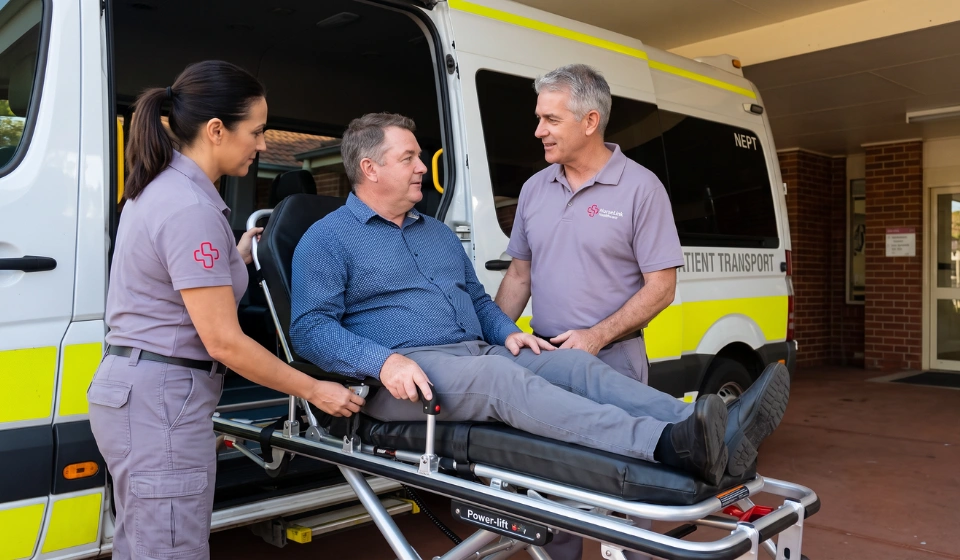
How NurseLink ‘s Bariatric Transport Capability Got A Mildura Man To Treatment Without Losing His Dignity A Case Study In Complex Mobility Transport That Treated Equipment As The Easy Part Introduction For patients living with significant obesity, the physical logistics of moving between healthcare facilities can become a source of dread entirely separate from whatever medical condition is prompting the transfer in the first place. Standard transport equipment, stretchers, hoists, vehicle configurations, is simply not built for every body, and when a service cannot safely and comfortably accommodate a patient’s size, the resulting experience can be genuinely humiliating: delays while appropriate equipment is sourced, uncomfortable improvisation with equipment not rated for the task, or, in the worst cases, staff who are visibly uncertain or uncomfortable with the transfer itself. For many bariatric patients, this experience becomes something they anticipate and dread well before it happens, often having already lived through it during previous encounters with a healthcare system not equipped for their needs. The clinical solution to this is, on its face, straightforward: correctly rated bariatric equipment and appropriately trained crew. But the more significant challenge, and the one that determines whether a transfer is simply completed or genuinely well handled, is ensuring that having the right equipment does not become the entire story, that the patient experiences competence and normalcy rather than a transfer that treats his size as the central, unspoken subject of the entire journey. This case study documents how NurseLink Healthcare’s Non-Emergency Patient Transport service managed a complex bariatric transfer for a man in his fifties from a rural hospital in Mildura to a specialist unit several hours away, and how a combination of proper equipment and genuinely thoughtful care turned a transfer he had been quietly dreading into one he described afterwards as unremarkable, in the best possible sense of the word. To protect the privacy of the client, all names and identifying details have been kept confidential throughout this case study. The Client & His Situation The client is a man in his mid-fifties living in Mildura, in Victoria’s far north-west, admitted to his local hospital with a deteriorating knee condition that required assessment and likely surgical intervention at a specialist orthopaedic unit several hours away. His significant weight, a long-standing condition compounded by the reduced mobility his knee had caused over recent years, meant that his transfer required bariatric-rated equipment and specifically trained crew, well beyond what a standard NEPT booking would call for. He had, by the time NurseLink Healthcare’s referral arrived, already experienced two previous transport encounters that he described to the admitting nurse as genuinely awful, on one occasion waiting over three hours in a hospital corridor while an appropriately rated vehicle was located, and on another being moved using equipment that visibly struggled with his weight, an experience he found not just physically uncomfortable but deeply embarrassing, conducted, as he put it, in full view of a waiting room. He told his treating doctor plainly, ahead of this transfer, that he was more anxious about the journey itself than about whatever the specialists at the other end were going to tell him about his knee. His admitting hospital’s referral to NurseLink Healthcare noted his previous experiences explicitly, along with a request that whatever service handled this transfer treat both the equipment and the manner of the transfer as equally important to getting right Understanding What He Actually Needed When NurseLink Healthcare’s transport coordinator reviewed the referral, the equipment requirements were clear: a bariatric-rated stretcher and vehicle configuration, and crew members specifically trained and experienced in safe bariatric manual handling, none of which was unusual for the service to provide, but all of which needed to be correctly matched and confirmed well ahead of the scheduled transfer date rather than arranged reactively on the day. But the coordinator, reading between the lines of the referral notes and the admitting hospital’s explicit comments about his previous experiences, recognised that the clinical logistics were, in some ways, the more straightforward half of what this transfer required. He needed a crew who would treat the entire process as thoroughly normal, competent and unremarkable, neither drawing attention to his size through awkwardness or overcompensating caution, nor treating the transfer as a special or difficult case requiring visible extra effort that would itself become uncomfortable for him to witness. Practically, this meant crew members experienced enough with bariatric transport that the process felt genuinely routine to them, confident handling that communicated competence rather than uncertainty, and a manner throughout the journey that engaged with him as a patient being transported for a knee problem, rather than as a bariatric case being managed around a knee problem. The NurseLink Healthcare Solution Equipment Confirmed & Tested Well Before The Day NurseLink Healthcare’s transport coordinator confirmed the correctly rated bariatric stretcher and vehicle well ahead of the scheduled date, cross-checking capacity ratings directly against his admission details rather than relying on general assumptions, and ensured the assigned crew had recent, hands-on experience with the specific equipment being used, removing any risk of the kind of on-the-day scrambling that had caused his previous transfer such delay and discomfort. A Crew Selected Specifically For Bariatric Transport Experience The crew assigned to the transfer were selected specifically for their established experience with bariatric patients, chosen deliberately over otherwise available crew without that specific background, on the basis that genuine ease and competence during the physical handling itself would do more to protect his dignity than any amount of verbal reassurance could achieve on its own. An Approach That Started With Him, Not His Equipment Needs On arrival, the crew introduced themselves to him directly, discussed the plan for the transfer in ordinary, unhurried terms, and asked about his comfort preferences for the journey in exactly the way they would with any patient, deliberately avoiding language or behaviour that singled out his size as the notable feature of the transfer. The senior crew member later reflected that this was a conscious
Getting Him Back On His Feet, Without Getting Back In The Car Himself
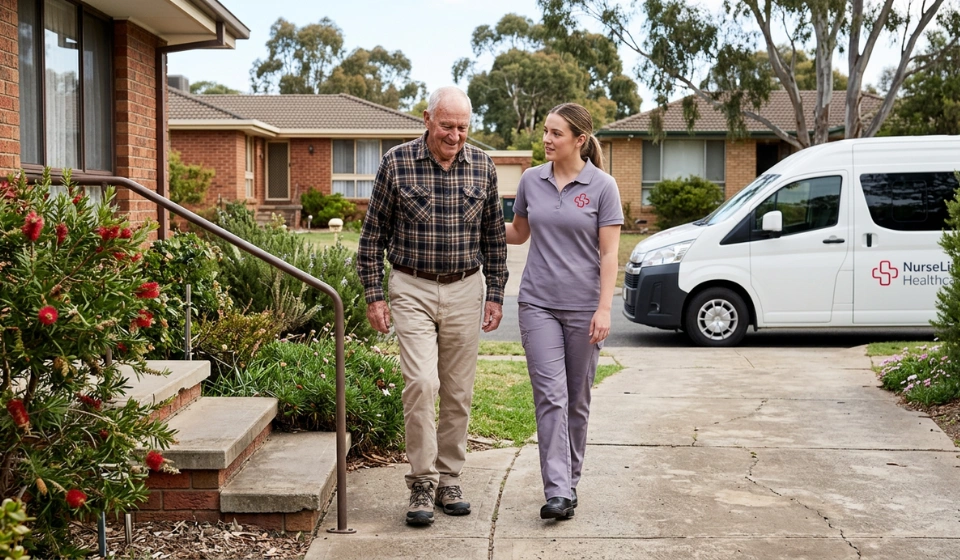
How NurseLink’s Transport Helped A Man Rebuild His Strength And His Confidence After A Fall A Case Study In Patient Transport That Addressed The Fear As Much As The Physical Recovery Introduction A fall changes something in an older person that goes well beyond whatever physical injury results from it. Even a fall that causes no lasting physical damage, or one from which a full physical recovery is entirely achievable, often leaves behind a genuine and persistent fear, a fear of falling again, a fear of the specific circumstances or movements that preceded the fall, a fear that can, left unaddressed, do more to limit a person’s independence and confidence than the physical injury itself ever did. Rehabilitation after a fall, particularly the physiotherapy and allied health support that helps rebuild strength, balance and confidence, is one of the more evidence-based and genuinely effective interventions available for exactly this problem. But attending it consistently requires reliable transport, and for a patient whose fear of falling has made him newly anxious about many ordinary activities he once managed without a second thought, the transport itself can become entangled with the very fear the rehabilitation program is trying to help him overcome, making the manner of the transport, not just its reliability, a genuinely important part of the recovery. This case study documents how NurseLink Healthcare provided regular transport to allied health appointments for a man in his late seventies in Bendigo, recovering from a fall and managing a significant and understandable fear of falling again, and how transport delivered with real care and attentiveness became part of what helped him rebuild both his physical strength and his confidence. To protect the privacy of the client, all names and identifying details have been kept confidential throughout this case study. The Client & His Situation The client is a man in his late seventies living with his wife in a suburban home in Bendigo, a retired farmer who had, throughout his life, been an active and physically confident man, accustomed to a level of independence and physical capability that had, until his fall, rarely given him reason for concern. His wife continued to work part time in an administrative role in town, a job she valued and had no particular wish to give up, though the demands of his recovery would, without appropriate support, have made continuing in that role considerably more difficult. His fall occurred on the front steps of their home one morning, a slip that resulted in a fractured wrist and significant bruising, injuries that were, from a purely physical standpoint, expected to heal well within a reasonably ordinary timeframe according to his treating doctors. What proved considerably more persistent than the physical injury itself was the fear that took hold in its aftermath. He became, in the weeks following the fall, noticeably more cautious and anxious about movement generally, hesitant on stairs he had navigated without a second thought his whole life, reluctant to walk outside without someone nearby, and privately, though he did not initially articulate this clearly even to his wife, increasingly worried that another fall was simply waiting to happen. His GP, recognising both the physical and the psychological dimensions of his recovery, referred him for a structured falls prevention and strength rehabilitation program with a physiotherapist, involving regular sessions over several months designed to rebuild his physical strength and balance while also, through graduated and supported movement, helping to rebuild the confidence that his fear of falling had significantly eroded. The practical difficulty was transport. His wife’s full-time work commitments meant she could not reliably take him to twice-weekly appointments without it becoming, across the length of the program, a significant strain on her own job, something the family could not comfortably sustain given their reliance on her income. His own driving, meanwhile, had become something he was newly and considerably anxious about since the fall, a hesitancy his GP supported rather than dismissed, given the genuine relationship between his current anxiety and his physical recovery still being underway. Understanding What He Actually Needed The initial conversation between NurseLink Healthcare and the client, with his wife present for part of it, revealed a situation that required attention not only to the practical transport schedule but to the specific psychological sensitivity of a man whose fear of falling had become genuinely significant since his injury. He needed reliable transport to his physiotherapy sessions twice a week for the length of his rehabilitation program, timed consistently enough that his wife’s own work schedule was not disrupted by the arrangement. But he needed, just as importantly, a transport experience that did not itself become a source of anxiety, given how heightened his general sensitivity to physical risk had become since the fall. He was, by his own admission during the initial conversation, somewhat embarrassed by how anxious he had become about things that had never troubled him before, and he was clear that he did not want the transport arrangement to make him feel more fragile or more closely managed than necessary, even as he acknowledged that some genuine extra care and attentiveness during transfers and the journey itself would help him feel considerably more comfortable. His wife, for her part, needed confidence that the arrangement would genuinely hold reliably enough that she would not need to intervene or take time off work to manage gaps, given how much her own job mattered to the family both financially and, she noted, to her own sense of herself during a period when a great deal of the household’s focus had understandably shifted onto her husband’s recovery. The NurseLink Healthcare Solution A Transport Officer Chosen For Genuine Care Around Transfers & Movement NurseLink Healthcare assigned a transport officer with specific experience supporting older clients recovering from falls, chosen for a manner that combined genuine physical attentiveness during transfers and movement with a light, reassuring conversational style that avoided making the client feel unnecessarily fragile or closely managed. Before the
The Transfer That Wasn’t Routine To Him
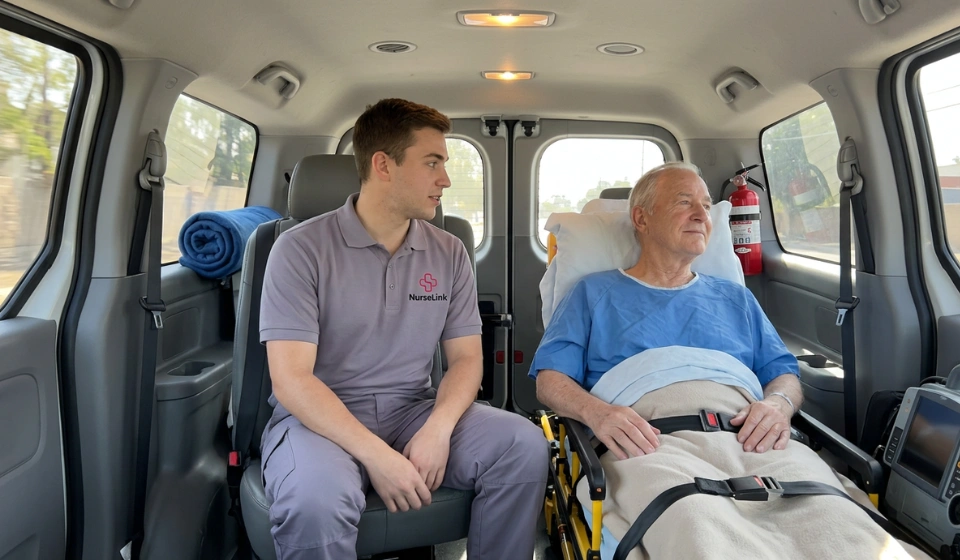
How NurseLink’s Non-Emergency Patient Transport Turned A Standard Interfacility Transfer Into A Calm, Dignified Journey A Case Study In Clinical Transport That Understood The Patient Behind The Paperwork Introduction In the language of hospital logistics, an interfacility transfer is often described, quite accurately from an administrative standpoint, as routine. A patient is moved from one facility to another for a higher level of care, a specific procedure, or ongoing management better suited to a different unit, and the transfer itself is logged, scheduled and completed as one of hundreds of similar movements happening across a health system each week. For the clinicians and administrators coordinating it, routine is the right word. For the patient lying on the stretcher, it very rarely feels that way. A transfer between hospitals, however clinically straightforward, often arrives at a moment of genuine vulnerability: unfamiliar surroundings, uncertainty about what is happening next, and for many patients, particularly older patients or those managing anxiety alongside their physical condition, a real fear that gets easily overlooked precisely because the transport itself is considered low-risk. The clinical task may be simple. The experience of it, for the person being moved, rarely is. This case study documents how NurseLink Healthcare’s Non-Emergency Patient Transport service managed a routine interfacility transfer for an elderly man in regional Victoria, moved from his local hospital to a specialist cardiac unit several hours away, and how attentive, patient-centred care turned a logistically simple transfer into one the patient later described as the calmest part of a frightening week. To protect the privacy of the client, all names and identifying details have been kept confidential throughout this case study. The Client & His Situation The client is a man in his late seventies living in a small town in Victoria’s Western District, admitted to his local regional hospital after presenting with chest pain and irregular heart rhythm. Initial assessment and stabilisation were managed locally, but his treating team determined that he required transfer to a specialist cardiac unit in Geelong, roughly two and a half hours away, for further investigation and a procedure not available at his local facility. Clinically, he was stable enough for non-emergency transport, on cardiac monitoring, with a moderate level of anxiety noted in his admission file, unsurprising given the circumstances, but nothing that changed the classification of the transfer itself. Administratively, it was a standard interfacility booking: a stable cardiac patient, scheduled transport, several hours’ drive to a specialist facility. He had, by his own account to hospital staff, never been further from home than the regional centre forty minutes away, had lost his wife two years earlier, and was making the trip without any family member able to accompany him, his only daughter living interstate and unable to get there before the transfer was scheduled. He told the ward nurse, the morning of the transfer, that he was more worried about the drive than about whatever the specialists in Geelong were going to find. Understanding What He Actually Needed When NurseLink Healthcare’s transport team received the referral, the clinical requirements were clear and, by NEPT standards, unremarkable: continuous cardiac monitoring during transport, a crew qualified to manage a stable but monitored cardiac patient, and a stretcher transfer suited to a man with limited mobility following several days of bed rest. Nothing in the referral flagged anything beyond standard protocol. But the transport coordinator reviewing the booking noted the admission file’s reference to his anxiety and lack of accompanying family, and recognised, from experience, that a two-and-a-half-hour transfer for an elderly patient travelling alone, away from everything familiar, toward a specialist unit he had never seen, carried a dimension of need that the clinical paperwork alone did not capture. He needed, beyond stable monitoring, a crew who would treat the journey itself as something worth managing carefully, not simply a transport task to be completed efficiently between two points on a map. Practically, this meant a crew comfortable spending the drive in genuine conversation rather than clinical silence, alert to signs of escalating anxiety beyond what vital signs alone would show, and able to communicate clearly with both the sending and receiving hospitals so that he arrived not as an unfamiliar case file but as a patient whose journey, and whose state of mind on arrival, the receiving unit already had context for. The NurseLink Healthcare Solution A Crew Briefed On More Than Just The Clinical Handover Before departure, the NurseLink Healthcare crew reviewed not only his clinical file but the ward nurse’s handover notes regarding his anxiety and circumstances, and made a deliberate decision, before ever meeting him, to build extra time into the pre-departure routine for a proper introduction rather than a brisk clinical handover straight onto the stretcher. A Departure That Started With Conversation, Not Procedure On arrival at his bedside, the crew took several minutes before beginning any transfer procedures to introduce themselves properly, explain in plain terms what the next few hours would involve, and ask directly what would make the trip easier for him, rather than assuming his only concern was the destination. He mentioned, almost as an aside, that he got carsick on long trips and hated not being able to see out a window. Both were noted and accommodated in how he was positioned and monitored throughout the journey. Continuous Clinical Monitoring Without Clinical Coldness Throughout the transfer, his cardiac monitoring was maintained to full protocol, with regular observations and clear documentation for the receiving unit, while the crew maintained an easy, unhurried conversation across the drive, covering nothing more complicated than the towns they passed through and the football season, deliberately keeping the atmosphere calm rather than clinically formal. The senior crew member later noted that this was a deliberate choice, not an incidental one: a genuinely relaxed atmosphere does more to keep an anxious patient’s observations stable than repeated verbal reassurance alone. Real-Time Communication That Prepared Both Ends Of The Journey Midway through the transfer, the crew radioed ahead
Getting Him Home, Then Getting Him Better
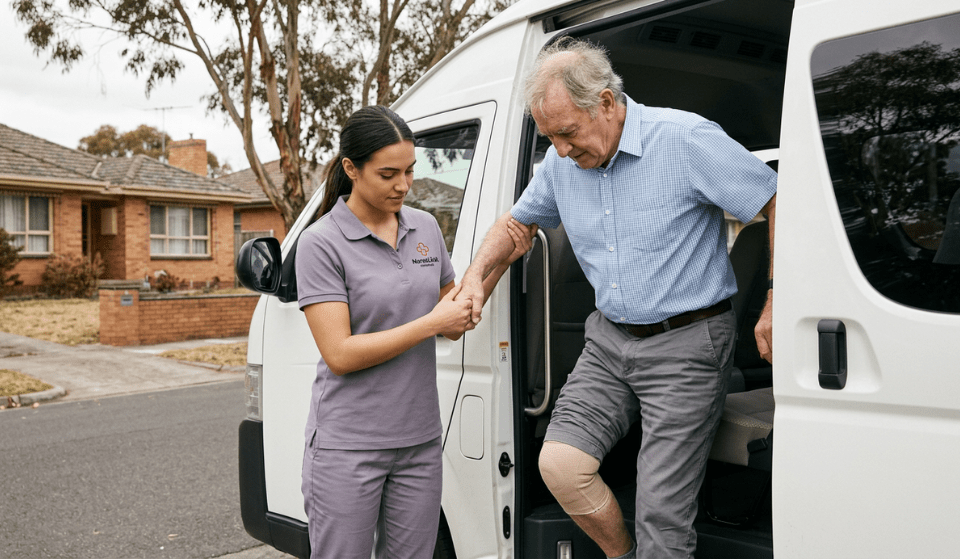
How NurseLink Supported A Melbourne Man’s Full Recovery From Knee Replacement Surgery, One Appointment At A Time A Case Study In Discharge & Follow-Up Transport That Let A Recovery Actually Happen Introduction The period immediately following major joint replacement surgery is one of the more transport-intensive phases of an otherwise routine recovery, and it is also, for a certain kind of patient, one of the most poorly planned for. Hospitals are, understandably, focused on the surgery and the immediate post-operative care. Discharge planning tends to assume, often correctly but not always, that a patient will have someone available to collect him, to drive him to the string of follow-up appointments that a hip or knee replacement requires in the following weeks, physiotherapy, surgical review, wound checks, and to do so safely, given that a patient in the early weeks of recovery from major joint surgery is, in a great many cases, not supposed to be driving himself at all. For a patient whose spouse cannot drive, whether through her own health limitations, never having held a licence, or simply age and circumstance, this assumption breaks down immediately and completely. The surgery itself might go perfectly. The rehabilitation protocol might be exactly right. But if the patient cannot reliably get to the appointments that protocol depends on, the recovery it is designed to produce does not fully happen, and the gap between a successful operation and a successful recovery becomes, quietly, a transport problem rather than a medical one. This case study documents how NurseLink Healthcare supported a man in his late seventies in Melbourne through his discharge home and the full sequence of follow-up appointments required after a total knee replacement, after it became clear that his wife, who did not drive, would not be able to provide the transport his recovery protocol required. To protect the privacy of the client and his family, all names and identifying details have been kept confidential throughout this case study. The Client & His Situation The client is a man in his late seventies living with his wife in Melbourne’s eastern suburbs, a retired accountant who had spent much of the previous two years managing worsening osteoarthritis in his right knee, a condition that had gradually curtailed activities he had once enjoyed without a second thought, gardening, his weekly walk with a group of friends from his old workplace, simply moving comfortably around his own home. His orthopaedic surgeon had recommended a total knee replacement, a procedure he had approached, by his own account, with more relief than apprehension, given how significantly the condition had already narrowed his daily life. His wife, several years younger than him, had never held a driver’s licence, a fact of their fifty-year marriage that had rarely caused any real difficulty given that he had always been the one who drove, and given that their needs, day to day, rarely required transport she could not arrange through him or, occasionally, through their son who lived across the city. But a knee replacement recovery protocol is transport-intensive in a way that ordinary daily life is not. His surgeon’s post-operative plan included regular physiotherapy sessions in the early weeks, a surgical review appointment, and a wound check, all requiring transport at a point in his recovery when he was explicitly advised not to drive himself, given both the physical limitations of the healing knee and the lingering effects of the pain medication he was managing in the early weeks. Their son, keen to help but managing a demanding job and a young family of his own across the city, could not reliably provide the volume of transport the recovery schedule required without it becoming, across several weeks, a genuine strain on his own work and family commitments. The hospital’s discharge planner, reviewing the family’s situation ahead of his surgery, flagged the transport gap early and suggested the family arrange non-emergency patient transport for both his discharge home and his subsequent appointments, rather than leaving the family to patch together an arrangement that was unlikely to hold across the full recovery period. Understanding What He Actually Needed The initial conversation between NurseLink Healthcare and the family, arranged ahead of his surgery so the transport arrangement would be ready from the moment of discharge, focused on both the practical schedule his recovery would require and the specific comfort needs of a patient in the early stages of joint replacement recovery. He needed transport home from hospital on the day of his discharge, in a vehicle and with a driver attentive to the particular discomfort of a freshly operated knee during transfers and the journey itself, avoiding the abrupt movements and rough handling that could genuinely set back an early recovery. He then needed reliable transport to each of the follow-up appointments his surgeon’s protocol required over the following weeks, physiotherapy sessions initially twice weekly, tapering as his recovery progressed, along with his surgical review and wound check appointments, all scheduled with enough consistency that his rehabilitation could proceed exactly as prescribed rather than around the limitations of an improvised transport arrangement. He was, by his own description, not a particularly demanding patient in terms of what he expected from the arrangement, but he was clear about two things. He wanted the transport officer to understand and respect the physical care his knee required during transfers in and out of the vehicle, given how genuinely painful an careless movement could be in the early weeks. And he wanted his wife kept properly informed of his appointments and his return times, given that she would, on most occasions, be at home managing her own day without him and without the ability to simply check on his whereabouts herself. His wife, present for the initial conversation, added that she needed the arrangement to be something she did not have to actively manage or worry about, given that organising and monitoring transport was not a role she had ever had within their marriage and one
Getting Him There, Getting Him Home, Getting Him Through
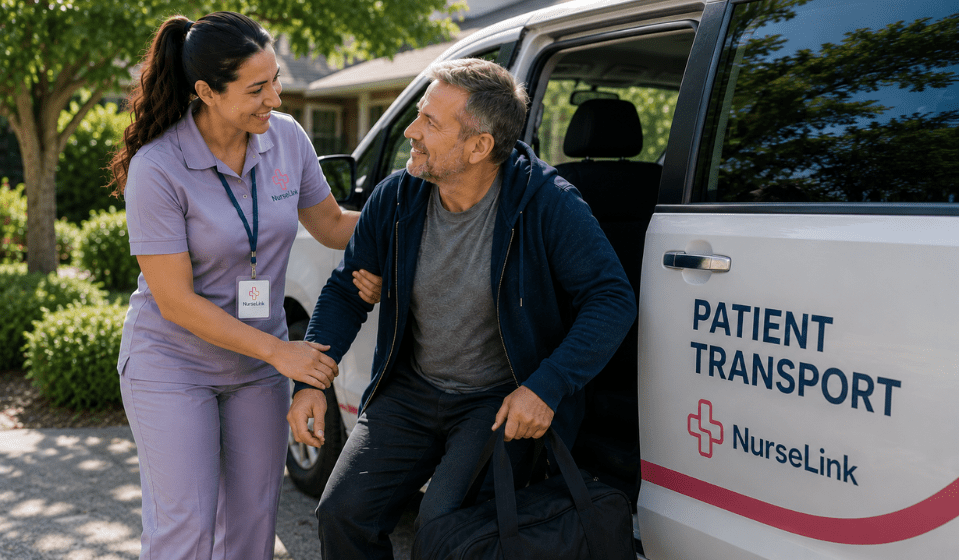
How NurseLink Supported A Patient To Keep Working Through Months Of Chemotherapy A Case Study In Patient Transport That Protected A Career, A Family Budget & A Man’s Sense Of Himself Introduction Chemotherapy takes something from a person well beyond the disease it is treating. It takes energy, in a way that is difficult to fully anticipate until it has happened. It takes reliability, because a person who feels reasonably capable on a Monday cannot always predict how depleted a Thursday treatment will leave him. And for a patient who is still trying, understandably and often out of financial necessity as much as personal identity, to keep working through treatment, it takes something else too: the margin that used to exist between managing an illness and managing a job, a margin that chemotherapy tends to close almost entirely. Getting to and from treatment is, for many patients, a bigger practical obstacle than people outside the experience tend to appreciate. Driving after chemotherapy is frequently unsafe or simply impossible, given the nausea, fatigue and occasional disorientation that many regimens cause. Public transport, even when technically available, can be a genuinely difficult undertaking for someone who has just spent hours receiving treatment that has left him drained in ways that are hard to predict from session to session. For a man trying to hold a job together at the same time, the transport problem is not a side issue. It sits close to the centre of whether the whole arrangement, treatment and work and everything else, can actually be sustained. This case study documents how NurseLink Healthcare provided non-emergency patient transport for a man in his early fifties in Melbourne, undergoing several months of chemotherapy while continuing to work, and how reliable, well-timed transport became one of the quiet but essential pieces that let him keep both his treatment and his job on track. To protect the privacy of the client, all names and identifying details have been kept confidential throughout this case study. The Client & His Situation The client is a man in his early fifties, married with two teenage children, working as a project manager for a mid-sized construction firm in Melbourne’s outer east. He had been diagnosed with cancer following a period of vague but persistent symptoms that had eventually prompted investigation, and had begun a chemotherapy regimen scheduled across several months, with treatment sessions occurring every second week at a hospital some distance from both his home and his workplace. He had made an early and deliberate decision, discussed carefully with his oncologist and his family, to continue working through as much of his treatment as he reasonably could. This was partly financial, given that his income was a significant part of the family’s budget and his sick leave entitlements would not comfortably stretch across the full length of treatment. But it was, by his own account, just as much about identity and normalcy. He did not want cancer to be the only thing defining his days, and continuing to work, in whatever modified form his energy allowed, felt to him like holding onto a piece of the life he intended to keep once treatment was over. The practical difficulty was transport. His treatment sessions left him, without exception, unfit to drive for the remainder of that day and often into the following one, given the nausea and fatigue that hit hardest in the hours after each infusion. His wife worked full time herself and could not reliably take time off every second week without it becoming, over the length of treatment, a serious problem for her own job. His children were too young to drive. Public transport, even setting aside how unwell he generally felt after treatment, involved a route and a duration that his oncologist advised strongly against given his post-treatment condition. He had managed the first couple of sessions through a combination of his wife taking leave and a colleague offering a lift, arrangements that both parties made clear, kindly but honestly, were not sustainable across the full length of his treatment. His oncology social worker, aware of the pattern developing, suggested NurseLink Healthcare’s non-emergency patient transport service as a way of resolving the problem properly rather than patching it together session by session. Understanding What He Actually Needed The initial conversation between NurseLink Healthcare and the client focused, as much as anything, on the practical rhythm his work and treatment schedule required, because it became clear early in the conversation that a generic transport arrangement would not adequately serve a man trying to hold a full-time job together around his treatment. He needed transport to his treatment sessions timed precisely enough that he could attend a partial morning at work beforehand on the days his energy allowed, without cutting it close enough to arrive at the hospital rushed or stressed. He needed, just as importantly, reliable transport home afterwards, at a time that could not always be predicted precisely in advance given that infusion duration sometimes varied session to session, which meant the transport arrangement needed to accommodate some flexibility around pickup timing without becoming unreliable as a result. He also needed, though he raised it almost apologetically, a driver who understood that he generally did not feel like talking much on the way home, given how unwell the sessions frequently left him, while being perfectly happy to chat on the way in, when his energy was usually still reasonably intact. This asymmetry, a sociable outward journey and a quiet, undemanding return journey, became one of the more specific and important details the care coordinator noted from the initial assessment. His wife, present for part of the conversation, added that her biggest concern was simply knowing, reliably, that he had arrived safely and been collected safely, given how depleted he sometimes was by the end of a session and how much easier her own workday became if she was not managing background anxiety about whether the transport arrangement would hold. The NurseLink
When Getting To Care Is Part Of The Challenge

How NurseLink Supported A Young Victorian Woman With Endometriosis A Case Study In Patient-Centred Transport For A Young Woman Navigating A Painful Condition Introduction Endometriosis is one of the most underdiagnosed and undertreated conditions in women’s health. It affects roughly one in nine Australian women, causes pain that can be severe and debilitating and takes, on average, more than six years from the onset of symptoms to diagnosis. The women who live with it during those years are not simply managing a medical condition. They are managing a condition that has frequently been minimised, misunderstood or attributed to causes that do not reflect the clinical reality of what is happening in their bodies, by a healthcare system that has historically found women’s pain easier to dismiss than to investigate. When a young woman with endometriosis finally accesses specialist care, the relief of being properly seen and properly diagnosed is real and significant. What follows the diagnosis is a treatment pathway that is often intensive and that requires consistent engagement with a specialist team, regular procedures, careful monitoring and the particular kind of ongoing clinical relationship that endometriosis management at its best involves. And for a young woman who lives outside the city where her specialist is based, who is managing the physical exhaustion and the pain that her condition produces and who does not have reliable access to the transport she needs to get to her appointments, the gap between a treatment plan and a completed one can become the next barrier in a long series of barriers. Non-emergency patient transport for a young woman in this situation is not simply a logistical service. It is the practical support that makes the treatment possible, provided in a way that understands what she is managing and that treats the journey with the sensitivity that her condition and her experience require. At NurseLink Healthcare, we understand that transport is never just transport. This case study documents how our team supported a young woman with severe endometriosis in regional Victoria through a sustained period of specialist treatment in Melbourne, and how the consistent, sensitive transport we provided became one of the things that made completing her treatment possible. To protect the privacy of the client, all identifying details have been kept confidential throughout this case study. The Client & Her Situation The client is a woman in her late twenties who lives in a regional Victorian town approximately ninety minutes from Melbourne. She had been managing symptoms of endometriosis since her late teens, a period of nearly a decade during which she had seen multiple GPs, had her symptoms attributed to stress and period pain and had been told, on more than one occasion, that what she was experiencing was normal and that she would learn to manage it. She had not learned to manage it, because it was not normal and because the pain, which was cyclical but also chronic and which had worsened progressively across the years, was not something that management strategies were adequately addressing. She had missed days of work. She had cancelled social plans more often than she could count. She had sat through clinical appointments feeling both unheard and guilty for taking up a doctor’s time with something that was apparently manageable. The specialist referral that had eventually been made, by a GP who had listened more carefully than the ones who came before, had led to a diagnosis of severe endometriosis that had, by the time it was confirmed, progressed to a stage that required both surgical intervention and an ongoing medical management programme. Her specialist, based at a clinic in Melbourne, had developed a treatment plan that included an initial surgical procedure followed by a series of follow-up appointments, hormone therapy management and regular monitoring across a treatment period of twelve to eighteen months. The treatment plan was the right one. The specialist was excellent. The clinic was well-regarded. And the clinic was ninety minutes from her home, in a city she did not drive to regularly, at times that were determined by her specialist’s schedule rather than by what was convenient for her, after appointments that often left her exhausted, in pain or recovering from procedures that made the drive home in a car she had to manage herself both difficult and inadvisable. She had managed the first several appointments by asking friends to drive her, which had worked for the initial phase and had become, as the frequency and the duration of the appointments had increased, more difficult to sustain without feeling that she was imposing. Her specialist’s practice manager, who had encountered this problem before, had mentioned NurseLink Healthcare. Understanding What She Actually Needed The initial conversation NurseLink Healthcare had with the client was one that the care coordinator approached with specific awareness of the particular experience of a young woman who had spent years not being properly heard about her own health. She was, initially, somewhat guarded. Not unfriendly, but careful in the way of a person who has learned that services do not always deliver what they promise and that asking for help sometimes produces more complication than it resolves. The care coordinator, who recognised the guardedness for what it was, did not try to dissolve it with reassurances. She asked specific questions and answered the questions she was asked with the same specificity. What emerged was a clear picture of what the client needed. She needed transport to her Melbourne appointments that she could rely on completely, because managing the uncertainty of whether her transport was going to work on a day when she was already managing pain and anxiety about a procedure was more than she wanted to add to what she was already carrying. She needed the vehicle to be comfortable, because the journey of ninety minutes each way was significant for a person whose pelvic pain made certain positions uncomfortable for extended periods. She needed the return journey to be managed with the understanding that
Getting There Made The Difference
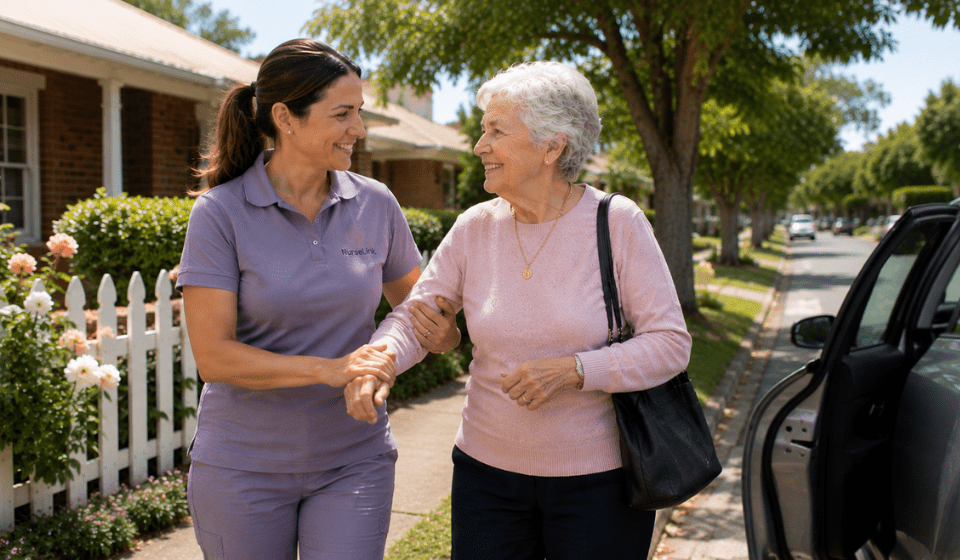
How NurseLink Supported A Retired Melbourne Teacher Through Her Full Cardiac Rehabilitation Programme A Case Study In Reliable, Friendly Patient Transport That Turned A Logistical Problem Into A Non-Issue Introduction Cardiac rehabilitation works. The evidence for it is clear and has been for decades. For people who have experienced a heart attack, cardiac surgery or another significant cardiac event, a structured rehabilitation programme reduces the risk of future events, improves physical fitness, builds confidence and supports the psychological recovery that a cardiac event makes necessary alongside the physical one. It is not a supplementary service. It is a core component of cardiac care, and the patients who complete it consistently fare better than those who do not. Completing it consistently is the challenge. Cardiac rehabilitation programmes are typically delivered across weeks or months, requiring attendance at a clinic or rehabilitation centre on a regular schedule that does not always align neatly with a patient’s transport options, family circumstances or the practical realities of daily life. For a patient who cannot drive, who does not have a family member available to provide transport at the required frequency and who does not have an obvious alternative, the gap between a rehabilitation programme that has been prescribed and one that is actually attended can become the thing that determines how far the recovery goes. For an older patient living with a spouse who has stopped driving, this gap is particularly common and particularly frustrating. The programme is available. The patient wants to attend. The clinical benefit is real and the patient’s cardiologist has been clear about it. The only thing missing is a reliable, comfortable way to get there and back. Non-emergency patient transport that resolves this gap is not dramatic. It is not the most clinically complex service that NurseLink Healthcare provides. But it is, for the patients who need it, genuinely important, because the recovery it makes possible is genuinely important and the consistency it provides is what the recovery depends on. This case study documents how NurseLink Healthcare supported a retired teacher in her seventies in Melbourne, Victoria, through the full course of her cardiac rehabilitation programme after her husband stopped driving, and how the reliable, friendly transport our team provided gave her the consistency she needed to complete a programme that made a real difference to her health and her confidence. To protect the privacy of the client and her family, all names and identifying details have been kept confidential throughout this case study. The Client & Her Situation The client is a woman in her mid-seventies who lives with her husband in Melbourne’s eastern suburbs. She had taught primary school for thirty-five years before retiring in her early sixties, and retirement had suited her well. She volunteered at a local community garden, was part of a long-running book club and maintained the particular kind of active social life that a person who spent her career surrounded by people tends to build and value. Her husband, who was several years older, had stopped driving the previous year after his optometrist had recommended he do so on the basis of changes to his vision that had made night driving unsafe and daytime driving inadvisable. He had accepted this with the particular pragmatic resignation of a man who understood the reasoning and disliked the implication, and the couple had adjusted to the practical changes that the decision required, as couples who have been managing life together for a long time tend to do. Her cardiac event had occurred without significant warning, which cardiac events often do. She had been managing what she thought was persistent indigestion for a week before her GP, reviewing her symptoms with the specific attentiveness that a woman in her mid-seventies deserves, had referred her for investigation. The investigation had identified a significant blockage and she had undergone a cardiac procedure that her cardiologist described as both necessary and successful. The recovery had gone well. She was discharged from hospital with a management plan that included medication, dietary guidance and a referral to a cardiac rehabilitation programme at a centre not far from their home. The programme was structured across several months, with attendance required twice a week for the exercise sessions and monthly for the group education and support sessions that the programme included. Her cardiologist had been clear about the importance of the programme. She had nodded and agreed and then come home and worked out that the rehabilitation centre, while not far in distance, was not easily accessible by public transport and that her husband could not drive her and that her children, who lived in other suburbs and had their own commitments, could not reliably provide twice weekly transport across several months without it becoming a burden she was not comfortable placing on them. She had mentioned this to her cardiac rehabilitation coordinator at the initial assessment, who had suggested NurseLink Healthcare. Understanding What She Actually Needed The initial conversation NurseLink Healthcare had with the client was one of the more straightforward assessments the care coordinator had conducted, which was a reflection of how clearly she understood her own situation and how directly she communicated about it. She needed reliable transport to and from her cardiac rehabilitation sessions twice a week, and to her monthly education sessions, for the duration of the programme. She needed a vehicle that was comfortable for a woman who was in the early stages of her cardiac recovery and who found certain positions uncomfortable for extended sitting. She needed the pickup to be at the agreed time because she was a person who valued punctuality and because arriving at her rehabilitation sessions flustered from a late or unreliable transport arrangement was not a good way to begin the exercise component of her programme. She also said something that the care coordinator noted because it was both straightforward and entirely reasonable. She said she hoped the transport officer would be someone she could have a conversation with, because
Showing Up For Someone Nobody Else Was Showing Up For
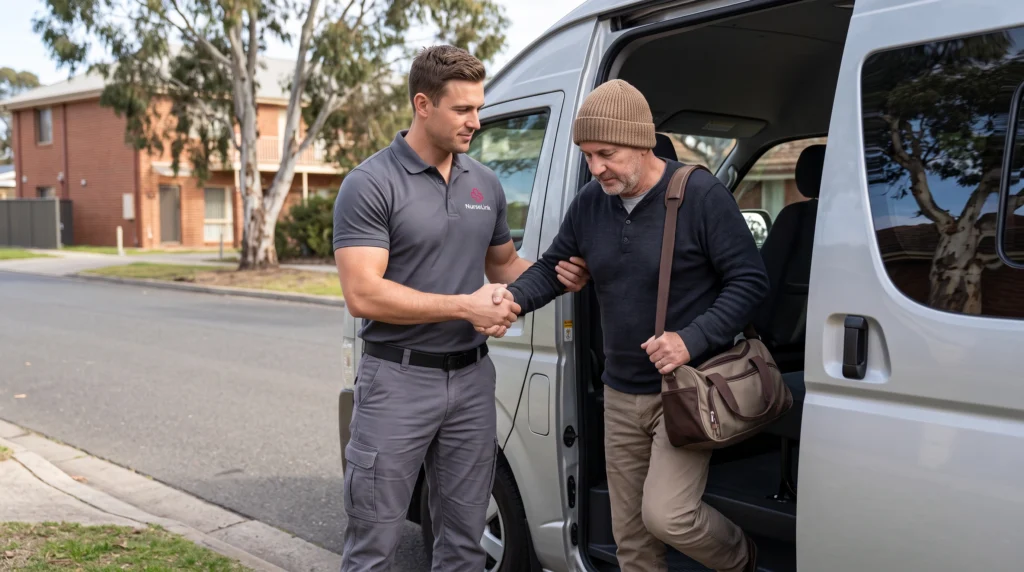
How NurseLink Provided Transport To A Homeless Man Navigating Cancer Treatment Alone A Case Study In Person-Centred NEPT For A Patient With No Support Network Introduction Cancer does not only happen to people with houses and families and someone to drive them to their appointments. It happens to people who are sleeping rough, managing addiction, navigating the particular complexity of a life that has come apart in ways that the healthcare system is not always well equipped to address alongside the clinical management of a serious illness. For a person experiencing homelessness who receives a cancer diagnosis, the barriers to treatment are not primarily clinical. The oncology team knows what to do. The treatment exists. The appointments are available. The barriers are the ones that sit between the person and the clinic, the transport, the storage of medications, the administrative requirements of a healthcare system that assumes a permanent address, the exhaustion of managing survival alongside managing treatment, and the particular invisibility of a person whose life circumstances make them easy to overlook in a system that is busy and under-resourced and not always designed for the people who need it most. Non-emergency patient transport for a patient in this situation is not simply a logistical service. It is, in many cases, the thing that determines whether treatment happens at all. A person without a support network, without a car, without family to call and without the financial resources to manage the cost of getting from wherever they slept last night to an oncology clinic across the city, needs a transport arrangement that is reliable, dignified and built around their specific reality rather than around the assumptions of a service designed for people with more stable lives. At NurseLink Healthcare, we believe that everyone who needs transport to medical treatment deserves transport that sees them as a person. This case study documents how our team provided consistent, dignified non-emergency patient transport to a man experiencing homelessness in regional Victoria, navigating a cancer treatment programme that he had nearly stopped attending, alone and without the support that most patients take for granted. To protect the privacy of the client, all identifying details have been kept confidential throughout this case study. The Client & His Situation The client is a man in his mid-fifties who had been experiencing homelessness in a regional Victorian city for several years at the time of his cancer diagnosis. His path to homelessness had followed the particular trajectory that homelessness often follows, a combination of circumstances that arrived in a sequence that his capacity to manage had not kept pace with, and that had left him, by the time of this case study, without stable accommodation, without consistent support from family or friends and without the practical infrastructure that most people rely on without noticing. He was known to the local community health service, which had been providing him with basic primary care and connecting him with social support services with varying degrees of success over the preceding years. He had a relationship with one of the health service’s outreach workers that was, by the standards of his current life, one of the more consistent points of human contact available to him. The cancer diagnosis, a form of lung cancer that was serious but treatable if the treatment was completed consistently and on schedule, had been made during a presentation to the community health service that had been prompted by symptoms he had been managing, or not managing, for several months. The oncology team at the regional hospital had developed a treatment plan that included a course of chemotherapy and regular monitoring appointments at the hospital’s cancer centre, which was located across the city from the area where he typically spent his days. The outreach worker who had been supporting him through the initial stages of the diagnosis and treatment planning had identified the transport gap early. He did not have reliable access to the bus routes that connected his area to the hospital. He did not have money for taxis. He did not have anyone to ask for a lift. And the experience of trying to manage a complex, multi-appointment treatment programme while simultaneously managing the daily demands of homelessness had already produced two missed appointments in the first weeks of his treatment, which his oncology team had noted with concern. The outreach worker contacted NurseLink Healthcare. Understanding What He Actually Needed The initial conversation NurseLink Healthcare had with the outreach worker, and subsequently with the client himself, was one that required specific sensitivity to the circumstances of the person being supported. He was not a person who was accustomed to services showing up reliably. He was not a person who assumed that the people who said they would help would follow through. And he was not a person who found it easy to ask for or accept help, because the experience of his life had not provided many reliable templates for what helpful looked like. The outreach worker was specific about what the transport arrangement needed to provide and what it needed to avoid. It needed to be consistent, because inconsistency was the thing that had already produced missed appointments and that would, if it recurred, produce a man who had decided that the treatment was not worth the effort of trying to get to it. It needed to be dignified, which in this context meant transport officers who would not treat him differently because of his circumstances, who would not make his homelessness the defining feature of the interaction and who would not, through manner or through the practical management of the arrangement, communicate that he was a difficult or unusual case rather than a person who needed a ride to the hospital. It needed to accommodate the specific practical challenges of his situation. He did not have a fixed address for pickup. His location on any given day depended on where he had slept the night before and where he had spent
Getting There Safely
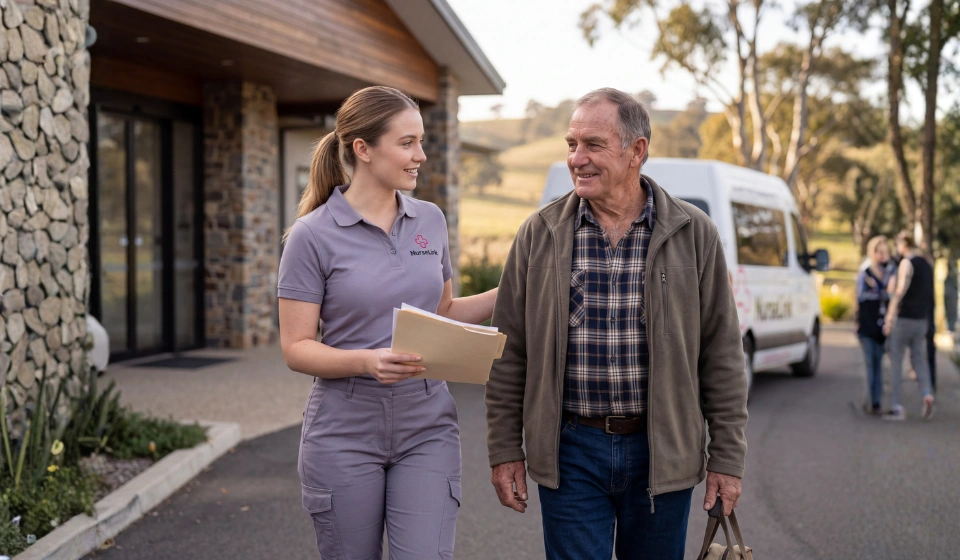
How NurseLink Provided Safe Post-Surgery Transport For A Rural Victorian Man How Specialised Transport Kept A Regional Victorian Patient’s Recovery On Track Introduction Recovery from major surgery is demanding enough without the added burden of not being able to get to the appointments that recovery depends on. For most patients, the logistics of follow-up care, the drive to the clinic, the transfer from vehicle to waiting room, the journey home afterward, are manageable inconveniences in a process that is otherwise straightforward. For some patients, those logistics are anything but straightforward, and the gap between what is needed and what is available can quietly undermine a recovery that the surgical team has worked hard to set in motion. Bariatric surgery is a significant clinical undertaking. The period following it is equally significant, a carefully managed process of recovery, nutritional adjustment, wound monitoring and progressive rehabilitation that requires consistent engagement with a specialist team over weeks and months. Missing follow-up appointments in this period is not a minor inconvenience. It carries genuine clinical risk, and for patients in regional and rural Victoria, where specialist services are often located in Melbourne or other major centres a considerable distance away, the question of how to actually get there is not one that resolves itself easily. Non-emergency patient transport that is equipped and staffed for the specific requirements of post-bariatric surgery patients is a specialised service. It requires the right vehicle, the right equipment and transport officers who understand both the physical requirements and the human dignity of the person they are supporting. When that service is available and delivered well, it removes a barrier that can otherwise stand between a patient and the recovery they have worked toward. At NurseLink Healthcare, we provide exactly this kind of transport. This case study documents how our team supported a man in his late forties in rural Victoria through a series of post-bariatric surgery follow-up appointments, after his family had been managing his transport in a private vehicle in a way that was neither safe nor sustainable for any of them. To protect the privacy of the client and his family, all names and identifying details have been kept confidential throughout this case study. The Client & His Situation The client is a man in his late forties who lives with his wife and two teenage children in a small rural community in Victoria, approximately two hours from Melbourne by car. He had worked for many years in a physically demanding trade before a combination of health issues, including significant obesity and the conditions that had developed alongside it, had progressively limited his capacity to work and had narrowed the shape of his daily life considerably. The decision to pursue bariatric surgery had not been made lightly. It had come after years of attempting other approaches to managing his weight and health, extensive conversations with his GP and specialist team, and a genuine reckoning with what his health trajectory looked like if things did not change. The surgery, performed at a specialist centre in Melbourne, had gone well clinically. The early post-operative period in hospital had been managed without significant complication, and by the time discharge was being planned, his surgical team was cautiously optimistic about his recovery trajectory. The discharge plan included a structured schedule of follow-up appointments over the coming months, covering wound review, nutritional assessment, metabolic monitoring and progressive rehabilitation check-ins with his specialist bariatric team in Melbourne. These appointments were not optional additions to his recovery. They were the clinical infrastructure on which his recovery depended, and missing them carried risks his surgical team had been explicit about. The question of how he was going to get to these appointments had not been fully resolved at the time of discharge. His wife did not drive long distances confidently, particularly on the freeway sections of the Melbourne route. His vehicle, a standard family car, was not well suited to accommodating him comfortably and safely at his current size and mobility level. And the physical demands of a two-hour journey each way, followed by a clinic appointment, were significant for a man in the early weeks of post-surgical recovery. What Was Happening Before NurseLink Healthcare In the weeks following his discharge, the family had been managing his transport to follow-up appointments themselves. His wife had been driving him to Melbourne in their family car, a journey that was stressful for her, uncomfortable and physically difficult for him and that left both of them exhausted by the time they arrived at the clinic. The practical difficulties were significant. Getting him safely and comfortably into and out of the family car required a level of physical assistance that his wife found genuinely challenging, and on at least two occasions the process had been managed in ways that his surgical team would have considered a risk to his wound integrity and his overall safety. The vehicle itself did not provide the support and space he needed for a journey of that length, and the discomfort of the trip was beginning to discourage him from wanting to attend appointments at all. His wife had raised the transport difficulty with his GP during a routine call, describing with visible distress how the previous trip to Melbourne had gone and her concern that they were not managing it safely. His GP referred the family to NurseLink Healthcare without delay. The referral was also motivated by something his GP had noticed in how the client himself was talking about his upcoming appointments. A man who had committed to a significant surgical intervention and who had every clinical reason to engage fully with his follow-up care was beginning to suggest, obliquely, that perhaps not every appointment was strictly necessary. His GP recognised this for what it was. Not clinical judgment, but the slow retreat of a person for whom the process of getting to his appointments had become something he was dreading. Understanding What He Actually Needed The initial conversation NurseLink Healthcare
Every Appointment, Every Time
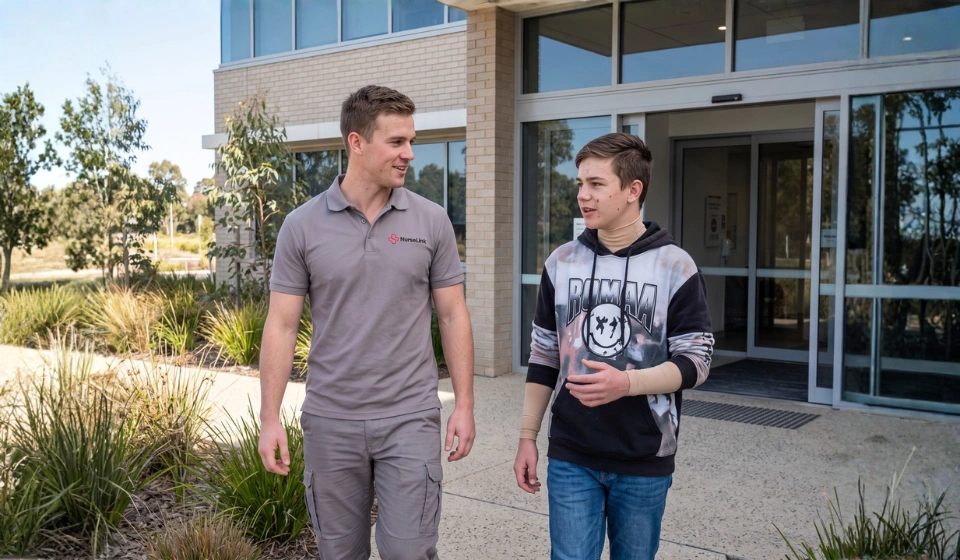
How NurseLink Supported A Teenage Burns Survivor To Attend His Reconstructive Treatment A Case Study In Sensitive NEPT For A Young Person Navigating A Long And Demanding Recovery Introduction Recovery from serious burns is not a single event. It is a process that unfolds across months and years, through surgeries and dressing changes and compression garment fittings and the particular kind of physiotherapy that works against scar tissue that would prefer not to be worked against. It is a process that requires consistent, repeated engagement with a specialist clinical team, and that consistent engagement requires, for a young person without reliable independent transport, a transport solution that understands not just the physical requirements of the journey but the human ones. A teenage boy who has survived a serious burn injury is carrying something that goes well beyond the physical. He is managing pain that is real and sometimes sudden. He is managing the particular self-consciousness of a young person whose appearance has changed in ways that the world around him notices and that he notices the world noticing. He is managing the disruption to the ordinary life of a teenager, the school, the friends, the sense of a future that was assumed to continue along familiar lines, that a serious injury produces and that no clinical team has a specific treatment for. Getting this young person to his specialist appointments consistently, safely and in a way that honours the complexity of what he is carrying, is not a transport task. It is a clinical and human responsibility. And when it is done well, by people who understand both dimensions of what the journey requires, it becomes part of the support structure that makes the recovery possible. At NurseLink Healthcare, we understand that non-emergency patient transport for a burns survivor is a distinct and specific undertaking. This case study documents how our team supported a teenage boy in Melbourne, Victoria, through a sustained period of reconstructive treatment following a serious burn injury sustained in a car accident, and how the consistent, dignified transport we provided became one of the stable elements of a recovery that asked a great deal of him and his father. To protect the privacy of the client and his family, all names and identifying details have been kept confidential throughout this case study. The Young Person & His Situation The young person at the centre of this case study is a boy aged between sixteen and eighteen who lives with his father in Melbourne’s western suburbs. He sustained serious burns to his upper body, neck and part of his face in a car accident that occurred when he was a passenger in a vehicle driven by a friend. The accident itself was the kind of sudden, catastrophic event that does not leave room for preparation, and the weeks that followed it, in the burns unit of a major Melbourne hospital, were among the most difficult of his and his father’s lives. He had been, before the accident, a fairly ordinary teenager in the ways that matter. He went to school. He played sport on weekends. He had a group of friends he had known since primary school and a relationship with his father that was, by his father’s account, close in the practical, unspoken way of fathers and teenage sons who understand each other without talking about it much. He had plans, loosely held in the way of teenagers whose future is so obviously ahead of them that planning it feels premature. The accident changed the shape of what ahead looked like. The burns he sustained required multiple surgical procedures, extended skin grafting and a reconstructive treatment programme that his specialist team at a Melbourne burns clinic had mapped out across the following twelve to eighteen months. The programme included regular clinic appointments for wound assessment, compression therapy and scar management, surgical procedures scheduled at intervals determined by his healing progress, physiotherapy to manage the contracture risk that serious burns carry, and the psychological support that his treatment team had wisely built into the programme from the outset. His father, who worked in a trade and had managed the weeks of his son’s hospitalisation by taking leave he could not entirely afford and sitting in the burns unit for hours each day, was now managing a return to work alongside the transport demands of a treatment programme that required his son to attend the burns clinic several times a month at a location that was not easily accessible from their home by public transport. His son’s own licence was still some months away, and the physical discomfort that his burns and compression garments produced made the idea of public transport for a journey of this length both clinically inadvisable and practically very difficult. The burns clinic’s social worker, who had been supporting the family through the post-hospitalisation transition, identified the transport gap and contacted NurseLink Healthcare. Understanding What He & His Father Actually Needed The initial conversation NurseLink Healthcare had with the family involved both the young person and his father, which was the right approach for a sixteen year old who was old enough to have clear views about his own situation and young enough to need his father in the room while he expressed them. He was not forthcoming initially, which was not surprising. He was a teenager who had been through something serious and who had, in the weeks since leaving hospital, been managing the particular self-consciousness of a person whose appearance had changed in ways that were visible to the world. He had not yet returned to school. He had seen his close friends but had found some of those interactions more difficult than he had expected. He was, in the way of teenage boys managing something they do not have the language for, largely quiet about most of it. What he communicated, when the care coordinator asked him directly what he needed from a transport arrangement, was specific in the way