Getting There Safely
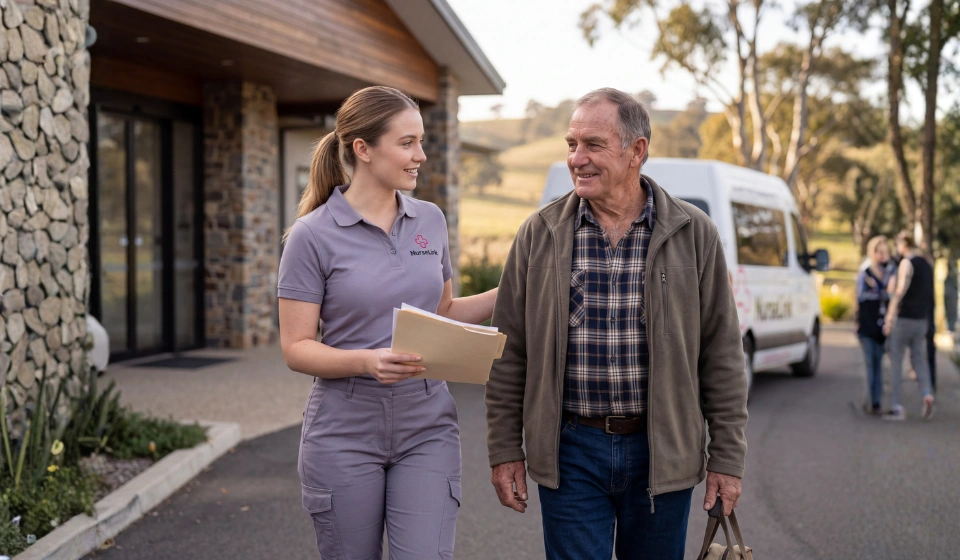
How NurseLink Provided Safe Post-Surgery Transport For A Rural Victorian Man
How Specialised Transport Kept A Regional Victorian Patient's Recovery On Track
Introduction
Recovery from major surgery is demanding enough without the added burden of not being able to get to the appointments that recovery depends on. For most patients, the logistics of follow-up care, the drive to the clinic, the transfer from vehicle to waiting room, the journey home afterward, are manageable inconveniences in a process that is otherwise straightforward. For some patients, those logistics are anything but straightforward, and the gap between what is needed and what is available can quietly undermine a recovery that the surgical team has worked hard to set in motion.
Bariatric surgery is a significant clinical undertaking. The period following it is equally significant, a carefully managed process of recovery, nutritional adjustment, wound monitoring and progressive rehabilitation that requires consistent engagement with a specialist team over weeks and months. Missing follow-up appointments in this period is not a minor inconvenience. It carries genuine clinical risk, and for patients in regional and rural Victoria, where specialist services are often located in Melbourne or other major centres a considerable distance away, the question of how to actually get there is not one that resolves itself easily.
Non-emergency patient transport that is equipped and staffed for the specific requirements of post-bariatric surgery patients is a specialised service. It requires the right vehicle, the right equipment and transport officers who understand both the physical requirements and the human dignity of the person they are supporting. When that service is available and delivered well, it removes a barrier that can otherwise stand between a patient and the recovery they have worked toward.
At NurseLink Healthcare, we provide exactly this kind of transport. This case study documents how our team supported a man in his late forties in rural Victoria through a series of post-bariatric surgery follow-up appointments, after his family had been managing his transport in a private vehicle in a way that was neither safe nor sustainable for any of them.
To protect the privacy of the client and his family, all names and identifying details have been kept confidential throughout this case study.
The Client & His Situation
The client is a man in his late forties who lives with his wife and two teenage children in a small rural community in Victoria, approximately two hours from Melbourne by car. He had worked for many years in a physically demanding trade before a combination of health issues, including significant obesity and the conditions that had developed alongside it, had progressively limited his capacity to work and had narrowed the shape of his daily life considerably.
The decision to pursue bariatric surgery had not been made lightly. It had come after years of attempting other approaches to managing his weight and health, extensive conversations with his GP and specialist team, and a genuine reckoning with what his health trajectory looked like if things did not change. The surgery, performed at a specialist centre in Melbourne, had gone well clinically. The early post-operative period in hospital had been managed without significant complication, and by the time discharge was being planned, his surgical team was cautiously optimistic about his recovery trajectory.
The discharge plan included a structured schedule of follow-up appointments over the coming months, covering wound review, nutritional assessment, metabolic monitoring and progressive rehabilitation check-ins with his specialist bariatric team in Melbourne. These appointments were not optional additions to his recovery. They were the clinical infrastructure on which his recovery depended, and missing them carried risks his surgical team had been explicit about.
The question of how he was going to get to these appointments had not been fully resolved at the time of discharge. His wife did not drive long distances confidently, particularly on the freeway sections of the Melbourne route. His vehicle, a standard family car, was not well suited to accommodating him comfortably and safely at his current size and mobility level. And the physical demands of a two-hour journey each way, followed by a clinic appointment, were significant for a man in the early weeks of post-surgical recovery.
What Was Happening Before NurseLink Healthcare
In the weeks following his discharge, the family had been managing his transport to follow-up appointments themselves. His wife had been driving him to Melbourne in their family car, a journey that was stressful for her, uncomfortable and physically difficult for him and that left both of them exhausted by the time they arrived at the clinic.
The practical difficulties were significant. Getting him safely and comfortably into and out of the family car required a level of physical assistance that his wife found genuinely challenging, and on at least two occasions the process had been managed in ways that his surgical team would have considered a risk to his wound integrity and his overall safety. The vehicle itself did not provide the support and space he needed for a journey of that length, and the discomfort of the trip was beginning to discourage him from wanting to attend appointments at all.
His wife had raised the transport difficulty with his GP during a routine call, describing with visible distress how the previous trip to Melbourne had gone and her concern that they were not managing it safely. His GP referred the family to NurseLink Healthcare without delay.
The referral was also motivated by something his GP had noticed in how the client himself was talking about his upcoming appointments. A man who had committed to a significant surgical intervention and who had every clinical reason to engage fully with his follow-up care was beginning to suggest, obliquely, that perhaps not every appointment was strictly necessary. His GP recognised this for what it was. Not clinical judgment, but the slow retreat of a person for whom the process of getting to his appointments had become something he was dreading.
Understanding What He Actually Needed
The initial conversation NurseLink Healthcare had with the client and his wife was one that both of them approached with a degree of wariness that was entirely understandable. They had been managing a difficult situation in the only way available to them, and the prospect of handing that responsibility to an external provider, particularly one they did not know, required a level of trust they had not yet had reason to extend.
He was straightforward about his priorities. He needed a vehicle that could accommodate him safely and comfortably, with the space and the appropriate seating support that a man of his size and current mobility level required for a two hour journey. He needed transport officers who understood what post-bariatric surgery recovery involved and who would handle the physical aspects of his transport, boarding, alighting and any assistance during the journey, in a way that was safe for his recovery and that did not make him feel worse about himself than the situation already did.
He was honest about that last point in a way that took some courage. The experience of needing specialised transport, of being a person whose physical situation required equipment and assistance that a standard car could not provide, was not something he was entirely at peace with. He needed transport officers who would bring matter-of-fact professionalism to the physical aspects of his transport without drawing attention to them or making him feel that his size was a problem to be managed rather than a circumstance to be accommodated.
His wife needed the reassurance that he was being transported safely, that the physical assistance involved in getting him to and from the vehicle was being provided by people with the training and equipment to do it correctly, and that she did not have to be the person responsible for managing a situation that had been frightening her.
NurseLink Healthcare built the transport arrangement around all of this.
The NurseLink Healthcare Solution
A Vehicle & Equipment Suited To His Actual Requirements
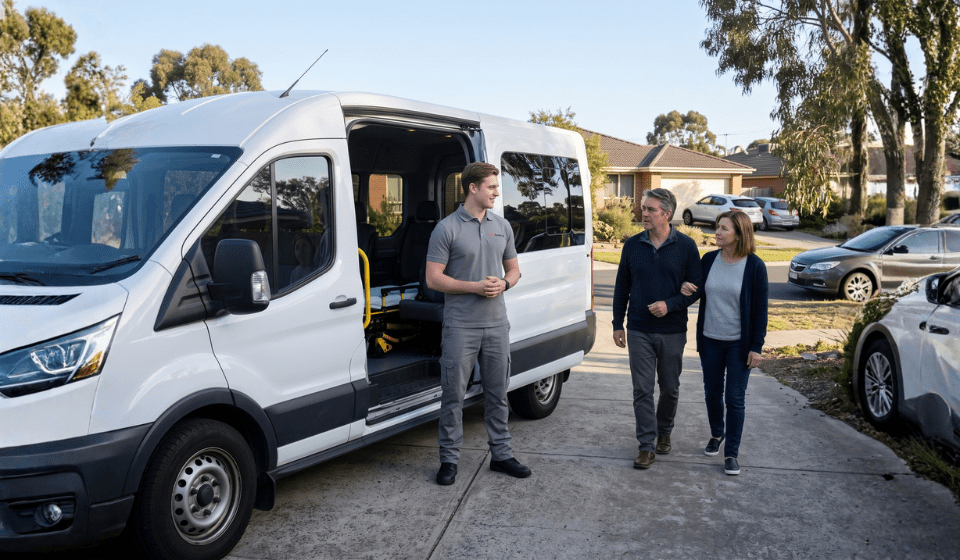
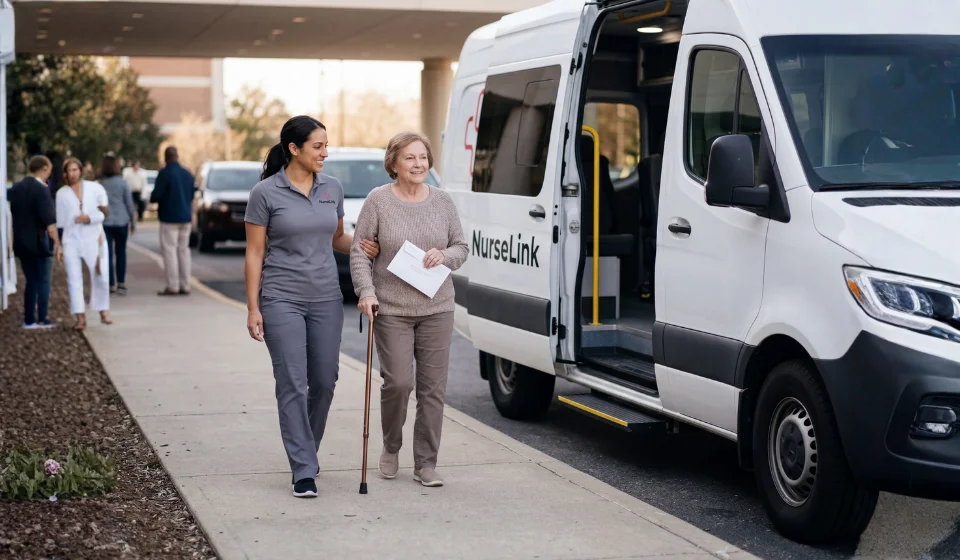
NurseLink Healthcare confirmed a bariatric-capable vehicle for all of his follow-up appointments, equipped with the appropriate seating, support systems and boarding assistance required for a patient at his size and current mobility level. The vehicle specifications were communicated to him and his wife in advance, along with a clear explanation of how the boarding process would be managed, so that neither of them arrived at the first pickup facing an unknown process.
The vehicle provided the space and seating support needed for a two hour journey to be genuinely manageable rather than an ordeal. For a man whose previous experience of that journey had involved significant physical discomfort in an unsuitable vehicle, the difference was meaningful from the very first trip.
Transport Officers With The Right Training & The Right Approach
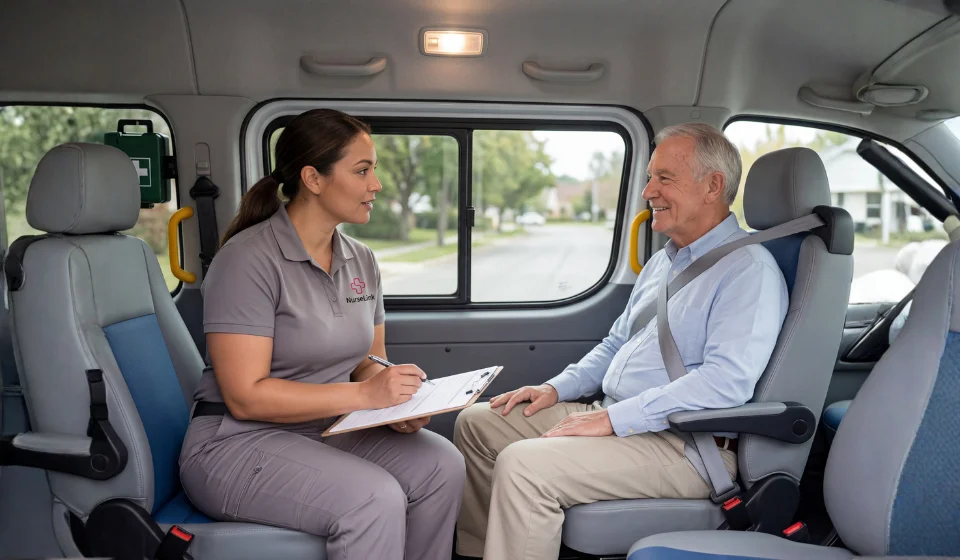
NurseLink Healthcare assigned transport officers with specific experience in bariatric patient transport to his appointments. This meant officers who were trained in the safe physical assistance techniques required for boarding and alighting, who understood the particular considerations of post-surgical patients and who brought to the role a manner that was professional, efficient and entirely free of the self-consciousness that an inadequately prepared transport officer can project and that a patient in his situation does not need to absorb.
Before the first appointment, the lead transport officer spoke directly with him by phone to introduce himself and go through exactly how the morning would work. The call was brief and practical, but it served a purpose that went beyond logistics. He arrived at the first pickup having already spoken with the person who would be driving him, knowing what to expect and without the anxiety of facing an unfamiliar process at an already demanding moment.
Consistent Rostering Across All Follow-Up Appointments
NurseLink Healthcare rostered the same transport officers across his scheduled follow-up appointments wherever operationally possible. For a patient for whom the physical and interpersonal dimensions of his transport had been a source of significant stress, the familiarity of a known transport officer arriving at the door made each subsequent appointment easier than the one before. By the third appointment, the boarding process that had been managed with such difficulty in the family car had become a routine that required no particular effort or anxiety from anyone involved.
The consistency also meant that his transport officers developed a practical knowledge of his specific requirements that made each journey more comfortable and more efficiently managed than a rotating roster of unfamiliar officers could have achieved.
Keeping The Journey Itself Manageable
The two hour journey each way was managed with attention to his comfort and his clinical situation. Departure times were planned to allow for a relaxed boarding process and arrival at the clinic with time to settle before his appointment. The return journey accounted for the fact that clinic appointments, particularly in the early post-operative period, could be physically and emotionally tiring, and the vehicle environment on the way home was managed accordingly.
For a man who had been dreading the journey to his follow-up appointments, the experience of a transport arrangement that was calm, well-managed and genuinely comfortable produced a shift in how he approached each upcoming appointment that his clinical team noticed in his engagement during consultations.
Outcomes & Impact
He Attended Every Scheduled Follow-Up Appointment
For the duration of NurseLink Healthcare’s involvement, he attended every scheduled post-bariatric surgery follow-up appointment without exception. The pattern of reluctance and oblique suggestions that certain appointments might not be strictly necessary, which his GP had identified before the referral, did not recur. The barrier that had been making attendance feel more difficult than it was worth had been removed, and attendance became straightforwardly possible.
His Recovery Proceeded As His Surgical Team Had Planned
With consistent attendance at his follow-up appointments, the clinical monitoring and support that his post-surgical recovery required was delivered as intended. His wound was reviewed on schedule. His nutritional progress was monitored and adjusted appropriately. His metabolic markers were tracked across the recovery period. The recovery that his surgical team had planned for, and that he had undergone significant surgery to make possible, proceeded along the trajectory that consistent follow-up care enabled.
His Wife Was Relieved Of A Role That Had Been Frightening Her
The referral had come, in part, from his wife’s distress about what she had been managing. With NurseLink Healthcare’s transport arrangement in place, she was no longer the person responsible for getting a post-surgical patient safely into and out of an unsuitable vehicle and managing a two hour freeway drive to Melbourne. The relief this produced was genuine and immediate. She described, in a follow-up conversation with the NurseLink Healthcare care coordinator, feeling for the first time since his discharge that his recovery was being properly supported rather than improvised around the limitations of what the family could manage alone.
His Relationship With His Own Recovery Changed
Perhaps the most significant outcome, and the one that extended furthest beyond the transport arrangement itself, was the shift in how he was engaging with his recovery. A man who had been beginning to disengage from the follow-up process that his recovery depended on became someone who arrived at his appointments prepared, engaged and invested in the progress his clinical team was tracking. His surgical team noted the change. His GP noted it. And his family, who had watched him struggle for years with his health and had supported him through a major surgical intervention, saw in it something they had been hoping for.
A Reflection From His Wife
In a follow-up conversation with the NurseLink Healthcare care coordinator several months into the engagement, his wife shared the following:
“Before NurseLink, every appointment was something I was dreading for days beforehand. I was worried about him, worried about whether we were doing it safely, and honestly just exhausted by the time we got there. Now I help him get ready in the morning, the car arrives, and I know he is going to get there safely and come home safely. That sounds simple. It has made an enormous difference to all of us.”
Key Takeaways From This Case Study
Appropriate transport is part of the post-surgical care plan. A surgical team that discharges a patient without a workable transport plan for follow-up appointments has left a gap in the care pathway that carries genuine clinical risk. For patients with specific transport requirements, identifying and confirming an appropriate transport solution before discharge is a clinical responsibility, not an administrative afterthought.
Bariatric patient transport requires specialist capability, not improvisation. The physical, equipment and interpersonal requirements of transporting a post-bariatric surgery patient safely and with appropriate dignity cannot be met by a standard vehicle and an unprepared transport officer. NurseLink Healthcare’s investment in the right vehicle, the right equipment and the right training is what made safe and comfortable transport possible in this case.
The manner of transport affects the patient’s relationship with their own care. A patient who dreads the process of getting to their appointments will find reasons not to go. A patient whose transport experience is safe, comfortable and managed with genuine respect will find it easier to stay engaged with the clinical process their recovery depends on. The quality of the transport experience is not incidental to clinical outcomes. It is connected to them.
Family carers should not be the default solution for complex transport needs. Asking a family member to manage the transport of a patient with specific physical requirements in an unsuitable private vehicle is not a care plan. It is a risk, for the patient and for the carer. Professional transport that is correctly equipped and staffed protects both.
Conclusion
Post-bariatric surgery recovery is a process that requires consistent clinical engagement over months. The surgery itself is the beginning, not the endpoint, and the follow-up care that follows it is what determines whether the clinical investment of the procedure translates into the health outcomes it was designed to produce.
For the man at the centre of this case study, the gap between what his recovery required and what his family could safely provide was real and was beginning to affect his engagement with the very appointments his recovery depended on. NurseLink Healthcare closed that gap with the right vehicle, the right transport officers and an approach that treated both his physical requirements and his dignity as non-negotiable.
He attended every appointment. His recovery proceeded as planned. And the family that had been managing an unsafe situation alone was given back something they had not expected to have. The simple confidence that he was being looked after properly, by people who knew what they were doing, every time.
If you or someone you care for requires specialised patient transport for follow-up care or ongoing medical appointments, we encourage you to reach out to the NurseLink Healthcare team. We are here to make sure that getting there is never what stands between a patient and their recovery.
Latest Post
Getting Him Home, Then Getting Him Better
Getting Him There, Getting Him Home, Getting Him Through

When Getting To Care Is Part Of The Challenge
Getting There Made The Difference
Showing Up For Someone Nobody Else Was Showing Up For
Getting There Safely
Every Appointment, Every Time
One More Day With Her Family
The Journey Home
The First Step Out The Door
Every Tuesday & Thursday
Bridging The Gap To Treatment
More Than A Ride Home
Every Trip Counted
The Right Equipment. The Right Team. The Right Outcome.
Maintaining Treatment Continuity During Cancer Care
Safe Non-Emergency Patient Transport
Ensuring Safe & Consistent Medical Access
A Safe Journey Home After Surgery