Transporting a person who uses a wheelchair is a responsibility that requires careful planning, proper equipment and the correct handling techniques to ensure safety and comfort throughout the journey. Many individuals rely on wheelchair transport to attend medical appointments, access community services or travel between healthcare facilities. Family carers, support workers and professional transport staff may all find themselves responsible for assisting a wheelchair user during travel. Understanding how to transport someone in a wheelchair safely is essential because incorrect handling or inadequate securement can increase the risk of injury, discomfort or distress for the passenger. This guide provides practical and professional insights designed for carers, healthcare support workers and transport providers who want to ensure every journey is conducted with the highest safety standards.
Understanding The Different Types Of Wheelchair Transport Needs
Wheelchair transport needs can vary significantly depending on the type of wheelchair used and the physical condition of the individual. Some wheelchair users may be able to transfer into a vehicle seat, while others must remain seated in their wheelchairs for the entire journey. Understanding these differences is an important first step in selecting the correct transport method and ensuring a safe experience for both the passenger and the person providing assistance.
Manual wheelchairs are commonly used for individuals who have some upper body strength or who receive assistance from carers. These chairs are often lighter and easier to manoeuvre, which can simplify the transport process. Powered wheelchairs, on the other hand, are heavier and include electrical components that require additional consideration when loading and securing them in a vehicle. Transport providers must ensure that vehicle lifts and securement systems are compatible with the specific wheelchair model being transported.
Several factors influence how a wheelchair user should be transported:
- The type of wheelchair being used, whether manual, powered or specialised seating systems.
- The patient’s ability to transfer independently from the wheelchair to a vehicle seat.
- The presence of tilt-in-space or reclining features may affect positioning during travel.
- The medical condition or mobility limitations affecting the passenger.
- Whether the journey involves occasional community transport or regular medical transport appointments.
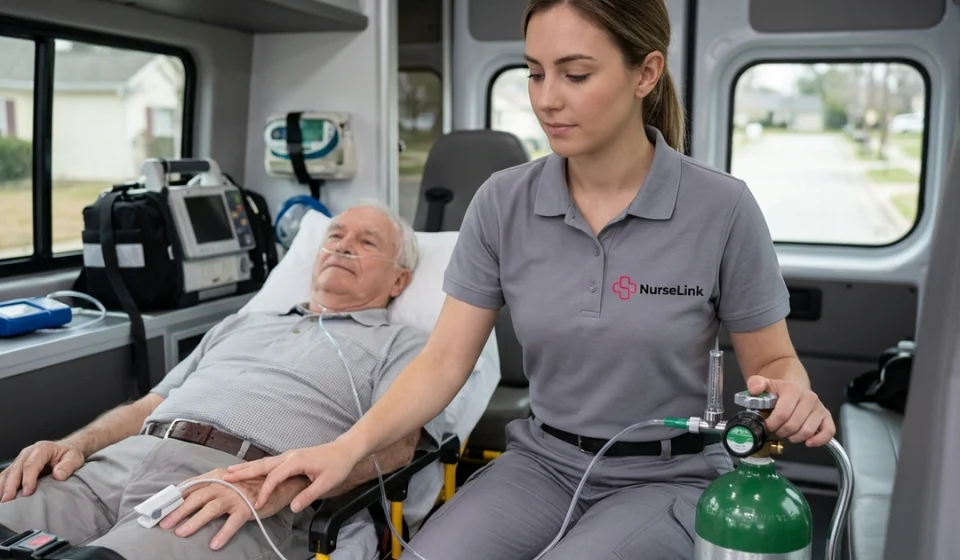
Patients who require regular medical transport often have additional care considerations that must be addressed before each journey. These may include postural support requirements, pressure relief positioning or the need for additional monitoring during travel. For this reason, a one-size-fits-all approach does not work when transporting wheelchair users. Each journey must be planned according to the individual needs of the passenger.
Essential Safety Checks Before Every Wheelchair Transport Journey
Preparing for a wheelchair transport journey begins with a thorough safety inspection. Before assisting a wheelchair user into a vehicle, carers or transport staff should carefully check the wheelchair itself to ensure that it is functioning properly. Mechanical faults, worn tyres or faulty brakes can create unnecessary risks during loading or unloading. Ensuring that the wheelchair is in good working condition is one of the most important wheelchair transport safety tips.
Footrests, armrests and any positioning supports attached to the wheelchair should also be examined. Loose or unstable components can create discomfort for the passenger or interfere with proper securement during the journey. Making these checks part of a routine pre-transport process helps reduce the likelihood of equipment-related issues.
Equally important is assessing the passenger’s comfort and positioning before boarding the vehicle. The individual should be seated upright with appropriate support to maintain posture and stability. If the passenger requires specialised cushions, positioning belts or head supports, these should be correctly fitted prior to the journey.
Vehicle safety checks are also essential. The ramp or lift used to load the wheelchair must be functioning correctly and capable of safely supporting the weight of both the wheelchair and the passenger. Transport staff should also confirm that all securement equipment, including straps and anchor points, is present and undamaged.
In some cases, the passenger may have specific medical instructions documented in their care plan. These instructions may include positioning requirements, pressure relief schedules or restrictions on movement. Reviewing this information before transport ensures that the journey aligns with the individual’s healthcare needs.
How To Properly Secure A Wheelchair In A Vehicle
Correctly securing a wheelchair inside a vehicle is the most critical step in ensuring passenger safety during transport. Even minor vehicle movements can create significant forces that affect the stability of a wheelchair if it is not properly restrained. For this reason, professional wheelchair transport techniques emphasise the importance of securement systems designed specifically for wheelchair users.
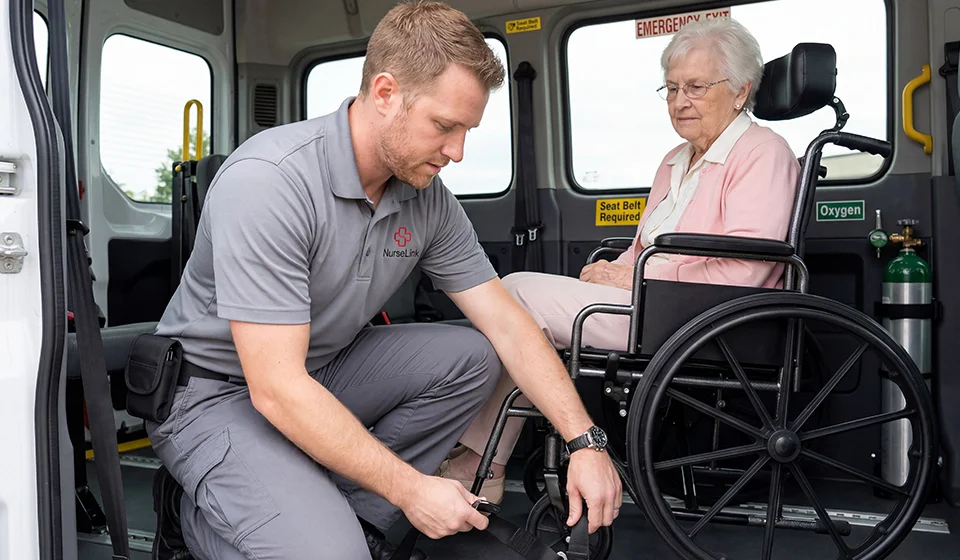
The most widely used system for wheelchair transport is the four-point tie-down system. This system uses four separate straps attached to the wheelchair frame and anchored to the vehicle floor. Two straps secure the front of the wheelchair while two additional straps secure the rear. Together, these restraints stabilise the wheelchair and prevent movement during travel.
Proper wheelchair securement involves several important steps:
- Position the wheelchair facing forward in the designated wheelchair space within the vehicle.
- Attach the front tie-down straps to strong structural points on the wheelchair frame.
- Securing the rear tie-down straps and tightening them to remove slack.
- Applying the passenger’s lap and shoulder seatbelt in addition to the wheelchair restraints.
- Confirming that the wheelchair brakes are engaged before departure.
One common misconception is that the wheelchair itself provides sufficient restraint for the passenger. In reality, wheelchair restraints secure the equipment, not the person. The passenger must also wear a properly fitted seatbelt to ensure adequate protection during sudden stops or vehicle movements.
Powered wheelchairs may require slightly different securement considerations due to their weight and structure. In some cases, additional positioning supports or headrests may be used to maintain stability and comfort for the passenger during the journey. These adjustments are an important part of implementing safe wheelchair transport methods in professional healthcare transport settings.
Common Mistakes To Avoid When Transporting Wheelchair Users
- Failing to conduct a pre-transport safety inspection of the wheelchair and vehicle equipment.
- Not checking the passenger’s positioning and comfort before starting the journey.
- Incorrectly attaching the four-point tie-down straps to unsuitable parts of the wheelchair frame.
- Leaving slack in the securement straps allows the wheelchair to shift during travel.
- Forgetting to apply the passenger’s seatbelt in addition to the wheelchair restraints.
- Moving the vehicle before all wheelchair securement steps have been fully completed.
- Overlooking potential hazards due to rushed preparation before transport.
- Poor communication with the passenger about the boarding and transport process.
- Rushing boarding or unloading procedures increases the risk of tipping or imbalance.
- Failing to consider the passenger’s medical condition, posture or comfort needs during the journey.
Final Thoughts
Transporting a wheelchair user safely requires preparation, proper equipment and careful attention at every stage of the journey. By following correct safety procedures and securement techniques, carers and transport staff can minimise risks while maintaining passenger comfort. Safe wheelchair transport involves understanding the individual’s mobility needs and preparing the vehicle appropriately. Many families also choose professional services for reliable and specialised transport. At NurseLink Healthcare, every journey is carried out with a strong commitment to safety, dignity and patient-centred care.